







GE2020: How growing up in Bukit Ho Swee led to a life of public service for PAP’s Desmond Tan
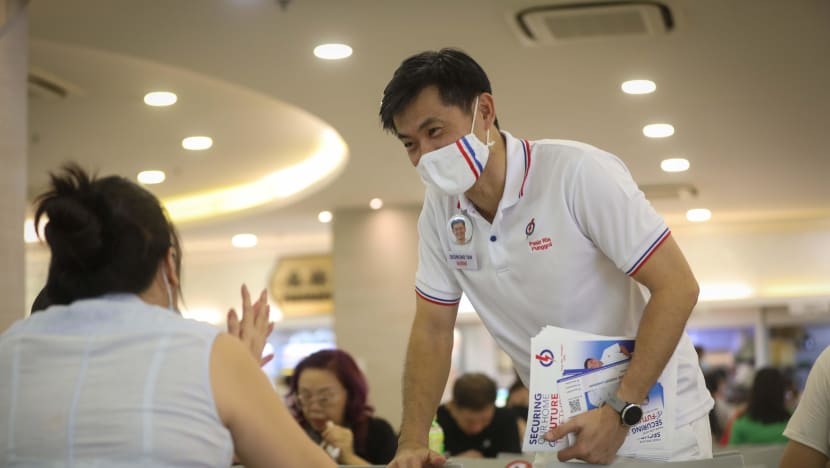
Mr Desmond Tan, a candidate contesting in Pasir Ris-Punggol Group Representation Constituency with the People's Action Party.


- Former brigadier-general Desmond Tan may first appear to be a typical catch for PAP, but he said that he had a modest start in life
- He is part of the five-member PAP team contesting in Pasir Ris-Punggol GRC
- He came to the attention of online users when some people left glowing praise for him during the time when new PAP candidates were introduced
- Mr Tan’s purpose in joining politics is to guard Singapore’s social mobility at a time when divisions are growing, he said
SINGAPORE — Watching his parents and their neighbours bond and support each other in Bukit Ho Swee and having lived in a cramped three-room flat with 12 people taught a young Desmond Tan Kok Ming one thing: Putting others before self.
It is a personal mantra that has carried him through his years from childhood, from being a part of a big household in Bukit Ho Swee to caring for his men while in the army, and then becoming a public servant and now, taking his first steps into politics.
Mr Tan, 50, is a People’s Action Party (PAP) candidate for Pasir Ris-Punggol Group Representation Constituency (GRC) and it is easy to think that on paper, the former Singapore Armed Forces (SAF) brigadier-general and former chief of the People’s Association is a typical choice for the ruling party.





Look back earlier into his life though, and it may not be so predictable.
In the three-room Bukit Ho Swee flat where he lived from birth to the time he turned 21, it was not exactly a comfortable life when it came to sharing space among his own family of six, his uncle’s family of four, his grandmother and another uncle.
His father worked as a taxi driver and his mother sold satay or worked in a factory to make ends meet.
Speaking to TODAY during a 30 minute-long interview at Punggol Plaza in the midst of the hustings, Mr Tan put down the notion that he is someone who rose above poverty.
In his mind, he merely grew up in a big home. The people living in his block looked out for each other, kept their doors open to their neighbours, and shared food and amenities such as television with each other, he recalled.
“That sort of kindness has always stayed with me. While we may not have a lot, we shared what we have and we grew up happy because of that. So, I never felt growing up that I was poor.”
He credited his mother as the person from whom he learnt his values, recounting how she would not eat for three days if it meant that Mr Tan and his three siblings were fed well.
“Because I grew up in a healthy environment, I felt supported and I had the freedom to do what I want. I had the opportunity to get the best education in the world, and then I had the opportunity to do well and then continue to progress in my life,” he said.
“In a way, this has shaped my beliefs and also my motivation to join the public service.”
HIS YEARS IN PUBLIC SERVICE
He performed well at Queenstown Secondary Technical School and entered Raffles Junior College. After National Service, he was awarded an SAF Merit Scholarship which opened doors to further education.
He studied in Britain and graduated with an aeronautical engineering degree at the University of Manchester in 1994. His family moved out of Bukit Ho Swee in the early 1990s.
Mr Tan remained in SAF for 28 years, rising to be the Chief Guards Officer and the Director of Joint Operations, before leaving to work at the People’s Association in 2017 as its chief executive director.
His prominence in the public eye only grew when he resigned this June, fuelling talk that he was going to join politics and that he was marked for a Cabinet position.
Mr Tan has since downplayed such talk about holding political office, telling the media that he wants to focus on the elections first.
Then, just before the election campaign started, he received another unsolicited bump in popularity when PAP candidate Ivan Lim Shaw Chuan — who has since withdrawn from the GE — came under public scrutiny in late June. Allegations of Mr Lim’s past behaviour, character and integrity were appearing on social media then.
As the online community dissected the newly introduced candidates, some quickly picked up that online testimonials about Mr Tan were the polar opposite of Mr Lim’s — they were full of praise of how Mr Tan treated his peers and subordinates throughout his career.
Some claimed that Mr Tan remembers every name and face he meets, which could very well be true as he recognised the TODAY photojournalist immediately during this interview, even though they have met only once in a passing encounter in Pasir Ris.
.embed-container { position: relative; padding-bottom: 56.25%; height: 0; overflow: hidden; max-width: 100%; } .embed-container iframe, .embed-container object, .embed-container embed { position: absolute; top: 0; left: 0; width: 100%; height: 100%; }NOT A PERFECT PERSON
When asked about these effusive social media posts, Mr Tan said that he is not a perfect person. He admitted to mistakes he had made in his early days as a junior officer, when he was leading soldiers whose backgrounds and circumstances were wildly different from him.
“The army is a microcosm of a society that includes parts that I was not exposed to when I grew up,” he said of the misunderstandings but did not go into detail. These experiences also taught him valuable life lessons.
“We tend to think that we are at the lowest part of the food chain, but there is always someone who will need more help than us, and there are also always people who can step in when we need help,” he added.
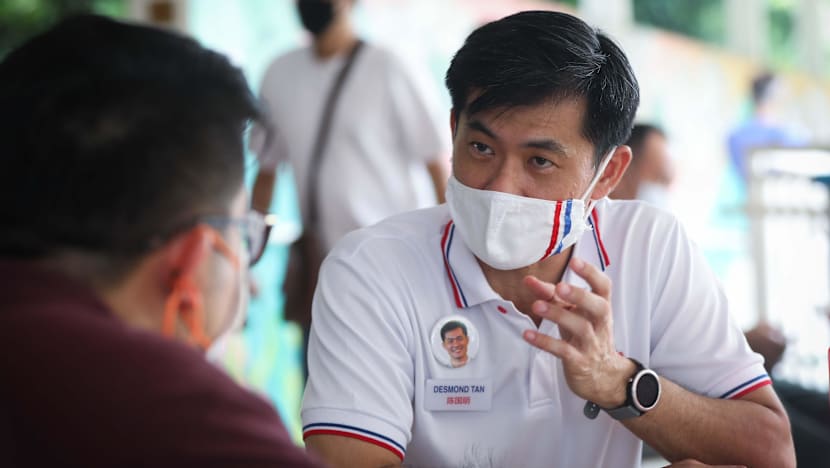
One online anecdote of him detailed how — during his term as commanding officer of the 1st Battalion, Singapore Infantry Regiment — a full-time national serviceman had been fined S$200 for breaking a piece of equipment.
Unable to afford it, he skipped the chain of command to plead with Mr Tan to waive the fee.
Doing so incurred the wrath of his immediate superiors, and to his dismay, Mr Tan said that the serviceman should be responsible for it. However, Mr Tan later caught up with the serviceman privately and handed him S$150 in cash to pay the fine.
FAULT LINES IN SOCIETY
When asked if army generals or public servants make good politicians, Mr Tan said that it is more important to have diverse representation in politics in order to represent a wide spectrum of Singaporeans.
This diversity of views and representation is something PAP believes in as well, which was why he joined them, he added.
His long military career aside, the perspective he gained as the former chief of the People’s Association also gave him a new purpose in public service.
In the three-and-a-half years of his stint there, he delved deeper into what led to the social fault lines that were creeping into Singapore and if managed poorly, could fracture society, he said.
These fault lines include divisions along racial and religious lines, the gap between the technologically able and the technologically illiterate, and a generational split between the young and the old.
There is a need to ensure social mobility, so that “everybody has the opportunities” to succeed in life no matter their starting point, Mr Tan said.
“With Covid-19, we also see that between countries, between communities, and between people, there are potential flashpoints, and that's where, I think, all the more we have to unite as a country and a people.”
Singapore, thankfully, still guards its social cohesion and multiracialism dearly, he said. If elected, he wants to further contribute in building this cohesion.
He is married with three children, and before the election campaign started, his youngest daughter would sometimes enter the frame to greet viewers during online webinars on his Facebook account or hosted by others, and which are part of his outreach efforts to Singaporeans during the Covid-19 pandemic.
Asked to choose between prosperity and happiness, Mr Tan said that he would pick a third option: Purpose.
“It explains why I joined the SAF initially and then chose to stay for 28 years, because that purpose to serve others continued to motivate me for 28 years. And when I chose to go to the People's Association, the significance and the purpose of the work that we did made me happy,” he said.
“Now, going into politics, it is the same thing. It is a significant step for me onto a bigger platform, and (to fulfil) a bigger purpose by contributing to Singapore.”




