







Getting doctors to love teaching
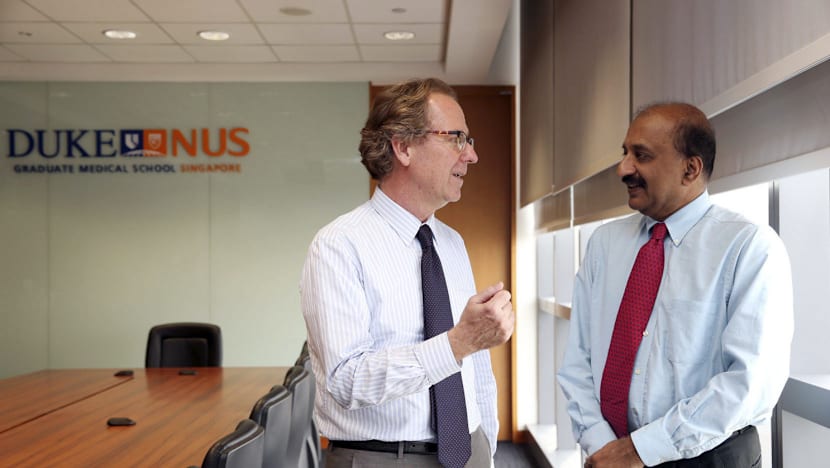
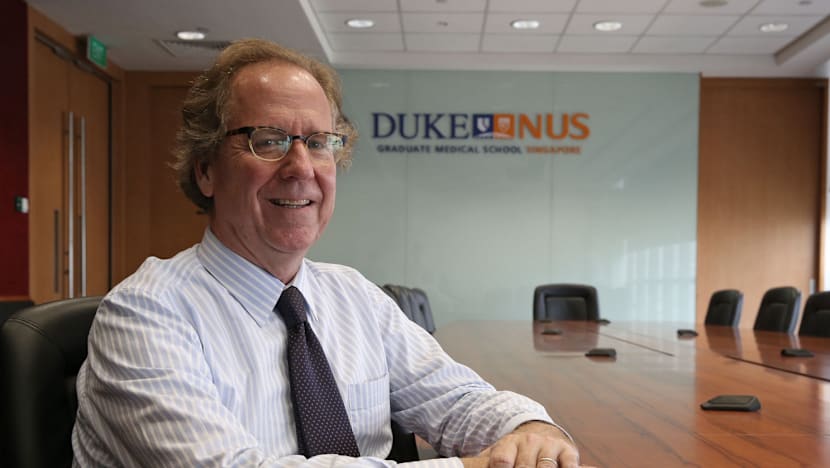
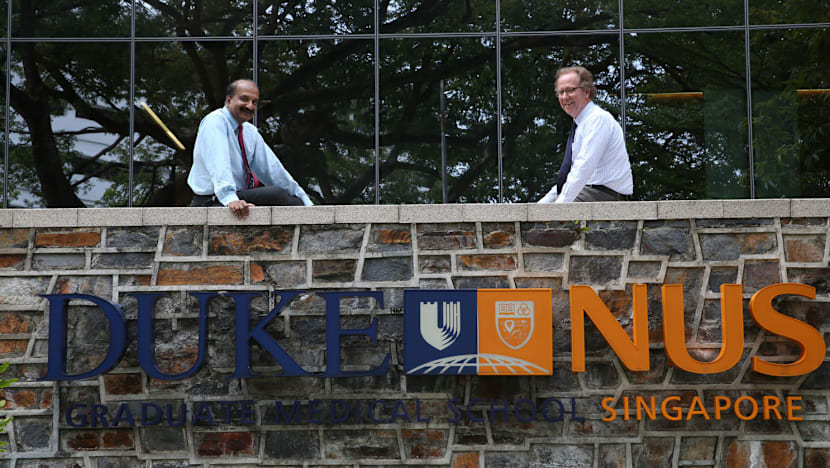

SINGAPORE — With Singapore’s second medical school looking to increase enrolment to about 75 students a year in the coming years, the man tasked to lead it has made it his mission to continue improving its students’ education — by getting more doctors to embrace teaching.
In 2010, Duke-NUS Graduate Medical School and SingHealth set out to integrate healthcare delivery, research and education. The makings of a great academic medical centre are now in place, said Duke-NUS’ dean-designate Thomas Coffman, who wants to give “an extra boost to this area”.
This means working with clinicians at SingHealth institutions, which include the Singapore General Hospital and National Heart Centre Singapore, to improve their teaching skills and enjoyment of educating students. It also means training students to take full advantage of opportunities when they leave for the wards and clinics of hospitals here, he said.
A nephrologist by training, Professor Coffman spent his career, which spans more than 30 years, with Duke University in the United States. He began visiting Singapore about four years ago to lead Duke-NUS’ cardiovascular and metabolic disorders research programme and served as executive vice-dean last year before being appointed dean-designate this year. Outgoing dean Ranga Krishnan officially ends his term on June 30.





Academic medical centres, formed from partnerships between a healthcare provider and university, provide a framework for research and education to help advance patient care. Prof Coffman said physicians at such centres in the US, which has a longer tradition of these centres, tend to make less money, but have to deal with more problems.
“But when things happen the right way, the opportunity to teach becomes something they enjoy and retains them in the academic system despite salary and lifestyle differences,” he said in a recent interview with TODAY. He added: “In this transition to academic medical centres here, we’re not quite at the point where we’ve got robust programmes in all those areas that exist.”
Asked about his vision for Duke-NUS, which was established in 2005 with the aim of grooming physician-scientists, he said: “In order for us to bring (research) programmes to long-term fruition to influence patient care, we have to have seamless interaction with our clinical partners. My sense is, a lot of my effort over the next five years is going to be in this area.”
Its latest batch had about 65 students and Prof Coffman said the school is in talks with government agencies to increase enrolment to about 75 in the next four to five years.
Another challenge is in steering students into fields of greater demand. Young people are more concerned about lifestyle and work-life balance than before, and look to go into areas where they can achieve that balance — which are not necessarily where physicians are needed, he said.
But role models can influence students’ career paths and Prof Coffman said he would like to see more students going into primary care and doing research in the area as well as into palliative care and internal and general medicine.
Both he and Prof Krishnan said healthcare delivery must change to care for the rapidly ageing population here, with Duke-NUS playing a role.
Academic medicine must also percolate into the Agency for Integrated Care, and this will mean working with the medical schools and other parts of the healthcare system, said Prof Krishnan, 58. Asked about his next move, Prof Krishnan said he wants to build approaches to lifelong learning, target them to disadvantaged populations and figure out better strategies to improve health. “Where I’m going to do it, I don’t know, it depends on the circumstances,” he said.
Building a medical school from the ground up was a once-in-a-lifetime opportunity, he said. An unexpected bonus was the transfer of the school’s teaching techniques to younger students. Online lessons and team-based learning were applied to maths lessons at Spectra Secondary School, a specialised Normal (Technical) school, after a teacher read Prof Krishnan’s commentaries in TODAY.
He said: “When we came here, it was pretty clear it was not just to build a medical school. It was also to play a role in helping Singapore to plan and shape its healthcare system downstream and for the future.”




