







Govt to pay SBS Transit, SMRT S$5.3b and $1.9b respectively to run bus routes
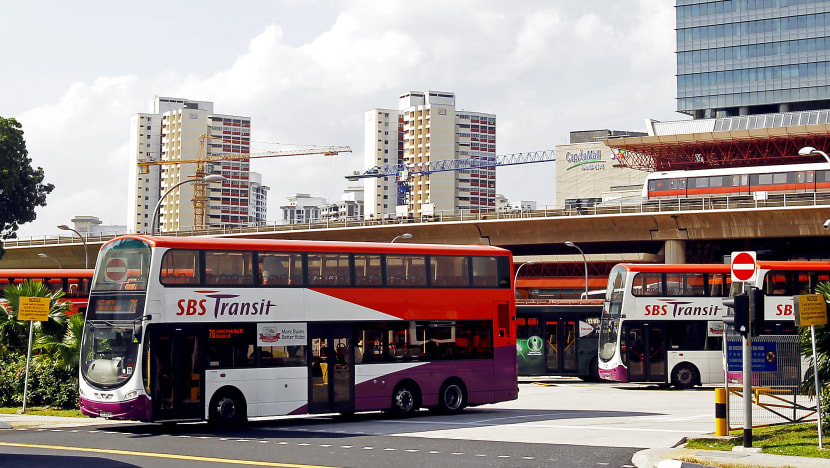
SBS Transit has a week to file a notice in court to say if it will defend itself against the bus drivers’ claims that it had breached their employment contract terms.


SINGAPORE — Public transport operators SBS Transit and SMRT Buses will be paid S$5.32 billion and S$1.87 billion, respectively, to run the remaining bus routes yet to be put up for competitive tendering, said the Land Transport Authority (LTA) on Thursday (Aug 11).
The numbers were finalised after negotiations with the two operators and marks the full transition to the government contracting model from Sept 1.
The LTA said the bus routes will be split into 11 packages, instead of the originally announced nine, so as to allow for “greater operational efficiency and greater contestability in the longer term”.
The contracts for the 11 packages will run for between two and 10 years. SBS Transit will operate eight packages, including Bukit Merah, Bedok and Bishan-Toa Payoh, comprising 196 services collectively. The rest, with 77 services plying Sembawang-Yishun, Choa Chu Kang-Bukit Panjang and Woodlands, will be managed by SMRT Buses.





Once the contract expires, the packages will be released for tender, similar to the Bulim, Loyang and Seletar packages. The Government accepted London-based Tower Transit’s S$556 million bid for five years for the Bulim package. For Loyang, London bus operator Go-Ahead Group will be paid S$497.7 million. The tender for the Seletar bundle of routes is open till October.
When the bus contracting model was announced two years ago, the Government had opted for a phased approach, putting up three packages of routes for competitive tendering, while negotiations with the incumbents would be carried out for the remaining packages. It said then that the negotiated contracts would have durations of about five years. On Thursday, the LTA said taking “this gradual, phased approach to competitive tendering minimises risk of service disruption for commuters and allows the LTA to refine and improve on the management of contracts, as well as the tendering and handover processes”.
The varying contract durations take into account the completion timeline of infrastructure such as bus depots, and allows a gradual release of bus packages for tendering, it said, adding it minimises risks of service disruption if the LTA were to tender out too many packages at the same time.
Of SBS Transit’s eight packages, only the Bukit Merah package runs for two years. The others have tenures ranging between five and 10 years. Meanwhile, SMRT Buses’ three contracts range between four and seven years.
Under the government contracting model, assets such as buses are owned by the LTA, which leases them to operators and pays them to run the routes. The LTA makes the call on the bus services to be offered and sets standards.
But for these 11 packages, the LTA would lease the buses from both operators instead of buying them. It involves a total of about 4,000 buses. The fee is equivalent to the depreciation value of the buses and the financial cost of this is the same as buying the buses now at net book value, said a spokesperson.
Both operators welcomed the transition to the government contracting model. Calling this a “new era” for the Republic’s public bus transport industry, SBS Transit chief executive Gan Juay Kiat said commuters can also expect better standards with the bus service reliability framework. SMRT Buses managing director Tan Kian Heong said: “SMRT has always been committed to delivering high levels of operational reliability, safety and service. The transition to the bus contracting model will allow us to have a stronger focus on these areas and better fulfil our role as a public transport operator for the benefit of all our commuters.”
Urging the LTA and operators to continue investing in the training of workers, National Transport Workers’ Union executive secretary Melvin Yong said his union would also work with the operators to ensure competitive wage packages and conducive working conditions for workers.




