







Hari Raya festivities aimed at bringing S’poreans together
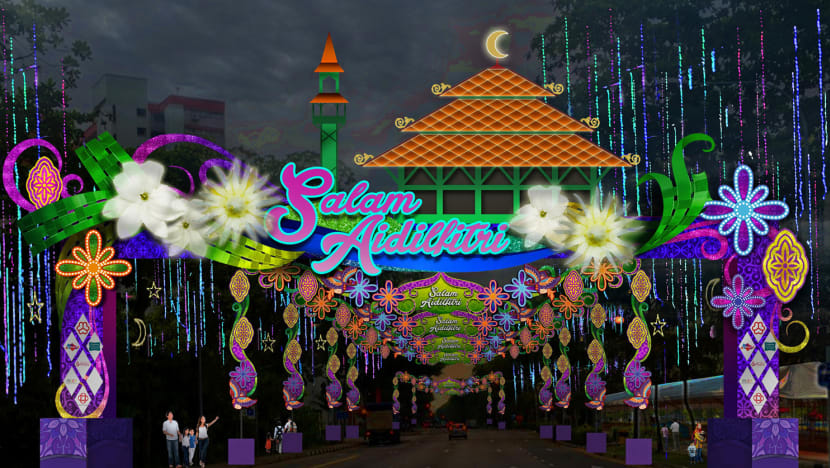
An artist’s impression of the 2016 Hari Raya light-up in Geylang Serai. The colourful display of lights, inspired by traditional Malay batik, will feature weave motifs. PHOTO: Hari Raya Light Up


SINGAPORE — A kampung-style pavilion, torches traditionally made of bamboo or lampu colok, and a larger-than-life Malay gong are among the items from a bygone era that await visitors at this year’s Hari Raya light-up in Geylang Serai.
Organisers are hoping the annual event, which will be launched by Prime Minister Lee Hsien Loong on June 4, will reach a wider audience and provide Muslims and non-Muslims with an opportunity to strengthen their understanding of each other and celebrate the occasion together.
The colourful display of lights, inspired by traditional Malay batik, will feature weave motifs — typically seen in ketupat and sepak takraw balls — to symbolise the close-knit nature of the Malay community here.
Covering 2.8km — up from 2.3km last year — the light display will stretch from Still Road to Lorong 101 Changi Road to spread the spirit of Hari Raya, which falls on July 6, to people living in the residential units in those areas.





“We wanted to include some of the residential areas, although there are no bazaar stalls along some of those areas. We decided we should make the light-up a bit longer and more impactful because I think the experience of driving through that area gives you this nice, happy (and) delightful feeling,” said Associate Professor Fatimah Lateef, adviser to Marine Parade grassroots organisations (Geylang Serai Division).
During the June 4 launch, visitors will be able to watch a performance by singer-songwriter Sufie Rashid — the first Singaporean to win the popular Malaysian reality singing show, Akademi Fantasia — and also go on free rides aboard Hippo buses to view the lights up-close.
For those who miss the launch, there will be other activities to enjoy on other weekends during the month-long light-up, such as cultural performances in the form of dikir barat, kompang and silat.
They can also take part in interactive activities, such as tying the songket, and making ketupat and putu piring, a traditional Malay steamed cake, said Assoc Prof Fatimah, who is a Member of Parliament for Marine Parade GRC.
Visitors can also satisfy their food cravings and buy their Hari Raya goodies by visiting the traditional Ramadan bazaar.
This year will also see children from the Ain Society — a voluntary welfare organisation — being invited to iftar, or breaking of fast, sessions, which will be held at the site where the Malay Village once stood.
“This is the month where Muslims are encouraged to do more charitable activities and therefore, one of the new iftar sessions that we will be doing will be to sponsor the cancer-survivor children from Ain Society with their families at an iftar session,” said Assoc Prof Fatimah, referring to the fasting month of Ramadan, which begins on June 6.




