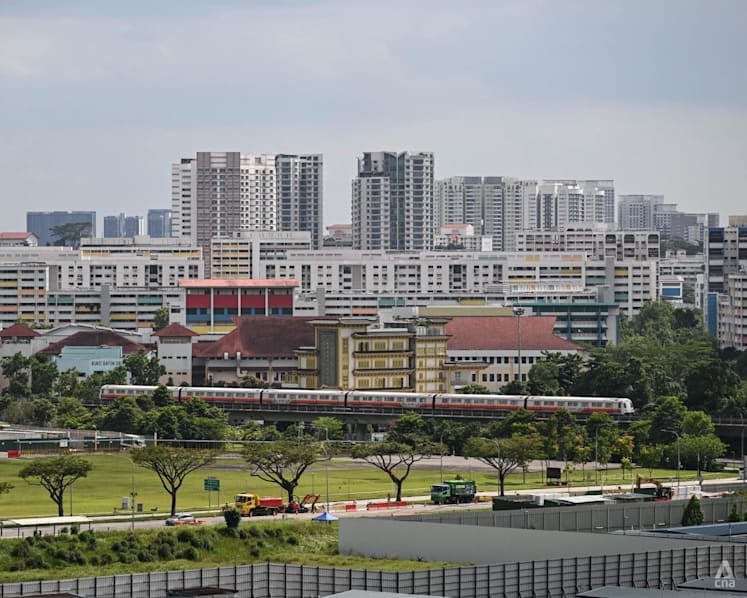
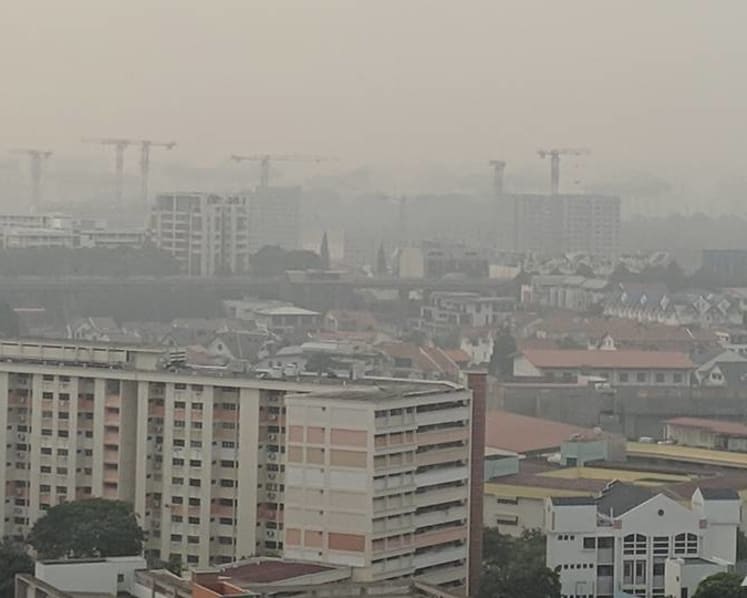
Hotspot activity could increase in coming weeks, leading to hazy conditions; Singapore monitoring situation closely: Grace Fu
If the haze worsens, measures will be put in place to safeguard public health, including ensuring sufficient supply of N95 masks, said the Minister for Sustainability and the Environment.
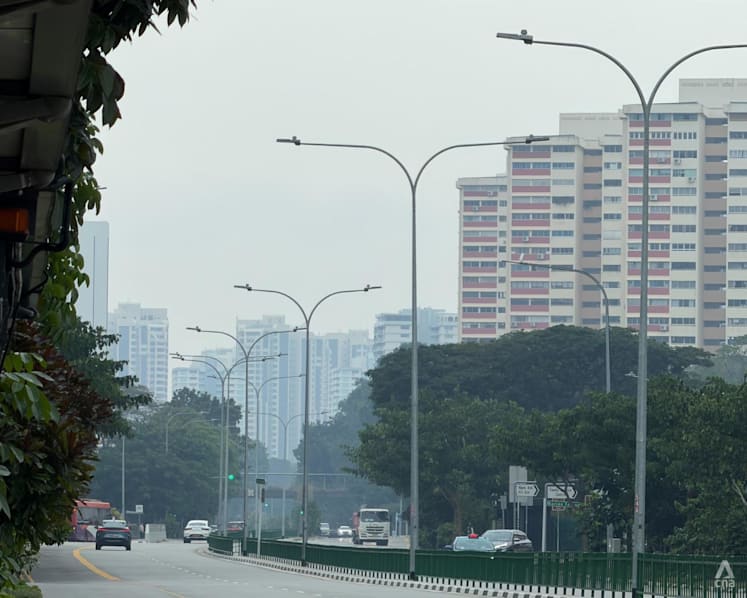
A street in the eastern part of Singapore on Jan 24, 2026. (Photo: CNA/Alvin Chong)

This audio is generated by an AI tool.


SINGAPORE: Hotspot activity could increase in the coming weeks in areas near Singapore due to wind patterns and drier conditions during the current phase of the Northeast Monsoon season.
This could result in hazy conditions affecting Singapore, Minister for Sustainability and the Environment Grace Fu said in parliament on Thursday (Feb 12) as she shared the Meteorological Service Singapore's assessment.
Singapore will continue to monitor the ongoing haze situation closely, she added.
Responding to Members' questions on transboundary haze, Ms Fu said the Haze Task Force, led by the National Environment Agency (NEA) and comprising 28 government agencies, will implement measures to safeguard public health if conditions worsen - particularly for vulnerable groups such as the elderly, pregnant women, children and those with chronic lung and heart diseases.





These include issuing advisories to minimise outdoor activities and ensuring sufficient supply of N95 masks. Indoor air purifiers will also be deployed in premises such as schools, public hospitals, nursing homes and polyclinics where vulnerable groups are likely to congregate, said Ms Fu.
Hotspot activity could increase in the coming weeks and result in hazy conditions in Singapore. Regional and bilateral cooperation is essential to address transboundary haze, and Singapore is committed to this effort. Sustainability and the Environment Minister Grace Fu, who said this in reply to an MP’s questions in parliament on Thursday (Feb 12), pointed out that Singapore’s 24-hour PSI readings have remained in the "good" to "moderate" range this year. Should the haze situation worsen, the Haze Task Force will implement measures to safeguard public health, she added.
She noted that Singapore's 24-hour Pollutant Standards Index (PSI) readings have remained in the good to moderate range this year. A peak PSI reading of 69 on Feb 8 was still within the moderate band, she added.
"Hence, at this stage, the haze has not reached such levels that warrant investigation under the Transboundary Haze Pollution Act," said the minister, referring to the law enacted in 2014, which makes it an offence to engage in conduct that causes or contributes to haze pollution in Singapore.
Ms Fu also pointed out that cloud seeding for rain will not be effective given Singapore's size and geography. "Any induced rain might not fall on Singapore due to variable wind patterns," she added.
Residents across the country have reported a faint burnt smell since late January. NEA previously attributed slightly elevated PM2.5 levels in the east to hotspots and smoke plumes from Johor, adding that vegetation fires had caused hotspots to the north of Singapore.
Doctors running clinics in the central, northern and eastern regions told CNA earlier this week that they have seen a surge in patients seeking treatment for respiratory symptoms amid hazy conditions.
Speaking in parliament, Ms Fu underscored the importance of regional and bilateral cooperation in addressing transboundary haze, adding that Singapore is committed to these efforts.
She noted that the ASEAN Specialised Meteorological Centre (ASMC), based in Singapore, provides member states with regular updates on weather and haze conditions, including hotspot information and early warnings to support their respective prevention and response measures.
Singapore also supports Indonesia's efforts to operationalise the ASEAN Coordinating Centre for Transboundary Haze Pollution Control, to be based in Indonesia. The centre will improve regional preparedness and coordination in managing the impact of land and forest fires that cause haze, said Ms Fu.
MP Christopher de Souza (PAP-Holland-Bukit Timah) asked in a supplementary question how the government was engaging those "creating this air pollution" to reciprocate the domestic efforts of Singapore agencies.
To this, Ms Fu pointed out that the "incidence of transboundary haze has reduced" over the years, with air quality improving.
"This is in no small way due to the efforts made by our neighbours in managing their own regulations and also their own communities domestically, but also cooperating regionally at the ASEAN level," she added.
Editor's note: A mention of hotspots in the north of Singapore has been corrected in this article. It should have been "to" the north. We apologise for the error.