







One vote short: The high stakes and relentless push to prevent no-shows in HDB block upgrading polls
Last month, two Housing Board blocks in Tiong Bahru’s Seng Poh estate fell short of the 75 per cent polling requirement to qualify for the heavily subsidised public housing upgrading scheme.
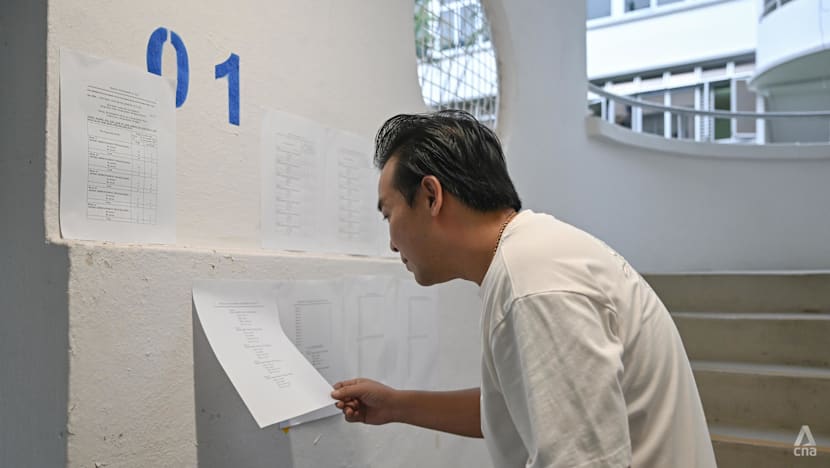
Tiong Bahru resident Clarence Soh looks at the Home Improvement Programme (HIP) straw poll results on Nov 27, 2025. (Photo: CNA/Tan Wen Lin)

This audio is generated by an AI tool.


SINGAPORE: In the weeks leading up to the Home Improvement Programme (HIP) polls for Tiong Bahru’s Seng Poh estate, residents were anxious about whether their Housing and Development Board blocks would qualify for the highly subsidised upgrading scheme.
As with all HIP projects, at least 75 per cent of eligible Singapore Citizen households must vote in favour before works can proceed – and every vote counts.
Residents Clarence Soh and Robin Loi spent months explaining the value of HIP, a taxpayer-funded initiative that tackles maintenance issues in ageing flats, such as spalling concrete.
“We went door to door to contact them, to understand their feelings,” said Mr Loi, 70.





There are compelling reasons to vote yes – common areas and ageing facilities in the block can be repaired for the health and safety of all residents, and much needed works can be done within the ageing flats at a subsidised cost.
Even if one votes for HIP, they can choose to opt out of improvement works within their flats without depriving other residents from the overall scheme.
But many residents worried about noise or inconvenience, while others were difficult to reach because they did not work from home. Some did not respond to calls; one resident pledged to turn up but ultimately did not.
In the end, the few no-shows proved decisive in Tiong Bahru. Two out of 29 blocks failed to hit the 75 per cent threshold; one block fell short by two votes, another by just one.
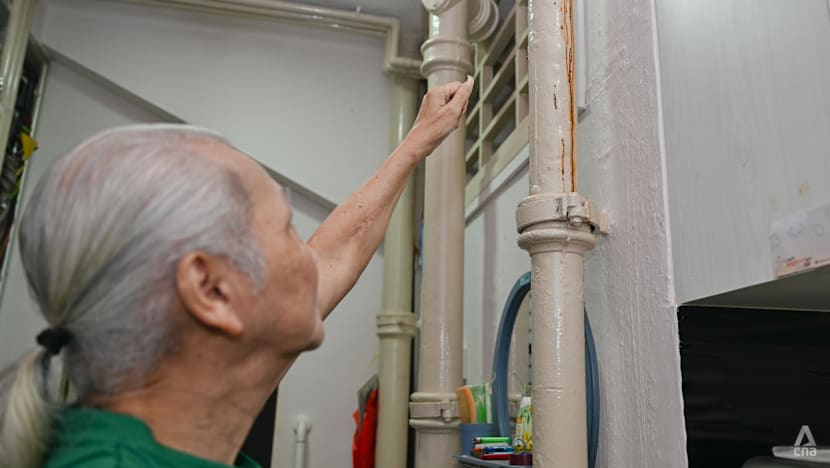
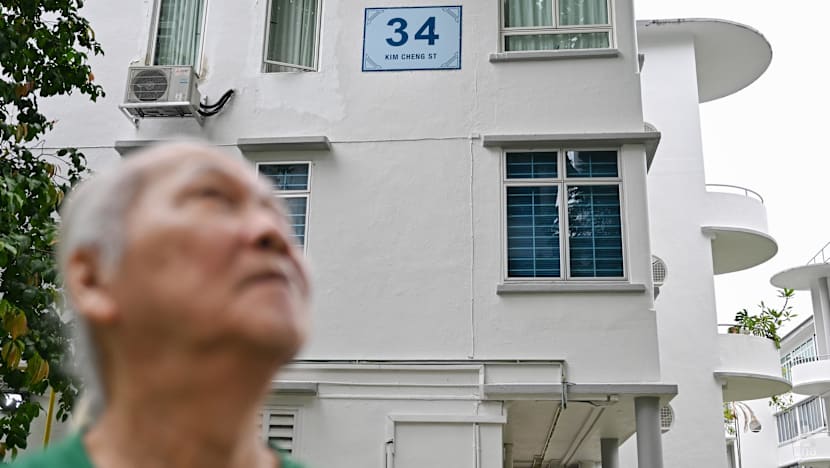
Mr Loi’s own block at 34 Kim Cheng Street was among them. Having lived there for over 50 years, he had hoped to install a new water pipe through HIP. Without it, he will have to pay about S$300.
“Unfortunately some of them don’t live here anymore, and were hardly contactable, and as much as we put in our effort, we could not do anything,” he said.
The effort to secure support for HIP often starts months in advance. MPs, grassroots volunteers and residents knock on doors repeatedly – but high effort does not always mean high turnout.
In an online post, Tanjong Pagar Group Representation Constituency Member of Parliament Foo Cexiang, who oversees the Seng Poh estate, remarked about how extensive mobilisation did not pan out for the two blocks.
However, it is not the end of the road when the vote fails, as residents of these blocks may still appeal to HDB to be reconsidered for HIP.
Elsewhere, four blocks previously failed HIP polls in recent years but were able to undergo re-polls: Block 316 Serangoon Ave 2 in 2017, and Blocks 101, 104 and 108 Lengkong Tiga in 2023.
HDB told CNA that the commonly cited reason in those blocks which were unsuccessful was that the residents had recently carried out their own home renovations.
In these four blocks, HDB considered factors such as residents’ support levels and the contractor’s capacity across the precinct. “HDB had then decided to conduct a re-poll, in which the blocks subsequently voted to take up the HIP,” the agency said.
It is currently discussing “the next course of action” with Mr Foo for the two affected Tiong Bahru blocks.
“LIKE AN EXAM YOU HAVE TO PREPARE FOR”
Speaking to CNA, MPs overseeing upcoming HIP polls say the biggest challenge is ensuring enough people actually turn up to vote as well as convincing those who are hesitant.
Chua Chu Kang MP Zhulkarnain Abdul Rahim, whose Keat Hong ward has three upcoming HIP projects, said a key challenge is persuading residents who recently renovated and wish to avoid further inconvenience. His volunteers even photographed an elderly resident’s old toilet, with her consent, to show others why neighbours needed the HIP.
"We went around and said to those people that indicated that they might not want to vote for HIP, that if you don’t vote for the HIP, she won’t have that chance to get her toilet upgraded,” he said.
His team made one to three weekly visits to various blocks and distributed pamphlets in the months before voting. “It’s like an exam that you have to prepare for,” he said.
In Hougang, where HIP polling took place last month, Workers' Party MP Dennis Tan told residents that even those who had already renovated could help others by voting yes.
“I tried to do my part ... as I think the prospects of any block not getting at least 75 per cent vote can be extremely disappointing for residents who wish to opt for the HIP works,” he said.
Hougang grassroots volunteer Kelvin Yap said he began following Mr Tan on house visits three months before polling to explain HIP’s benefits.
“We tell them that even if they vote for HIP, they can still choose to opt out,” he said. “Ultimately, HIP is subsidised and could greatly benefit their neighbours who cannot afford to renovate their place on their own financial muscle.”
Taman Jurong MP Shawn Huang noted other concerns: landlords with renovated units who worry about disturbing tenants, travelling residents who may miss polling, and misconceptions that all works are compulsory.
“Some may not need full HIP, and they can participate in some of the smaller upgrades,” he said, noting that toilet, entrance door, gate, and refuse chute hopper upgrades are optional.
“You can encourage them to vote yes, and then see what are the subcomponents of HIP that are relevant to them,” he added.
For Tiong Bahru’s Seng Poh estate, the issues are unique, said Mr Foo.
With each block of four floors only having 15 to 24 units, the vote of each unit carried a very high weightage. Many of the units are also rented out, which made it challenging to contact the original owners.
“Each negative and absentee vote would set back the chances of success significantly,” he said in a Facebook post.
Why is there a 75 per cent threshold?
HDB said the threshold is necessary because most essential improvement works — such as replacing waste pipes — take place within flats and affect multiple households.
A straw poll is conducted before HIP polling to gauge initial support.
“If the results of the straw poll show sufficient support from the flat owners, we will then proceed with the official HIP polling,” HDB said.
The agency encouraged residents to opt in, noting that HIP “enhances the safety and liveability of older homes, and is heavily subsidised by the government”.
Essential improvements — upgrades in common areas and to electrical systems, for example — are fully funded, while optional upgrades like bathroom works are subsidised up to 95 per cent.
On its part, HDB is also helping home owners understand what HIP entails.
Ahead of polling, HDB provides all benefitting flat owners with an information package comprising a guidebook, answers to frequently asked questions, and a proxy form for those who are unable to vote in person, among other things.
During the polling period, an exhibition and a mock-up unit are set up for residents to view the HIP improvement items, such as the main door grille gate designs and the upgraded toilet.
CONCERNS OF RESIDENTS
Several residents in upcoming HIP precincts who want to undergo upgrading said the decision is an easy one.
At Block 82 Strathmore Avenue, for example, Mr Wan Fook Peng supports the HIP as his toilet requires upgrading. The 67-year-old also looks forward to optional Enhancement for Active Seniors features like grab bars and foldable shower seats.
But there were also some who cited several reasons for the ambivalence.
For one, not everyone sees it as a rare chance that comes around only once every 30 to 35 years to improve their flats without breaking the bank.
Some are reluctant, citing dust, noise or disruption. Others who recently moved in after renovating their flats were also hesitant about the common areas being subjected to more renovation works.
There are also those who are renting out their units and fear needing to reduce their rents during the HIP period.
Another Strathmore Avenue resident, who wanted to be known only as Poh, noted that HDB residents have “less control” over improvement decisions compared to condominium owners.
“So when these things come around, you have to make your voice heard,” said the resident, who is in his 30s. “It’s important that we make good use of public funds.”
He suggested using more digital channels, including the use of mobile phone alerts, to better engage younger residents.
In Hougang Central, where polling is due next March, most residents CNA spoke to were supportive – though some still had questions.
Mr Nicanor Sow said his mother prefers bamboo poles for drying clothes and is unsure about the proposed new drying rack.
“She was saying that if it is compulsory to change the pipe sockets to the new clothes rack, she will say no,” said the 28-year-old.
His mother plans to seek clarification at future engagement sessions.
Others, like 61-year-old Ms Tay, are enthusiastic.
“I think most will vote yes. They know that if they’ve already renovated their house, they can opt out of the optional upgrades,” she said.
“I remind my neighbours of the HIP when I have the chance. The whole row of neighbours is quite excited about it. So far there has been no objection.”




