







Hundreds of distressed domestic workers seek help over debts to licensed lenders, loan sharks
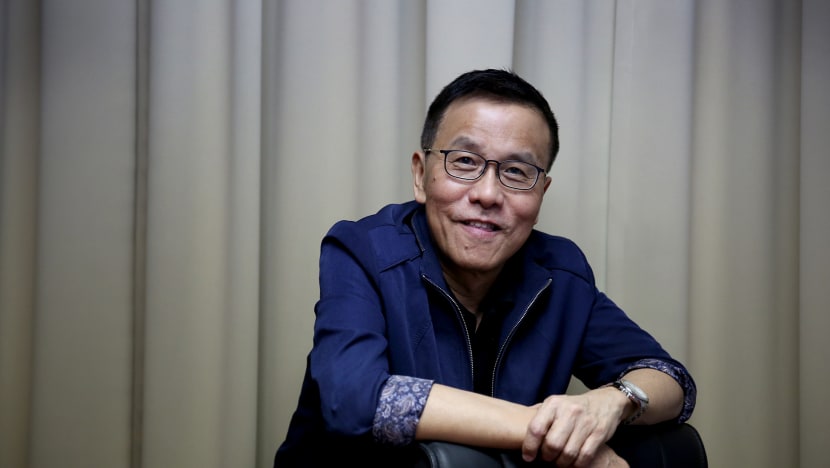
Pastor Billy Lee, founder and executive director of Blessed Grace Social Services. His charity helps workers to negotiate with moneylenders and devise repayment plans.


SINGAPORE — Hundreds of foreign domestic helpers, some heavily in debt, have turned to voluntary groups for help to negotiate repayment plans with moneylenders.
Their anxiety follows a loan limit set by the Government in November last year for low-income foreigners here.
Fearing that moneylenders would approach their employers, some endured sleepless nights, anxious that they could be sent home.
Blessed Grace Social Services, a charity, has helped about 520 Filipino foreign domestic workers mired in debt owed to moneylenders, both licensed and unlicensed, said its executive director, Pastor Billy Lee, 63.





In November last year, the charity — which Mr Lee founded in 2014 to help vulnerable groups such as those with gambling and narcotic addictions — started helping domestic workers in debt.
It had been in talks with the Credit Association of Singapore, a group of registered moneylenders, to help these workers even before new caps were introduced in late November last year on the amounts foreigners and residents may borrow from lenders.
Foreigners earning less than S$10,000 yearly are now subject to a S$1,500 loan cap.
This effectively means that domestic helpers cannot borrow beyond this amount.
The Law Ministry has said that it would also introduce a framework under which residents and foreigners who borrow from licensed lenders may apply to be self-excluded. Lenders will be barred from dishing out loans to these individuals.
The new rules came after the number of foreign domestic helpers who took loans from licensed lenders climbed from about 1,500 in 2016 to 12,000 in 2017. In the first half of last year, that figure soared to 28,000.
Read also
Foreign domestic workers more likely to develop mental health problems
THE DEBT TRAP
Each week, Mr Lee’s charity continues to see an average of 10 domestic helpers seeking assistance.
These workers took out loans from licensed lenders, but some had also borrowed from unlicensed ones, known as loan sharks.
The helpers found out about the unlicensed services mostly through text messages and calls.
More than nine in 10 of these unlicensed lenders are based overseas, said Mr Lee.
But even the licensed lenders can be “quite aggressive” when chasing debtors for payment.
For instance, they could threaten to call workers’ employers if they do not pay on time.
Domestic helpers are required to provide their employer’s contact number when borrowing from licensed and unlicensed moneylenders, said Mr Lee.
“Their greatest fear is that they would be sent back. As a result of the pressure, a lot of them also resort to all other means to get money to repay,” he said.
“In the end, they fall into this debt trap and, to get out of it, they just take whatever comes along and whatever is available.”
Out of the 30 helpers it surveyed in April, Blessed Grace found that 10 had borrowed from unlicensed moneylenders to pay licensed ones. Four had borrowed from licensed moneylenders to pay unlicensed ones.
Others, Mr Lee said, ended up with steep interest rates or got the short end of the stick when they tried various means to get hold of cash.
Some helpers were stuck with instalments carrying “punitive” monthly interest rates of 10 per cent after approaching a firm to remit money to their home countries.
This is unlike the typical practice in which remittance companies charge workers a fee to do so.
By contrast, licensed moneylenders are bound by rules that limit what they can charge borrowers. Interest, for instance, is capped at 4 per cent monthly.
Read also
Foreign domestic workers in Singapore seek help most for overwork, verbal abuse, pay-related problems: Report
SEEKING FAST CASH
Meanwhile, at electronics retailers, some helpers needing fast cash signed up for instalment plans for mobile phones.
The helpers then sold the phones to a person who gave them cash amounting only to a fraction of what they would eventually pay.
A 39-year-old foreign domestic worker who declined to be named said that she registered for plans with about three such shops.
The Filipina ended up with instalments totalling about S$700 in exchange for S$250 in cash.
“I needed the money, fast cash. For everyone, that’s the thinking,” she told TODAY last month.
She also chalked up debts from seven lenders, borrowing from one company to pay another.
Many debt collectors, she noted, would scare helpers by threatening to call their employers if they did not pay on time.
“We were pressured and totally stressed,” she said.
When distressed helpers approach his charity, Mr Lee said that the workers would be interviewed before a repayment plan is drawn up. Their employers are not informed.
It then negotiates with the licensed lenders to stretch out repayment, but this comes with the interest and penalties that they are allowed to charge each month for late payment.
Nevertheless, some lenders have allowed workers to repay only the original sum borrowed, Mr Lee said.
The charity also bans the workers from taking out loans from licensed lenders, he added.
Apart from licensed lenders, Mr Lee has also negotiated with several Singapore-based loan sharks on behalf of workers.
“Of course, we made some threats, (telling them that) ‘if you don’t want, then you won’t get your money… and, if you try to be funny, I will report you to the police’.”
These lenders were “willing to listen” and agreed to recoup only the original sums borrowed via instalments, he said.
Read also
Across borders: NGO helps domestic workers pursue claims even after they return home
DIPPING INTO HER OWN POCKET
Blessed Grace is not the only group here that helps domestic workers in financial distress.
Arise2Care Community Services, another voluntary group, started helping these workers last year, said Pastor Jolene Ong, its founder and chairman.
But it has taken on fewer than 10 cases, because it helps workers on condition that they come clean to their employers.
Ms Ong, 56, said that some of these helpers have young children in their care and are not in the right mental condition to look after them.
“These maids couldn’t sleep and, when they came to us, they were almost hysterical,” she said.
Like Blessed Grace, her organisation helps workers to negotiate better repayment terms within their means, factoring in their need to continue sending money back to their families.
Ms Ong has even dipped into her own pocket to help some workers.
“I felt for them. What I would do is that I would help them to settle one or two moneylenders first, so that they can fulfil the rest of the instalments,” she said.
Most workers have since sworn off borrowing and regretted their ways, Ms Ong said.
Indeed, the 39-year-old domestic worker who was helped by Blessed Grace said: “I’m totally not going to do it again. I have learnt my lesson with all the loans.”
GOVERNMENT MONITORING SITUATION
When contacted, the Ministry of Manpower (MOM) said that it was concerned about foreign domestic workers who run into debt problems when they borrow from lenders.
The ministry has stepped up efforts to educate domestic helpers on money management and over-borrowing.
For instance, workers who have just arrived in Singapore are told of the risks and implications of borrowing from moneylenders, especially those that are unlicensed, at the compulsory Settling-In Programme, said MOM’s spokesperson.
A spokesperson for the Law Ministry added that the ministry, MOM and the police would continue to monitor the situation and “assess if more stringent measures are necessary”.
Responding to queries, the labour movement’s Centre for Domestic Employees urged foreign domestic workers not to borrow from moneylenders.
“In an urgent situation, they should first approach their employers for help and share openly with their employers the reasons why they need the money,” said Mr Shamsul Kamar, the centre’s executive director.
The Law Ministry and MOM said that domestic helpers may approach these voluntary welfare organisations for help in managing their debts:
Adullam Life Counselling: www.adullam.org.sg; 6659 7844
Arise2Care Community Services: www.arise2care.sg; 6909 0628
Association of Muslim Professionals: www.amp.org.sg; 6416 3960
Blessed Grace Social Services: www.bgss.org.sg; 8428 6377
Centre for Domestic Employees: www.cde.org.sg; 1800 2255 233
One Hope Centre: www.onehopecentre.org; 6547 1011




