







PM Wong looks forward to continue working closely with Malaysia; to engage on complex issues as 'good neighbours'
Singapore Prime Minister Lawrence Wong said both countries should be proud of what was accomplished together these past 60 years.
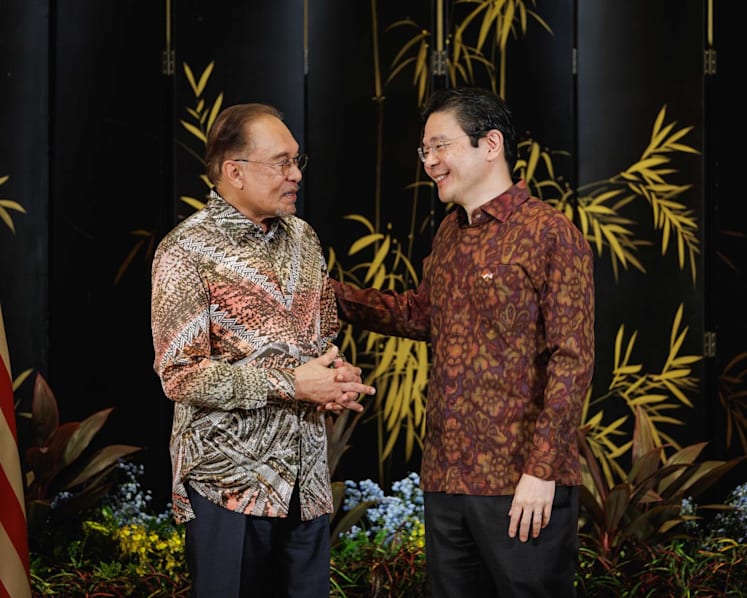
Malaysian Prime Minister Anwar Ibrahim (left) and Singapore's Prime Minister Lawrence Wong at the Singapore-Malaysia Leaders' Retreat on Dec 4, 2025. (Photo: Ministry of Digital Development and Information)

This audio is generated by an AI tool.




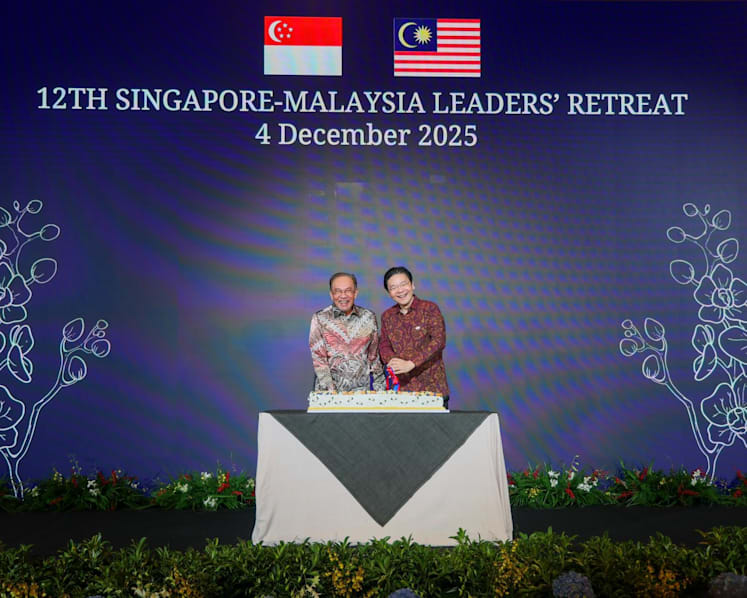
SINGAPORE: Singapore and Malaysia should be proud of what the two countries have accomplished in the last 60 years, both bilaterally and in the region, Prime Minister Lawrence Wong said on Thursday (Dec 4) at a joint press conference with Malaysia Prime Minister Anwar Ibrahim.
Hailing the milestone of both nations celebrating 60 years of diplomatic ties, Mr Wong said he always valued the engagements and the friendship with his counterpart Mr Anwar in their past meetings.
"We are able to have candid and constructive discussions, and we both focus on what we can achieve together as close neighbours, good friends and for the benefit of both our peoples," said Mr Wong at the 12th Singapore-Malaysia Leaders’ Retreat, which took place at The Ritz-Carlton, Millenia Singapore hotel.
Mr Anwar said his visit to Singapore, though short, was very substantive.





The Malaysian PM highlighted the strength of the friendship, noting that at almost "every opportunity", the two countries update each other on progress made and show concern for the welfare of the people.
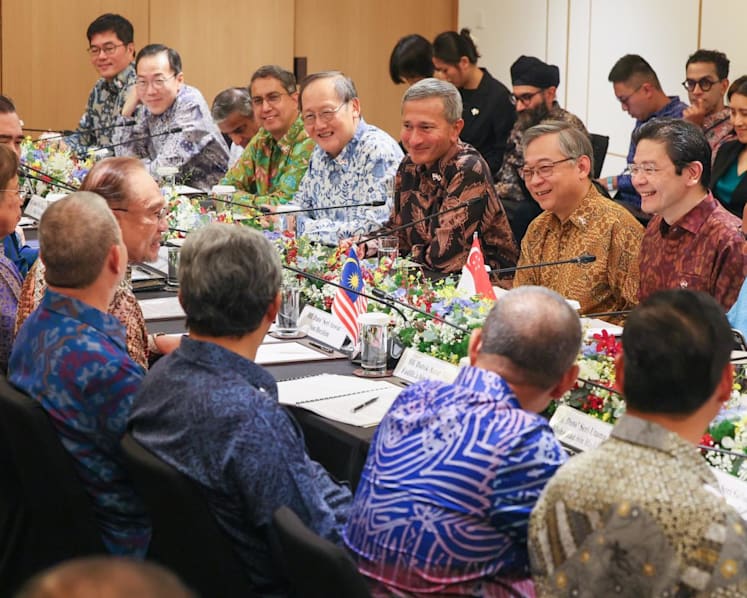
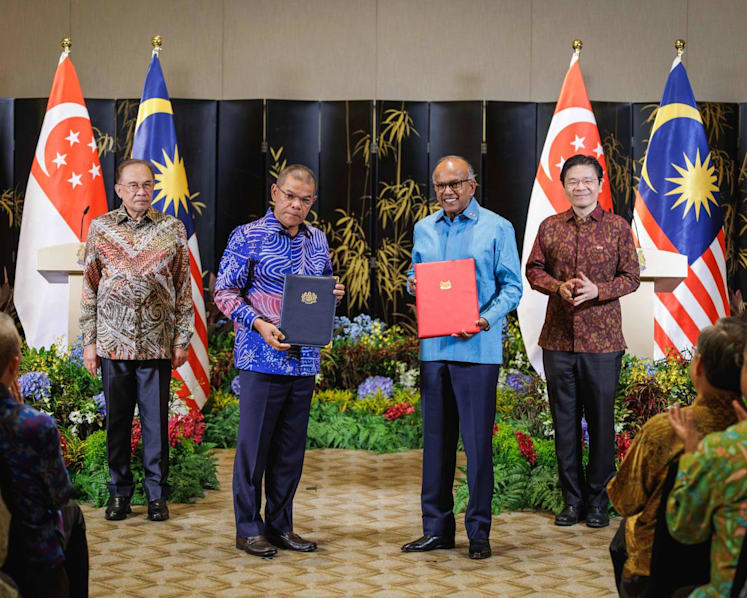
At the retreat, both countries exchanged two memorandums of understanding on health cooperation and combating the drug trade, and signed an agreement on the Johor-Singapore Rapid Transit System Link (RTS).
Malaysia also formally agreed to Singapore's proposal to open consulates in Sabah and Sarawak, which Mr Wong said he was "very happy" about.
Mr Wong then noted that “longstanding issues” remain between the two sides, including airspace, water, and maritime delimitation.
With growing air traffic in the region, Singapore and Malaysia need to work on arrangements on how to manage the current and future needs of both sides to ensure that the airports can operate safely and efficiently.
The discussion was fruitful, he said. Both countries recognised that airspace management is not about sovereignty and have committed to a joint study to optimise air traffic management services.
Mr Anwar said the parameters are quite clear, and the arrangements should not frustrate "free movements".
"If we accept that principle, I think we ... can move ahead with more certainty," he said in his opening remarks.
There is also a shared interest in increasing the yield and safeguarding the water quality of the Johor River, said Mr Wong.
As for maritime boundary delimitation, officials have gained a better understanding of each other’s position through several rounds of discussions, but more time is needed to resolve the issue.
Mr Anwar said in his opening remarks that the maritime boundary is a "more complex" issue, but that progress can be made if there is a clear commitment to resolve it.
"We must work towards an amicable resolution, even if it is not in full, at least progress in part," he said.
“All of these outstanding bilateral issues are complex issues. There are differences in views, and they are not easy to resolve,” said Mr Wong in his opening speech. “But as good neighbours, we will continue engaging in good faith.”
Officials from both sides will continue discussions, and Singapore looks forward to working with Malaysia to achieve positive and durable outcomes that benefit the two countries, he said.
“I am glad to find in (PM Anwar) a partner who is equally committed to ensuring that our ties continue to flourish for many more years to come,” said Mr Wong.
“I look forward to working closely together ... to further strengthen our partnership and uplift the citizens of both our countries.”
Mr Anwar said during his opening speech that other regional and trade issues were discussed extensively.
"Generally, we are on the same page, and I am of course, extremely delighted to be here and be able to discuss very candidly, frankly with Prime Minister Lawrence."
PROGRESS IN ECONOMIC COOPERATION, ENERGY
Mr Wong also highlighted ways in which Singapore and Malaysia have strengthened ties, including "very good progress" on the Johor-Singapore Special Economic Zone (SEZ).
He noted that Singapore-based companies have committed over S$5.5 billion (US$4.2 billion) in investments into the SEZ since January 2024.
"We welcome the ratification of the SEZ Agreement, and there is tremendous potential for this to grow further. We have only just begun," he said. "The potential is much greater going forward, especially with improved transport connectivity."
Mr Anwar said the SEZ is a "spectacular example and success" that could only happen because of the trust between both countries.
"I don't think this should be ignored or underestimated. This is ... unprecedented, and we have seen the initial results, which is startling," he said, adding that there has been a "phenomenal increase" in investments in Johor.
The energy partnership between Singapore and Malaysia has also had good momentum, with Singapore's Energy Market Authority awarding conditional approval for a proposal to import low-carbon electricity from Sarawak.
Mr Wong also said there are plans to expand the capacity for cross-border electricity trade through a second electricity interconnector.
"These projects will bring us closer to a low-carbon future, create more opportunities, and support the development of the ASEAN Power Grid," he said.
RTS A MAJOR "GAME CHANGER"
On transport matters, the supplementary RTS Link agreement inked during the retreat will help facilitate preparations for co-located immigration facilities, among other things.
Officials are also discussing reciprocal improvements to the cross-border taxi scheme to provide more convenient options to commuters, said Mr Wong, adding that both sides have introduced initiatives such as QR customs clearance and automated lanes to reduce congestion.
In response to a question from the media on long-term border infrastructure planning between both sides, Mr Wong said that the RTS will be a "tremendous asset" and a "major game changer" in facilitating the very high volume of traffic on both sides of the Causeway.
On Thursday, a Supplementary Agreement to the RTS Link Bilateral Agreement was signed and exchanged between Singapore's Acting Minister for Transport Jeffrey Siow and his Malaysian counterpart Anthony Loke, in the lead-up to the eventual operationalisation of the RTS Link.
Mr Wong also addressed the issue of cross-border taxis between both sides, noting that demand for such services have been going up.
"The increase has been so significant that the taxi companies have not been able to meet that demand, and you've ended up with illegal services coming up to meet those demands, and I think that's something we can resolve," he said in response to a question.
He said that the transport ministries of both countries have been discussing to enhance the legal cross-border taxi services, so that commuters on both sides can have more options.
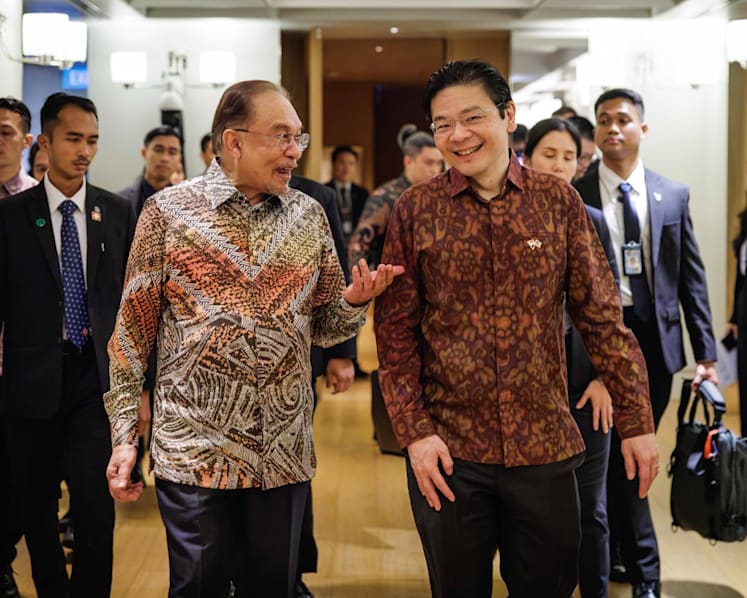
Mr Wong said in response to a question that cross-border taxi services are an area where there is a lot of common ground and that "this is not one of those outstanding bilateral issues that will take years and years to resolve".
"The officials and ministers have been making good progress on that discussion, and I'm sure they will be able to provide some updates soon," said Mr Wong, adding that bus services is another area that officials are discussing about.
Mr Wong added that Singapore is "making a major upgrade to the Woodlands Checkpoint", which will help to facilitate the flow of commuters across both sides of the causeway.
Responding to a journalist's question, Mr Anwar also emphasised a need to improve the infrastructure in Johor, calling it a "hinterland".
"We understand the requirements for Woodlands (Checkpoint) and the CIQ, and we're just working with the last piece of the arrangements so that Singapore can proceed fast. It would benefit Singapore and, of course, Malaysia too," he said.
He added that the issue of dispersal of travellers is a major issue in Johor too, and "we have to probably accelerate that process" in addressing it.




