







Little India riot: TTSH doctors draw lessons from handling of the injured
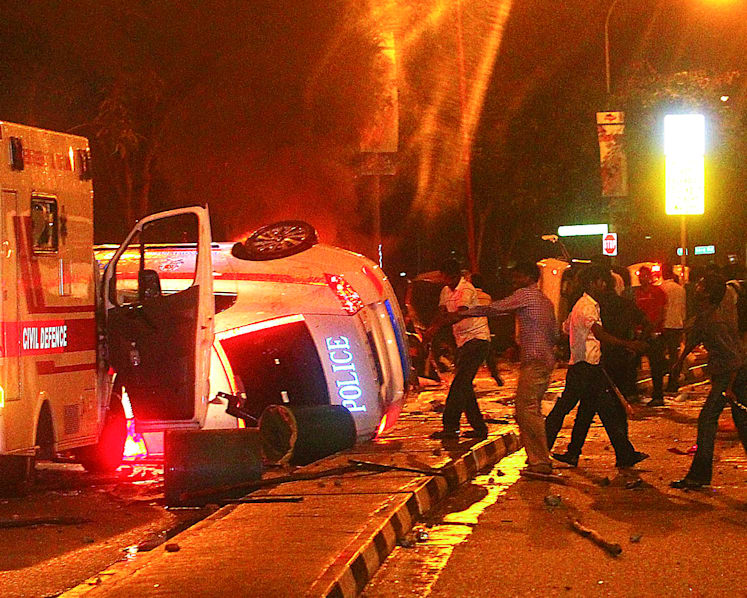
TODAY file photo.


SINGAPORE — More than two years after the Little India riot, a group of doctors from Tan Tock Seng Hospital’s (TTSH) emergency department have published a paper reviewing the hospital’s experience with casualties and lessons gleaned.
Looking beyond the factors leading to the riot and how law enforcers responded — which were covered by a Committee of Inquiry — the doctors flagged the need to pay heed to the safety and security of hospital staff when they deal with such mass casualty events, as they gave a glimpse into the injuries the hospital treated.
Another important lesson was that critical information may not come from official channels in mass-casualty incidents.
TTSH emergency department’s experience was chronicled by five of its doctors including Dr Lee Wei Feng, as well as Dr Ng Yih Yng of the Singapore Civil Defence Force (SCDF) in this month’s edition of the Singapore Medical Journal.





The main casualties of the Little India riot seen by TTSH were police and SCDF officers, and all but one of the 36 cases seen were outpatients.
Half of the 36 cases treated at TTSH arrived within two hours of the riot, which occurred on the night of Dec 8, 2013. Twenty-eight of the 36 patients were from the police or SCDF; the remaining eight were civilians.
The bulk of injuries were to the head and limbs, and most of the injuries were mild and consisted of scrapes and bruises. Doctors treated one patient for smoke inhalation and another had a fractured right middle finger. Only one patient was admitted for a head injury, and was discharged shortly after.
The doctors noted that firsthand information on the riot came “informally” from paramedics who brought casualties to TTSH, rather than the authorities, and said monitoring mainstream news channels and social media networks could provide early warning signs of a mass-casualty incident.
Although information from platforms such as Twitter and YouTube may not be trustworthy, emergency physicians should be open to such information so that they can anticipate the nature of cases and plan their responses, the doctors said.
The doctors also revealed that TTSH did not activate its mass-casualty incident plan, which would have entailed the deployment of more staff to beef up manpower in the emergency department. This was because the injuries from the riot were relatively mild, and the hospital had been able to cope with increased volume of patients from episodes such as stomach flu outbreaks and bus or truck accidents in the past.
However, the hospital did not have a security screening system that could detect weapons on riot casualties, the authors said. The first two casualties who arrived were “fully armed security personnel who appeared emotionally traumatised”, and staff from the nearest police post were activated to disarm them. “This is an important issue to consider, especially during preparation to receive casualties, as the safety of the staff and general public is of utmost importance,” they said.
The mental well-being of emergency department staff was largely unaffected by riot casualties, as the team had managed incidents of a similar scale and had coped well with the emotional stress, the authors reported.
The Little India riot involved a crowd of about 400 people and was Singapore’s worst public order disturbance in over 40 years. It began with Indian construction worker Sakthivel Kumaravelu fatally trapped under a bus, and escalated into a riot because of an alcohol-fuelled crowd, the mistaken perception that responders were trying to protect the bus driver and timekeeper instead of attending to the victim, and the crowd’s desire for “street justice” that is prevalent in their cultures. The rioters pelted personnel and emergency vehicles with cans, bottles and pieces of concrete drain covers, and set fire to the vehicles.
Twenty-five people were charged in court, 57 were repatriated and 213 warned and given advisories. The Committee of Inquiry, led by retired judge G Pannir Selvam, conducted open hearings and submitted its report to then-Home Affairs Minister Teo Chee Hean in June last year.
Recommendations included improvement of the police’s communications, command and control capabilities, and an increase of police manpower resources. It also recommended more services and amenities for foreign workers outside of the usual areas where they congregate.




