







Look Ahead 2021: Covid-19 — Are we approaching the light at the end of the tunnel?
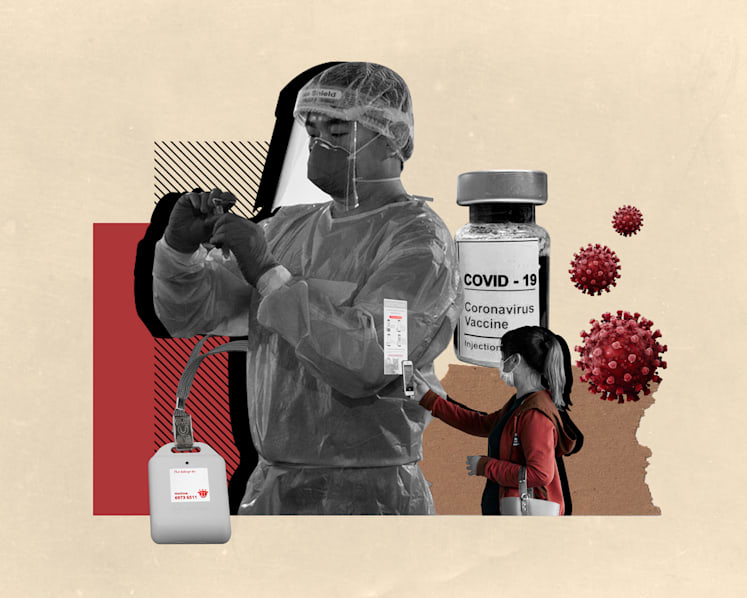
There is yet to be a clear sign whether 2021 will be the year that Covid-19 is beaten.


As the world steps tentatively into 2021, TODAY takes a look at what could lie ahead in four areas: The economy, jobs, property and Covid-19 developments. In the first of this series, TODAY Correspondent Ng Jun Sen speaks to experts about where the pandemic is headed from here.
- 2021 starts with Covid-19 at the top of people’s minds, with still no clear end in sight for the global pandemic
- Vaccines offer glimmer of hope, but there are challenges surrounding supply and distribution
- Experts said that continued public education is needed to encourage Singapore's adult population to vaccinate themselves
- New curveballs, such as the appearance of the B117 strain, means Singapore cannot be overconfident
- With vaccination programmes expected to be slow, more options are needed in treatments and therapeutics
SINGAPORE — More than 83 million people around the world have been infected by the coronavirus and 1.8 million people are dead. It is a grim toll that has come to define the annus horribilis of 2020.





And in less than a month, on Jan 23, Singapore will also have endured a full year battling the deadly coronavirus since the first Covid-19 case was detected here. The virus has killed 29 people and infected more than 58,000 to date.
With exponentially rising infection statistics and a growing number of lockdowns, there was a time in the past year when asking questions about how long the pandemic would last yielded no definitive answer.
But as the new year beckoned, a glimmer of hope surfaced. Scientists, working around the globe and at breakneck speed, have succeeded in developing vaccines and treatments for Covid-19. The first batch of approved vaccines arrived in Singapore on Dec 21, and the first vaccinations were administered nine days later.
“Now that vaccines are becoming available, we can see light at the end of the tunnel,” Prime Minister Lee Hsien Loong said in a televised address on Dec 14.
A number of challenges still lie ahead, including the manufacturing and distribution of the vaccines, and educating the public about them. There is also still the likelihood of further viral mutations and a resurgence of cases, which is already happening worldwide.
Globally, the task of getting the vaccine into the hands of the poorest nations will be a herculean one, but also a necessary feat in order to call a complete victory over Covid-19.
While there is yet to be a clear sign whether 2021 will be the year that Covid-19 is beaten, here is a closer look at how the battle against the infectious disease might look like in the year ahead.
THE INCOMPLETE SCIENCE BEHIND THE VACCINES
The mumps vaccine had held the previous record for the shortest time taken for vaccine development, at around four years.
With Covid-19, there are more than 200 vaccine candidates under development, and around 50 of the most promising ones entered clinical trials in under a year.
Currently, a number of frontrunners have received emergency-use authorisation from various regulators — Pfizer-BioNTech’s and Moderna’s vaccines have been approved for use by the United States’ Food and Drug Administration.
Dr Shawn Vasoo, the clinical director of the National Centre for Infectious Diseases (NCID) here, said: “It is really remarkable how fast Covid-19 vaccines were developed.”
Different factors contributed to this, he explained.
“One was that we had multiple groups with deep expertise. And using different vaccine technologies, they dedicated themselves to working on this with governments and non-governmental organisations incentivising these efforts.”
The advent of new vaccine technologies, too, aided their quick development.
The mRNA-type of vaccine, deployed by both Pfizer-BioNTech and Moderna, requires only that medical researchers know the genetic sequence of the Sars-CoV-2 virus that causes Covid-19, bypassing the need to “grow” the virus in cells as is traditionally done in other vaccine types.
Singapore’s health authorities have approved the Pfizer-BioNTech vaccine for pandemic use. It is also looking at vaccines by American biotech firm Moderna and Sinovac from China.
So far, those that have completed trials claimed impressive efficacy rates of above 90 per cent — that is, how likely the vaccine is able to reduce the disease in vaccinated persons relative to those who are not vaccinated.
What the trials have not shown are:
The duration of this protection
The effectiveness against continued viral transmission
Safety among certain high-risk groups such as children aged under 16 and pregnant persons
How well vaccines benefit those who had previously been infected with Covid-19
People with certain allergies may also not be suited to certain types of vaccines — there have been a very small number of reported cases of severe allergic reactions by vaccine recipients.
In the US, where around two million doses of vaccines have been administered, there have been at least eight reported cases of adverse reactions that are being investigated, according to media reports.
All this means that there is still much work to be done to gather more data on multiple vaccines, with continued monitoring a necessity.
Dr Vasoo said: “For vaccines, it is possible that not every vaccine may be safe and suitable for everyone, due to allergies to vaccine components, for example. It is good to have options.”
VACCINE DISTRIBUTION NIGHTMARE
At least two-thirds of the population will need to be inoculated in order for herd immunity against the coronavirus to be achieved, and this is only in the most ideal of conditions, several experts told TODAY previously.
But even achieving this minimum target will be a challenge on multiple fronts. There will likely be supply shortages for most of 2021, not just of the vaccine but also the syringes, medical glass and the manpower needed to administer doses.
For example, the US alone manufactures more than 600 million medical syringes each year. It needs to more than double that, by another 850 million, in order to deliver Covid-19 vaccines en masse, its government has said.
Getting it right will mean surmounting logistical challenges that demand ultra-cold-chain vaccine deliveries. Pfizer-BioNTech’s double shots of the vaccine will require storage of under -70°C, though other types of protein-based or inactivated virus vaccines may need just a commercial refrigerator.
And while science has already done a fair bit to see off the virus, the next test is a societal one: How to get people vaccinated.
In Singapore, the concept of adult vaccination is relatively new, unlike mandatory child immunisation. To encourage adult vaccination, in 2017, the Ministry of Health established the National Adult Immunisation Schedule to subsidise and encourage the take-up of various types of vaccines.
Child immunisation rates have been high at above 95 per cent coverage for the past five years — based on a parliamentary answer earlier in 2020 — but the rates for adults have not kept up.
The National Population Health Survey 2016/2017 found that the vaccination coverage for some vaccines are low — 14 per cent for influenza vaccination and 12 per cent for pneumococcal vaccination for those aged between 65 and 74.
The target for the National Adult Immunisation Schedule is to hit at least 50 per cent coverage by 2025.
Still, experts such as Professor Ooi Eng Eong of the Duke-NUS Medical School do not see this as a handicap for Singapore’s Covid-19 strategy. The lack of a successful adult immunisation programme “simply means that we have not had to mass vaccinate to control a disease pandemic in the past”, he told TODAY.
He added: “Just as Singapore was able to organise itself to control the wave of Covid-19 cases earlier in 2020, I am confident that we have the ability and the discipline to roll out vaccines to all who ask of it, rapidly and smoothly.”
As the science behind the vaccines becomes clearer over time, vaccine hesitancy may also fall. What will still be needed are public outreach and education efforts to convince those on the fence to be vaccinated, other experts said.
Infectious disease physician Ling Li Min from Rophi Clinic said: “What needs to be done? Plenty of roadshows, a lot of education to convince people. Maybe even consider using mobile vaccinations vans to bring vaccinations closer to people.”
AVOIDING OVERCONFIDENCE
As a strategy, however, vaccinations and herd immunity are a faraway hope that will matter little in the nearer term.
Dr Piers Ingram, co-founder of biotech firm Hummingbird Bioscience, told TODAY: “The emergence of promising vaccines is a great step forward — but there are a couple of reasons to avoid overconfidence.
“Ensuring sufficient people get immunised will take time even in the best scenarios, and we may never get there. Despite the efficacy of polio vaccines for more than 60 years, we’ve still not managed to eradicate polio, or indeed measles and other infectious viral-mediated diseases that we have seen spring back incredibly quickly once vaccination numbers drop below almost-full coverage.”
In the meantime, the next few months will be difficult. Around the world, countries are experiencing new waves of infections at a time when fatigue are seeping in over physical distancing measures and face mask mandates.
Awash with daily statistics on the dismal infection numbers, growing numbers of people are prioritising livelihoods and the economy over Covid-19, and are calling on their governments to open up the economy before the disease is under control.
There is also a high chance of further Covid-19 mutations or genetic recombination with other viruses, given its efficiency in infecting humans and other mammals, Dr Ingram warned. In Denmark, a mutated strain of the virus was discovered to have spread among the mink population in November, leading to a population-wide culling.
One of the most concerning recent developments is in the United Kingdom, where a different fast-spreading strain of the Sars-CoV-2 virus has emerged.
British prime minister Boris Johnson said that the new B117 strain is “up to 70 per cent more transmissible”, and is believed to be already spreading outside of the UK.
On Christmas Eve, Singapore confirmed its first case of the B117 strain — a 17-year-old who had been studying in the UK since August and had been serving a stay-home notice since her return. There is no evidence of the mutated virus circulating in Singapore for now.
While Britain tightened its regional travel measures, it did not institute a nationwide lockdown. The authorities slammed images of Britons “fleeing” locked-down regions hours before raised travel restrictions were implemented during the Christmas season.
It is not yet known what the implications are of this mutation to vaccine efficacy, but the initial take is concerning: All the mutations are located in the spike protein of the virus, which could affect how vaccines work.
Pfizer-BioNTech and Moderna have assured policymakers that their vaccines are effective against the B117 strain. Singapore’s Ministry of Health has started a formal study into the impact of the variant on available vaccines.
MORE OPTIONS NEEDED TO MANAGE RISKS
Dr Alfred Chua from Biovalence Technologies, a Singapore biotech company, said there is a risk that further mutations will negate the benefits produced by vaccines. This underscores the importance of other treatment options, he said.
Treatments, or therapeutics, serve a different purpose than vaccines. Therapeutics allow people suffering from Covid-19 to recover from the virus, while the vaccine prevents vaccinated persons from getting the disease in the first place.
“(In general), vaccines are good at preventing spread. Antiviral (treatments) are good for treating the masses, and antibody therapies are good to treat severe cases.
“Each has a role to play in the strategy of combating Covid-19,” Dr Chua said. His company produces the antiviral Retromad1 that has had early laboratory success in treating Covid-19.
Yet, more viable treatment options are still needed.
In October, the World Health Organization (WHO) released interim findings in its Solidarity trial and warned that current drugs used by hospitals to treat Covid-19, including those in Singapore, were useless against the disease.
The drugs noted to be ineffective by WHO are remdesivir, hydroxychloroquine, lopinavir or ritonavir, and interferon.
Dr Ingram, whose Singapore-based company is also looking to roll out an experimental antibody therapy against Covid-19, said that these are examples of drug repurposing — taking an existing drug that has been through trials for other diseases to see if they work for Covid-19.
“Moving beyond existing drugs to the development of new treatments requires a much more substantial effort both to generate the drug itself, but also to complete all the necessary preclinical safety testing and manufacturing activities to ready the drug for the clinic,” he said.
Dr Vasoo of NCID said that just like with vaccines, there is also a need for an arsenal of treatment options, seeing as different drugs may be appropriate for certain stages of illnesses, but not all.
He added that it is important to emphasise that Covid-19 is a new disease, and continuous research and clinical trials are ongoing to bring the best treatment options and strategies to patients.
“Treatment guidelines are living documents that require updates as and when new knowledge is made available,” Dr Vasoo said.
With Singapore in the third and final phase of its gradual reopening of the economy, the country is thus taking on new risks knowingly, on the basis that its existing measures have worked well for the country and will continue to do so.
As such, experts said that it is also critical to continue reinforcing this message of continued vigilance, they told TODAY.
One key plank is digital contact-tracing using the TraceTogether system— a method now emulated in many parts of the world. Around 78 per cent of Singapore’s population have adopted TraceTogether so far, crossing the waterline of 60 per cent adoption that international researchers have said is needed to beat the pandemic using contact-tracing tools.
The Singapore authorities had previously stated that TraceTogether had to be used by 70 per cent of the population before the country could enter the third phase of its economic reopening.
“Singapore’s current approaches on early case detection, close monitoring of disease progression and early intervention at the appropriate time points must be continuously emphasised,” Dr Vasoo said.




