







Lower drug prices at public hospitals unlikely to affect business: Private GPs
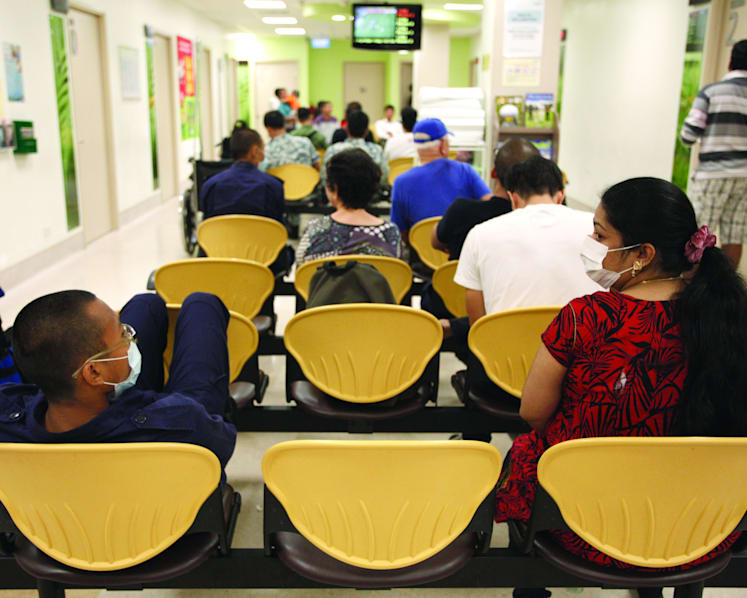
TODAY file photo
SINGAPORE — While some patients are likely to go to public healthcare institutions for cheaper drugs, after the Agency for Care Effectiveness (Ace) released the first set of “guidances” for 11 drugs, private medical practitioners told TODAY that they did not expect this to have a great impact on their business.
The Ace guidances, released on Wednesday, aim to provide public and medical professionals with more information on suitable treatments and the government subsidies available.
It will also lead to the capping of prices of selected drugs at public healthcare institutions, including hospitals, at rates deemed most cost-effective for the health benefits they offer.
Nine drugs will be subsidised for patients with conditions such as acute migraine attacks, metastatic breast cancer and rheumatoid arthritis.





Dr Jonathan Pang, of Everhealth Family Clinic and Surgery in Jurong, said the release of the guidances is unlikely to affect patient numbers in the private sector.
“All along, drugs are cheaper in public hospitals, and I don’t think (the price caps) will make that much of a difference, in the sense that there is always going to be a different kind of playing field, whether you are in the private or public sector.”
Dr Madeleine Chew, a general practitioner (GP) from MW Medical at Marina Bay Sands, noted that most of the time, the prices of the drugs in the private sector are “comparable” to the capped prices, “especially when we do bulk purchases”. Hence, “the capping doesn’t really affect us in the private practice”, she added.
Dr Chew also felt that those who can afford it will continue to visit private doctors “because of the personalised care”.
Echoing Dr Chew’s view was Dr Clarence Yeo from Killiney Family and Wellness Clinic in Somerset, who said: “Mine is a general practice, so based on the list of medications (in the guidances), we generally don’t prescribe many of those.”
“As for more complex diseases, the patients would mostly follow up at the hospitals,” he added, quoting breast cancer as an example where he would typically refer patients to hospitals.
Dr Tan Tze Lee, a GP at The Edinburgh Clinic in Choa Chu Kang, said the guidances will not impact the private sector because there are requirements that patients have to fulfil before they can buy the drugs at lower prices, making the switch from private to public sector “not as easy as it seems”.
“(Patients) can’t just easily, universally get the drugs and just transfer all the care from private sector to public sector, it doesn’t work like that,” he said. “There is a process (and) they need to check to make sure they qualify (for the subsidies).”
Family physician Kevin Chua of Drs Chua and Partners in Bukit Merah is one of those who expect a surge in the number of patients heading to public healthcare institutions to buy their medication. He plans to expand his clinic’s other services, such as “aesthetics services”, should there be a dip in patient numbers.




