







MHA to review definition of ‘animals’ in traffic law
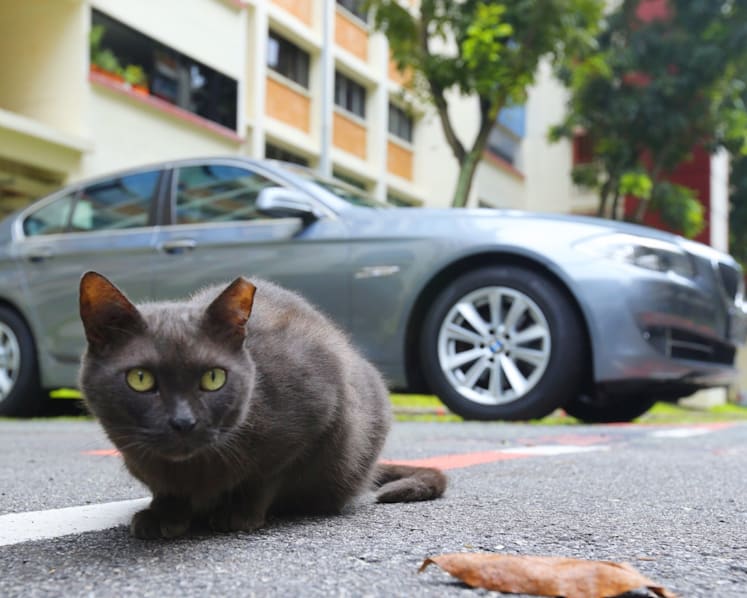
TODAY file photo


SINGAPORE — After previously rejecting calls to widen the definition of “animals” under the Road Traffic Act — to make it a crime for motorists who do not stop and help animals such as cats and monkeys after hitting them — Senior Minister of State for Home Affairs Desmond Lee said yesterday that the authorities would be reviewing the law.
He revealed this in response to a parliamentary question from Member of Parliament Louis Ng (Nee Soon GRC), who had asked whether the Ministry of Home Affairs (MHA) would consider bringing the definition of animals under the Road Traffic Act in line with that of the Animals and Birds Act, to ensure the alignment of legislation.
In response, Mr Lee said the definitions are scoped differently, and the primary intent of the Road Traffic Act is to “ensure the safety of road users, including motorists, cyclists and pedestrians”.
He added: “The specific provision in the Road Traffic Act relating to animals has been confined to farm animals of commercial value. The original intent of the legislation was to ensure restitution to their owners should an accident occur.”





Nonetheless, Mr Lee said the MHA “intends to review the definition of “animals” in the Road Traffic Act, and also consider any amendment in the context of road safety, especially the safety of the motorist and other road users.
Right now, it is an offence if a motorist knocks down a dog, horse, ass, mule, sheep, pig, goat or cattle, and he or she does not stop to help.
This is punishable with a S$3,000 fine or a jail term of up to a year. But the Road Traffic Act does not spell out what happens in cases involving other animals such as cats, monkeys, birds and rabbits.
Two years ago, the police rejected calls to penalise motorists who negligently run over any kind of animals, citing the concern that it was not always safe for a motorist to stop his or her vehicle after hitting an animal, such as on expressways.
In response to queries yesterday, the MHA said details would be announced when the review was complete. “It is premature at this juncture to comment on the animals that may be included,” a spokesperson said.
Animal welfare groups welcomed news of the review.
Action for Singapore Dogs president Ricky Yeo said it was time for such grey areas in statutes to be cleared up, and “finally have inroads into getting more defined boundaries for animal welfare”.
The group regularly receives calls about such cases, and “people get away scot-free”.
“People will be more aware and conscious of their actions and their liabilities and responsibility (if changes are implemented). It’s a good step moving forward,” he said.
Noting that safety remains a top priority, Mr Tan En, director of advocacy at Animal Concerns Research and Education Society (Acres), said that “motorists should render assistance … when it is reasonable and safe”.
“Acres has never been an organisation that puts animals first before human (safety),” he said.
“What the Government is going to include in this particular legislation is something we will work (on) closely with Louis (founder of Acres), who will work closely with MHA to see what we can do to increase the welfare of animals in Singapore.”
Dr Jaipal Singh Gill, acting executive director at the Society for the Prevention of Cruelty to Animals (SPCA), acknowledged that there would be challenges in enforcement even if the definition of animals was expanded, but it was “doable”.
“There are a lot of organisations like the SPCA that provide a lot of assistance to the authorities in cases like these ... by helping to gather evidence, speaking to witnesses and putting forward a case to the authorities.
“If we work together on cases like these, we will reduce the demand on the services of the (authorities),” he said.




