New mind sports federation to launch by March to prepare athletes, grow participation
The move comes after a Bill was passed in parliament earlier this month to formally recognise mind sports, alongside e-sports, as sports.
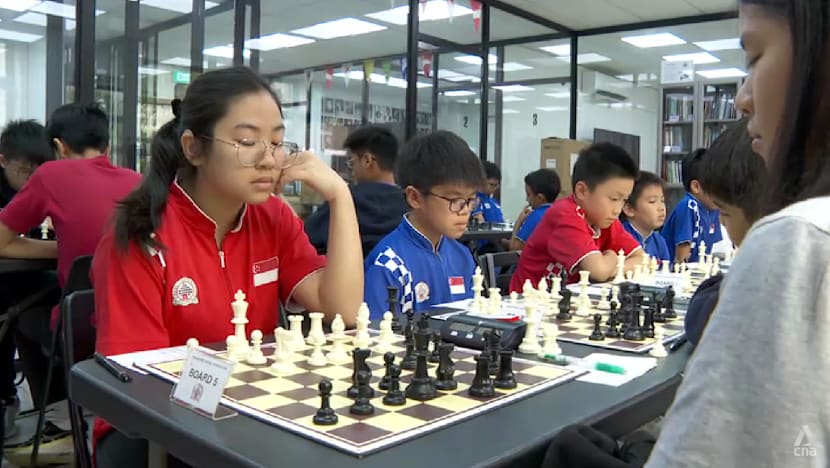
Recognition for mind sports has been a long-standing challenge, with some facing space constraints and others seeing participation decline.

This audio is generated by an AI tool.




SINGAPORE: A new federation for mind sports in Singapore will be launched by March to boost participation and help players qualify for major multi-sport events in the region.
It will coordinate efforts among the chess, contract bridge, weiqi and xiangqi associations to grow their respective games and support athletes.
The move comes after a Bill was passed in parliament earlier this month to formally recognise mind sports, alongside esports, as sports.
GAINING RECOGNITION
The Mind Sports Federation of Singapore aims to be affiliated with the Singapore National Olympic Council, and be recognised by the Asian Mind Sports Association.
“I think it's meant not really to govern the four associations, but more towards helping us to promote the game, to build awareness (and) to have more young children and parents understand the benefits of these games,” said chess grandmaster Kevin Goh, who is CEO of the Singapore Chess Federation.
“I definitely think this new entity with like-minded individuals will definitely help us in our projects.”
Recognition has long been a challenge for mind sports, with some facing space constraints and others seeing declining participation.
Goh told CNA last Sunday (Jan 18) that it has been difficult to find venues that can accommodate large-scale events.
These include the National Schools Individual Chess Championships, which is expected to set a new participation record this year, likely surpassing 1,800 students.
“We're running out of space and we always have to find a way to manage,” noted Goh, adding that demand for training venues is also high.
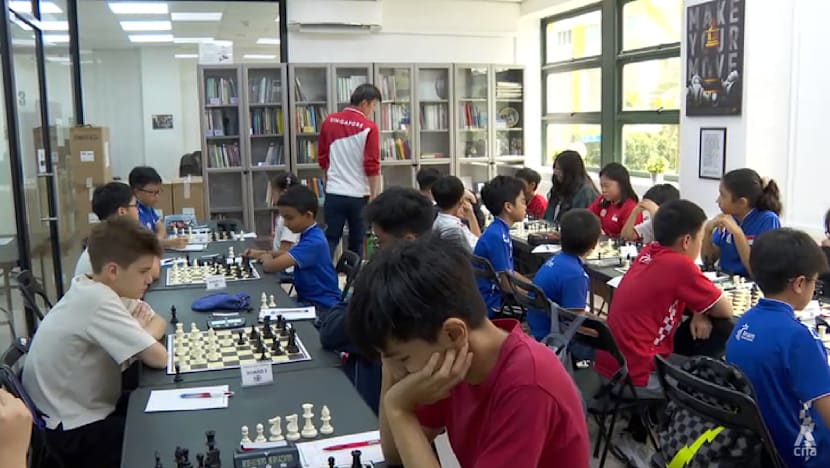
Weekend classes at the Singapore Intellectual Games Centre at Bishan Community Club, for instance, are often packed, with about 100 players attending each session.
“The easy part about chess is that we don't need special facilities,” said Goh.
“We need space, tables, chairs and chess sets. So that's not complicated, but the main thing is they have enough room for everybody.”
This comes as interest in chess in Singapore continues to grow, with participation rising by about 20 per cent year on year, according to the federation.
The game is especially popular – and increasingly competitive – among younger players.
The number of local chess tournaments has also surged, rising tenfold from about 30 in 2021 to around 300 over the past four years.
GROWING TALENT POOL, REGIONAL OPPORTUNITIES
Meanwhile, the Singapore Contract Bridge Association believes official recognition as a sport will help boost participation and improve its chances of further success on the global stage.
Despite winning medals at regional games, the sport has struggled to attract new players.
The number of active players has fallen from about 500 before the COVID-19 pandemic to around 300 currently, with the game’s complexity deterring some from taking it up.
Singapore Contract Bridge Association president Luwen Koh said official recognition would help establish bridge as a legitimate mass-participation sport.
He added that he believes its new status would also allow bridge clubs and organisations to better promote the game.
“Hopefully this will drive up the numbers and greater interest in playing the game,” he told CNA last Saturday.
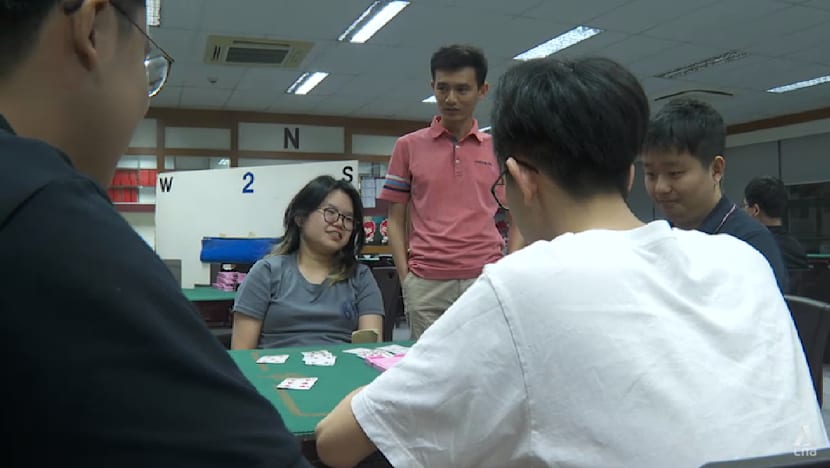
Opportunities for mind sports at major multi-sport events remain inconsistent and are often dependent on host countries’ preferences, said both Goh and Koh.
However, the associations are optimistic that formal recognition will improve their chances of inclusion, such as at the 2029 SEA Games, which will be hosted in Singapore.
The Singapore Weiqi Association said the move is a positive and encouraging step for the community.
With stronger backing, the sport hopes to secure more resources to attract and develop new talent, roll out outreach programmes and strengthen the national team.
The Singapore Xiangqi General Association said it understands the importance of promoting the game among young people.
It works with schools to provide coaching and organise student competitions, and hopes more schools will now adopt xiangqi as a co-curricular activity.