







Mindef pledges to stretch each defence dollar to the fullest
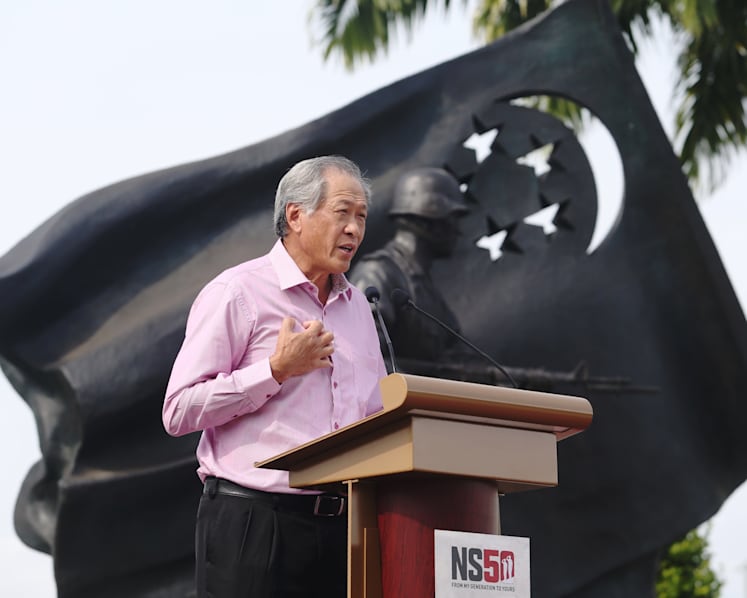
Defence Minister Ng Eng Hen speaking at an event for new enlistees at the Basic Military Training Centre (BMTC) in Pulau Tekong, on Feb 7, 2017. TODAY file photo


SINGAPORE — Even with new demands to improve the Republic’s military capabilities, the defence budget is expected to be maintained on the current trajectory of 3 to 4 per cent growth each year, allowing the Ministry of Defence (Mindef) to at least keep pace with inflation, said Defence Minister Ng Eng Hen on Friday (March 3).
Acknowledging the budgetary pressures of an ageing society coupled with slowing economic growth, Dr Ng said the ministry will re-prioritise programmes to meet challenges. But he stressed that it will not hesitate to push for higher spending if there are increasing new demands or if the security environment deteriorates.
Dr Ng was responding to Member of Parliament Low Yen Ling (Chua Chu Kang GRC), who asked during the debate on Mindef’s budget on Friday how the ministry would meet its needs with prudent defence spending, in light of the current fiscal climate.
Delivering the Budget statement last month, Finance Minister Heng Swee Keat had announced a 2 per cent cut in budget caps of all ministries and organs of state, stressing the need for the Government to continue to spend judiciously, as it seeks to boost coffers to fund growing needs in the long term.





Dr Ng said steady spending over past decades, with “no sharp dips, no sharp rises”, allowed the SAF to upgrade its assets while making new acquisitions to strengthen defence.
For instance, the Next Gen Armoured Fighting Vehicle will be rolled out in 2019, while the air force will upgrade its F-16s with new radars and weapons, and later this year, it will deploy the Aster 30 missile system to strengthen the country’s air defences.
Noting that Mindef is conscious that the Government invests substantially in the defence budget each year, Dr Ng also thanked Singaporeans for their strong support, adding that “we pledge to stretch each defence dollar to the fullest”.
He cited some examples of the military’s cost cutting measures which include how the implementation of the navy’s new Frigate’s Ship Management System has reduced maintenance time by 93 per cent and saved S$40 million in costs.
The army’s new Smart Magazine, which will replace blanks with simulated effects, will also save S$1.4 million each year.
“These measures, big and small reflect a culture of prudence, using innovation to cut costs without any loss of effectiveness for the SAF,” said Dr Ng.
The Ministry of Defence is expected to spend S$14.21 billion this financial year, a 2.7-per-cent rise from last year’s S$13.84 billion. Some major plans:
- Building the SAF Training Institute (Safti) City — the size of Bishan — south-west of Lim Chu Kang for training soldiers in an urban terrain. With features including more than 200 buildings, the facility is estimated to cost S$900 million and will be built over a decade.
- Setting up a Defence Cyber Organisation to defend Singapore’s defence networks against cyber attacks, with a new Cyber Defence Group to monitor the cyber defence of the SAF’s military networks.
- Cyber defence to be a new NS vocation, with selected soldiers to be deployed from August.
- New Analytics and Artificial Intelligence Lab by the Defence Science and Technology Agency to allow its engineers to tap emerging technologies such as data analytics and artificial intelligence. The DSO National Laboratories will also establish a Robotics Laboratory.




