







Mixed-stream classes in new year, as trial runs for new banding system in 28 secondary schools
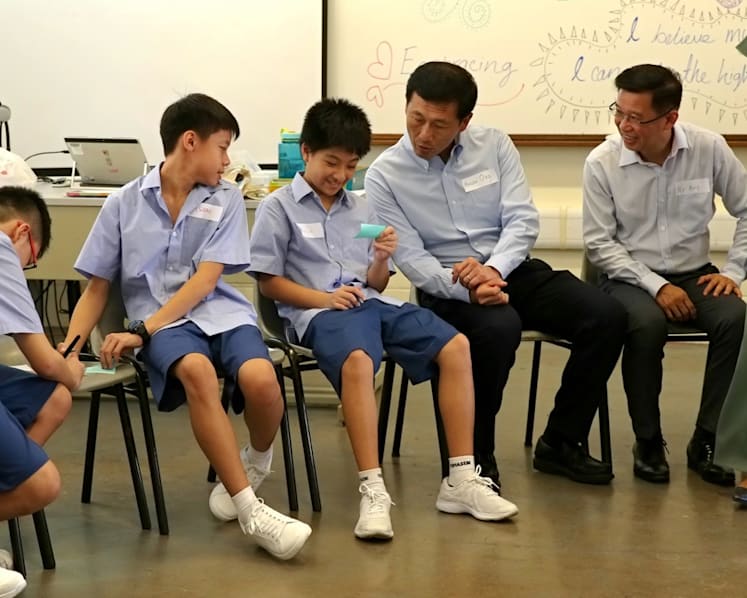
Ping Yi Secondary School's principal Ang Chee Seng (far right) and Education Minister Ong Ye Kung (second from right) sit in to observe a session of a Secondary 1 form class with students from different academic streams on Jan 2, 2020.
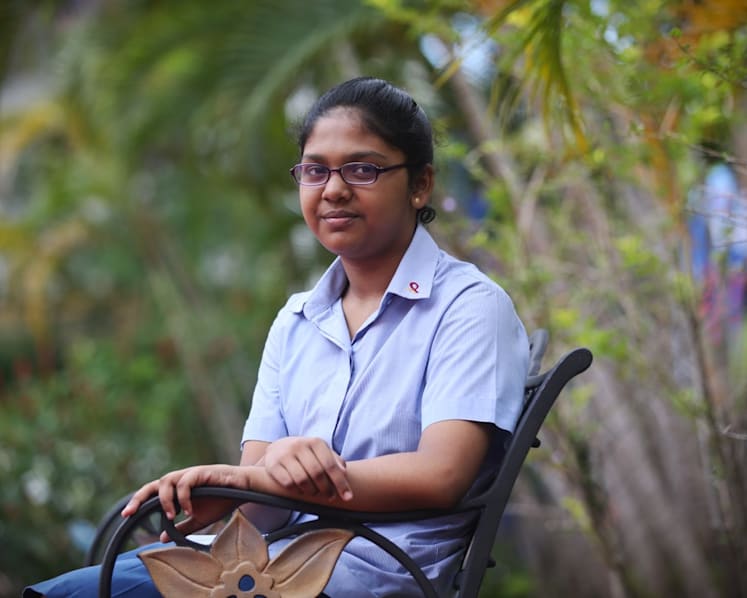
SINGAPORE — When Hajamaideen Asimathul Jafriya was given the choice of studying mathematics and science at a higher academic level in Secondary 1, she took it up even though she was concerned that she would not be able to cope with lessons in the Express stream.
The Ping Yi Secondary School student, who is from the Normal (Academic) stream, went in thinking that students in the Express stream were “very motivated and learn faster” than she did, but the 14-year-old benefited from being in their company.
“After school, I sit with them in the canteen and we do our homework together. This lets us clear any doubts we have together,” she said of her experience studying with students from different streams, as part of the new subject-based banding system that was piloted at her school last year.
Hajamaideen, who started the new school year in Secondary 2 on Thursday (Jan 2), will be taking geography at a higher academic level as well.





The roll-out of the subject-based banding system across 28 pilot schools will take place over the next two years.
Among other things, it allows Sec 2 students in the Normal (Academic) and Normal (Technical) streams to take humanities subjects such as geography, history and English literature at a more demanding level.
Before this, students may take only English, mathematics, science and a mother tongue at higher academic levels.
It will also see the 28 schools introducing mixed-stream classes at the Sec 1 level by 2021.
All other secondary schools will follow suit on these changes by 2024.
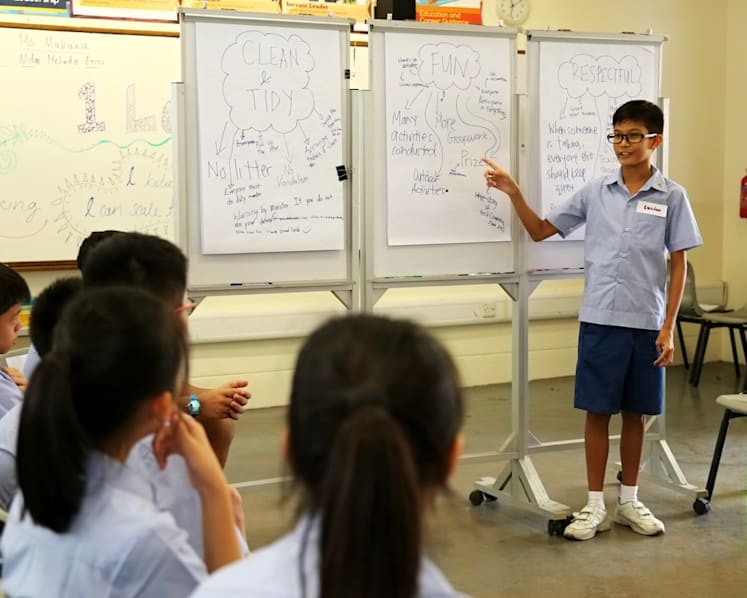
At Ping Yi Secondary School, the Sec 1 form classes comprising students from different streams take six subjects together: Music, art, design and technology, physical education, character and citizenship education, and food and nutrition.
Students take four subjects — English, mathematics, science and a mother tongue — at levels catered to their academic capabilities.
The school’s principal Ang Chee Seng also ensured that there is a good mix of gender and students of different financial backgrounds in each class.
During the trial run last year, Mr Ang said that teachers were surprised when they found students from the Normal (Academic) stream to be more vocal in joint classes with Express stream students.
Mr Ang said: “The Normal stream students were more active in terms of engagement. No matter what topics we were talking about (during character and citizenship education class), they were more ready to give suggestions.
“So that debunked our assumption that we need to be too worried about certain student segments.”
Mr Ang added that moving to mixed-stream classes will also reduce the chase for grades, with teachers focused on fostering the strengths of individual students through collaborative projects instead.
Speaking to reporters during a visit to Ping Yi Secondary School on Thursday, Education Minister Ong Ye Kung said that one benefit of this system is that students who are academically stronger will learn to lend a hand to those who are weaker.
“If you are a stronger student, you benefit from the fact that you interact with students from many more different backgrounds.
“I think you learn a very important value that if you are a stronger student, you can actually play a part and teach other students who may not be keeping up as well in their academic subjects and they, in turn, may have something to teach you in other things.”
The subject-based banding system also helps students to break out of the mindset that they are incapable of doing certain things, just because they are from a certain stream, Mr Ong said.
Calling the pilot a “big step forward” for the education system here, Mr Ong highlighted three issues that schools must get right when taking up subject-based banding.
The first is the scheduling of classes to cater to the different level of subjects taken by each student.
The second is ensuring that teachers can cater to different levels of learning abilities in each class.
The third is ensuring that teachers encourage and motivate students of differing levels of academic abilities.
HOW SUBJECT-BASED BANDING WORKS
The subject-based banding system allows students to take individual subjects at a higher or lower level, depending on their abilities.
In 2024, each subject will be categorised into three tiers — General 1 (G1), General 2 (G2), and General 3 (G3).
The G1 level corresponds to Normal (Technical) standard, G2 to Normal (Academic) standard, and G3 to Express.
Students who perform well in English, mathematics, science or mother tongue at the Primary School Leaving Examination (PSLE) may take these subjects at a more advanced level in Sec 1.
So, for instance, a student in Sec 1 could take English and mathematics at the G1 level, and science and mother tongue at the G2 level, depending on his PSLE grades for these subjects.




