







MAS raises inflation forecasts for 2026, continues to stand pat on monetary policy
The forecasts for core inflation and headline inflation have been raised to 1 to 2 per cent.
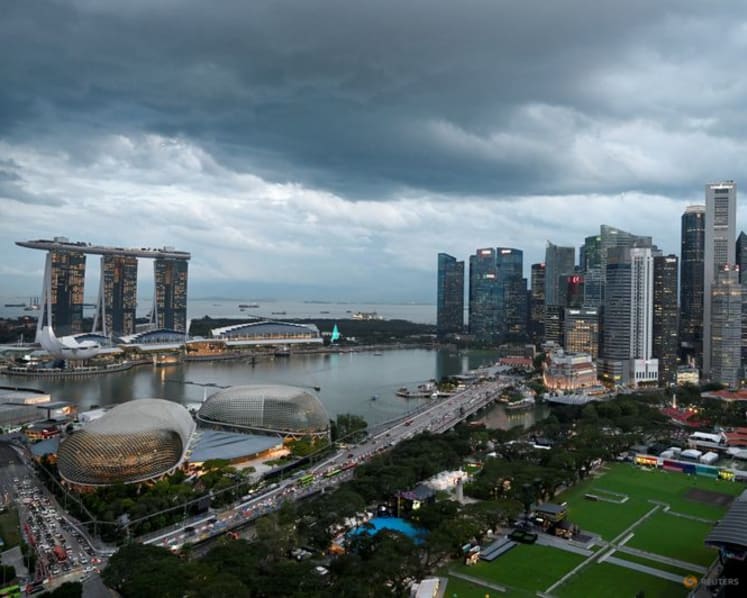
A view of the skyline in Singapore Sep 17, 2024. (File photo: Reuters/Caroline Chia)

This audio is generated by an AI tool.


SINGAPORE: The Monetary Authority of Singapore (MAS) raised inflation forecasts for 2026 and kept monetary policy unchanged for the third consecutive time on Thursday (Jan 29).
It now expects core inflation and headline inflation to be between 1 per cent and 2 per cent, up from the previous forecast of 0.5 per cent to 1.5 per cent.
Core inflation excludes accommodation and private road transport. The central bank said core inflation is expected to increase modestly as the unit labour costs for services rise, but that a tick up in services productivity would dampen the pace of cost increases.
Imported inflation is likely to be contained with global oil and food commodity prices projected to decline this year.





"The risks to the growth and inflation outlook are tilted to the upside at this point," said MAS.
Persistently stronger-than-expected economic growth could lead to higher wage growth and boost consumer sentiment, which could increase inflationary pressures.
Supply shocks, which could be triggered by geopolitical developments, could also increase imported costs.
On the other hand, if global financial markets see a sharp correction or there is a pullback in artificial intelligence-related investment, growth would ease faster, and inflation would be lower.
MAS said growth is expected to be resilient in 2026, and noted that underlying price pressures are returning closer to trend.
Hence, the central bank will maintain the prevailing rate of appreciation of the Singapore dollar nominal effective exchange rate (S$NEER) policy band.
The width and level at which the band is centred will also not be changed.
"MAS is in an appropriate position to respond effectively to any risk to medium-term price stability and will continue to closely monitor economic developments amid uncertainties in the external environment," it said.
The move was in line with expectations. Out of 16 analysts polled by Reuters, 15 expected the MAS to stand pat.
OCBC economist Selena Ling said the tone in the central bank's statement was "a tad more hawkish and less dovish, flagging upside risks to both growth and inflation".
Ms Ling and Maybank economist Chua Hak Bin both forecast MAS slightly steepening the appreciation bias at reviews later in the year.
"A slight steepening of the S$NEER should probably be interpreted as normalisation rather than tightening per se," said Ms Ling.
Mr Chua said: "We are more positive on the growth outlook and see simmering inflation pressures emerging."
Last year, MAS eased monetary policy in January and April, then kept it unchanged in July and October.
Standard Chartered Bank chief economist Edward Lee said the bank had expected a slight steepening of the S$NEER, to remove some of the pre-emptive easing in January and April, on the back of the expected change in inflation forecasts.
"Admittedly, uncertainties remain high which may have held back MAS this time around despite perceived signals," he said.
"We think it is likely that MAS now only moves in April as per our initial projection."
The central bank said global growth is expected to ease modestly as the lagged effects of higher tariffs weigh on final demand and trade, said MAS. But the extent of the moderation could be mitigated by supportive fiscal and monetary policies.
The global AI capital expenditure upcycle should also continue.
MAS noted that the Singapore economy grew 1.9 per cent on a quarter-on-quarter seasonally adjusted basis in the fourth quarter of 2025, stronger than expected due to the robust performance of the manufacturing and services segments.
Looking ahead, despite uncertainties, Singapore's trade-related sectors are likely to be supported by the AI cycle, and financial services should benefit from steady lending and capital market activity.
The central bank manages monetary policy by letting the Singapore dollar rise or fall against the currencies of its main trading partners within an undisclosed band. Other countries typically manage monetary policy through interest rates.
Singapore can change the slope, mid-point and width of the band to adjust policy.




