







More civic-mindedness needed among car-sharing users, say operators
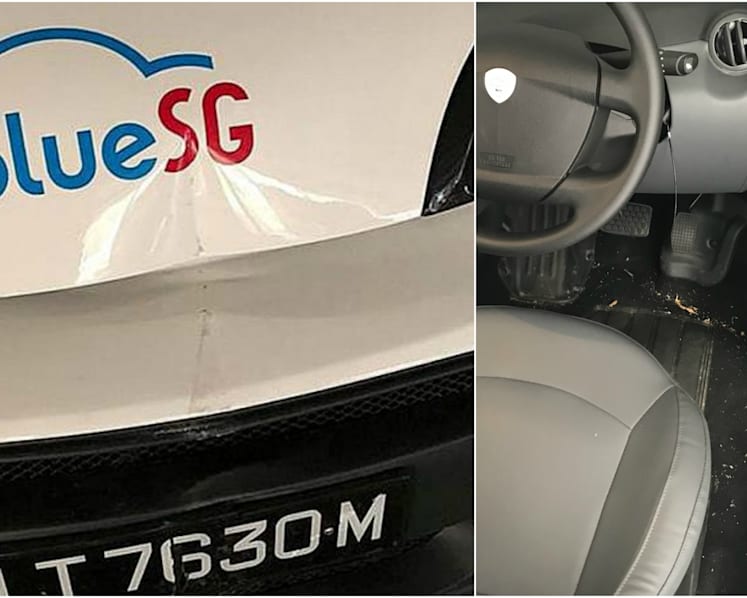
Images of damaged BlueSG cars have started appearing online and users have given feedback about the cleanliness level of the cars. Photos: Minghui Ming/SG Road Vigilante/Facebook and Today


SINGAPORE — Bumps and scratches to their fleet happen from time to time, but the real headache car-sharing operators face lies elsewhere: Inconsiderate users who walk off after soiling the interiors, even if they had thrown up or urinated.
Car-sharing services have been in the spotlight recently after pictures of damaged vehicles belonging to the newest entrant BlueSG surfaced on social media showing dents, a broken front licence plate and scratches.
A discussion ensued on the civic-mindedness of users here, and whether shared cars will suffer the same fate as shared bicycles, which have been dumped in remote locations or wrecked intentionally.
Car-sharing operators agreed that there remains much to be desired in how users treat their fleet, and worse, they acknowledge there is little they can do because it can be hard to track down those responsible.





Filming the inside of the vehicle infringes on privacy, they said, adding that maintaining cleanliness for every user is a near impossible task.
Smove’s chief operations officer Joseph Ting said: “Our car can be based anywhere … (and) will go through three or four customer bookings before our maintenance teams gets to check it. If we were to track every car and conduct checks after every use, the administrative costs would be astronomical.”
He estimates that about one in 10 of the bookings they get involve inconsiderate users who leave litter behind or dirty the interiors.
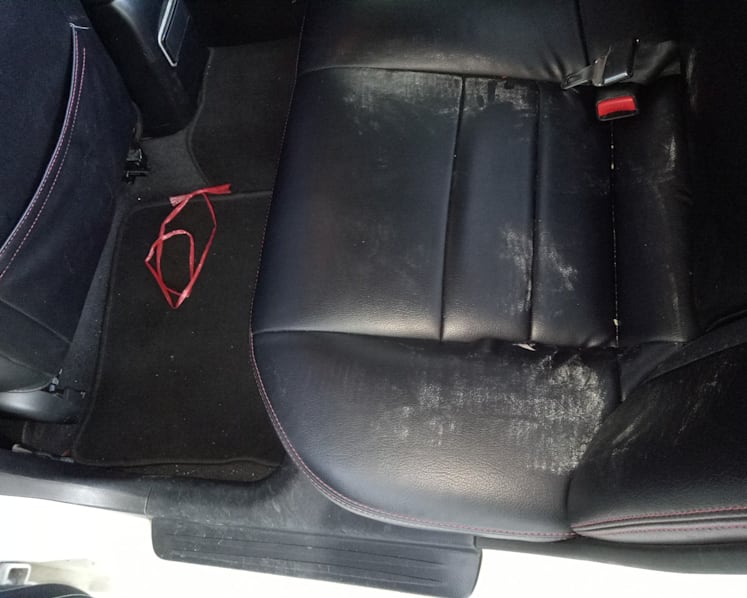
Car-sharing operators are grappling with inconsiderate users who soil the interiors of their rental cars. Photo: Tribecar
Smove has a fleet of over 400 vehicles and tasks five out of 16 maintenance crew with upkeeping cleanliness.
Tribecar had received a complaint that one of its vehicle had a strong smell of urine. They investigated and found that the previous user’s child had soiled the car.
Mr Philemon Toh, 24, who has used car-sharing services, said it is quite common to get cars that are “not in the best condition”.
The undergraduate added: “Missing stuff and dirty interiors are normal, it’s probably due to the mindset that the shared vehicle doesn’t belong to them, so there is no need to maintain the car.”
Operators TODAY spoke to said they absorb most of the cleaning cost, saying that it is “part and parcel” of running the business.
WhizzCar spends up to 10 per cent of their revenue on this, while Smove spends about 5 per cent of their revenue.
The situation is manageable because they are usually still able to claw back heftier cleaning fees.
Smove’s Mr Ting said if a user had spilled sauce or thrown up in the car, it would generally be able to track down the user responsible and levy the cleaning fees on them.
At least one operator, Car Club, has managed to curb the problem by doing extensive checks on users prior to approving their membership.
Its managing director Gary Ong said that issues of misuse, and even cleanliness of the car, make up less than 1 per cent of their cases.
“At the sign-up stage, we analyse customers’ behaviours, we do checks, and reject users who have had criminal driving records such as drink driving offences,” said Mr Ong.
“This process of analysis definitely contributes to the reduced rate of misuse. Nobody can put an exact finger on how much it has reduced incidents of misuse, but we observe that the trend of profiling customers have helped,” he added.
Smove’s Mr Ting said: “In a sharing community, the car is only as clean as how the previous customer left it. We still see a lot of customer who fail to see this point and is something that users can definitely be more aware about.”
Mr David Ng, a BlueSG user, said: “The interior of the cars are quite dirty, on both occasions where I have rented the cars, I have observed dead leaves, some dirt and soil left in the cars.”
The 34-year-old manager who works in the education sector said that so far, the level of cleanliness has not deterred him from using the services. “I figure that [the condition of the car] is due to frequent use, and I’m not too bothered by it, after all it is a shared service, it is bound to be dirtied,” he added.
But inconsiderate user behaviour is more than just a hygiene issue, or hurts their image, said operators.
Founder of Tribecar Adrian Lee cited instances of users returning vehicles with empty gas tanks, causing the next hirer severe inconvenience.
“Shared-cars are not as pervasive as shared-bicycles. Operators like us don’t usually have thousands of vehicles in our fleet. A user might be able to find a replacement for a faulty bike within five minutes, but there might not be an immediate car replacement,” said Mr Lee.
“Also, it’s easy to tell if a bicycle is damaged, but if a car tyre is punctured, for example, an inexperienced driver may not notice it and will go ahead and use it, and it might get him or her into an accident, as a result,” he added.
Operators said damage to their fleet from minor bumps and swipes pose a minor problem, in comparison.
Smove said it sees less than 5 per cent of such cases, for instance.
A spokesperson for BlueSG declined to specify how many such cases it has handled, only saying damaged cars only make up a “handful”, with those requiring repairs forming a “fraction”.
She added that “it is expected that there will be few incidents as it can happen with any personal cars”.
Mr Ho Kok Kee, managing director of car-sharing company WhizzCar, said cases of serious damage to his fleet of 150 cars are few and far between, estimated to be about 2 to 3 per cent.
In any case, the user responsible is usually made to pay up for repairs for serious cases, such as damage to the entire front bumper, he added.
“So far, most have been co-operative,” said Mr Ho. “It helps that sometimes the in-car camera captures footage of how the dent or damage came about, so that they are not able to deny or refute the claims.”




