







MPs want more time to study new Bills before debates
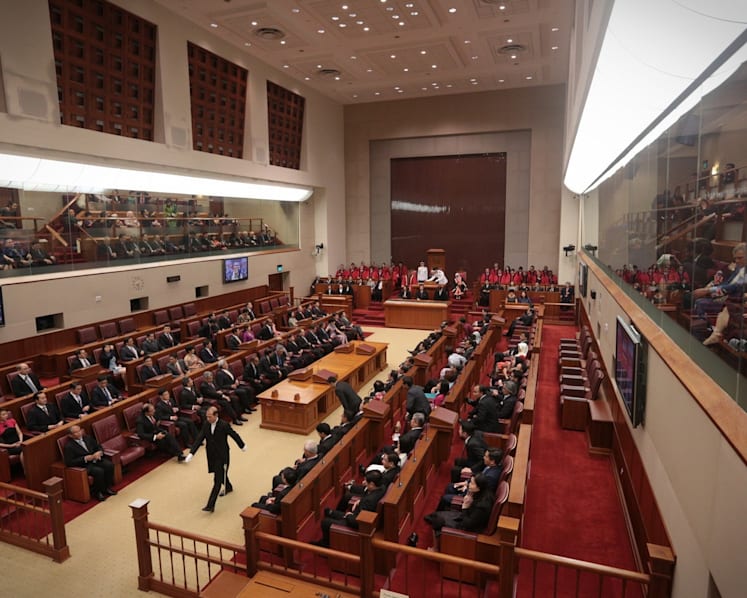
TODAY file photo




SINGAPORE — With a large number of Bills being introduced at a single Parliament sitting — as many as eight were tabled when lawmakers convened in October last year for instance — Members of Parliament have asked for the minimum interval between the introduction of a legislation and the ensuing debate in the Second Reading to be raised from seven to 10 “clear days”.
Among other recommendations to improve parliamentary procedures, they also proposed doubling the notice period given to the MPs for amendments from two to four clear days.
“This will give Parliament more time to consider Bills and amendments,” a committee tasked to do a periodic review of the Parliament’s Standing Orders said in their report which was released yesterday.
The proposals will be debated in Parliament next month. Other suggestions include allowing political office-holders to circulate a written statement in the House to “correct any factual error they make in a Parliamentary speech”, with the permission of the Speaker of Parliament.





The 10-member Standing Orders Committee include Parliament Speaker Halimah Yacob, Government Whip Chan Chun Sing, Leader of the House Grace Fu, Tampines GRC MP Desmond Choo, Tanjong Pagar GRC MP Joan Pereira and Hougang MP Png Eng Huat.
Between 2013 and last year, the number of Bills being introduced in Parliament have hovered between 27 and 43 each year. A similar number of Bills were passed annually during the same period.
MPs whom TODAY spoke to noted that by and large, they have sufficient time — typically a month or so — to prepare for Parliamentary debates on Bills after these are first tabled. But there have been occasions where they were pressed for time.
Non-Constituency MP Dennis Tan noted that he had raised the issue of insufficient time to prepare for the debate on the Companies (Amendment) Bill. The amendments were introduced on Feb 28, and following the Budget and Committee of Supply debates, scheduled for a Second Reading on March 10. This translated to eight weekdays for MPs to pore through the changes.
Pasir Ris-Punggol GRC MP Zainal Sapari felt that having more time would be “helpful” in allowing him to bounce ideas off grassroots leaders and seek residents’ views on various issues, especially when several Bills are being put up at the same Parliament sitting. Agreeing, Mr Choo reiterated that the additional days would allow for more scrutiny of the Bills and enable MPs to do more in-depth consultation with various stakeholders.
Still, Ms Pereira stressed the need to achieve a balance between providing adequate time for MPs to go through Bills, and maintaining “a certain level of efficiency” so that law-making remains responsive.
Not all suggestions from the MPs were taken up by the committee. For example, Nee Soon GRC MP Louis Ng and Nominated MP Kok Heng Leun suggested increasing the existing 1.5 hour-limit per sitting day allocated for parliamentary questions. The committee, however, noted that the Government had in the past extended the time limit to three hours on an ad hoc basis. Speaking to TODAY, Mr Ng reiterated that more time should be given to debate timely and important issues.
With question time enough to cover only the first 20 questions, the rest would be answered via written replies which deprive MPs the chance to ask further questions, he noted. “To get the best policies, we need (to be able to) debate the issues … That is the most important (aspect),” he added.
On the proposal to allow office-holders to rectify factual errors in their speeches, Deputy Speaker Charles Chong said that such mistakes must be “swiftly corrected and placed on public record”, instead of leaving it to the next sitting.
“I don’t think it is intended to give office-holders a free pass to misspeak and get away with it. (There) has to be a public acknowledgement and correction of any error made during a speech,” he said.
The committee also laid out the procedures that Parliament should follow to override the President. The procedures, which detail the changes to the Elected Presidency passed last year, will kick in if the President goes against the advice of the majority of the Council of Presidential Advisers and exercises his veto power.
The committee proposed that the President’s grounds and the CPA’s recommendation be submitted to Parliament at least two days before a motion is moved to overrule the President.




