







MRT maintenance ‘not sexy, but critical’
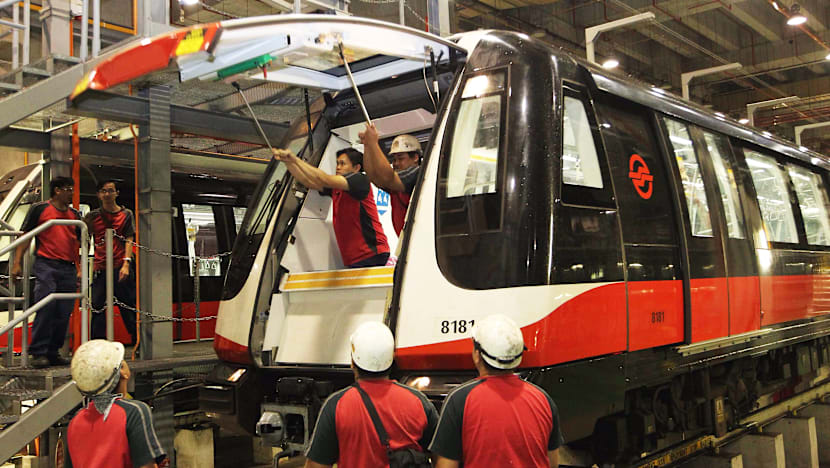
SMRT staff conducting regular tests on a train. Much preventive maintenance is carried out in the early morning hours after train services end. TODAY FILE PHOTO
SINGAPORE — MRT maintenance may not be “sexy”, but it is the most important work that keeps Singapore’s complex rail network humming, Transport Minister Khaw Boon Wan has said.
In a blog post today (Oct 25) titled Maintenance Isn’t Sexy, Mr Khaw said maintenance is something that no one appreciates until something goes wrong.
“Much preventive and corrective maintenance is carried out in the wee hours of the night, after train service ends. It is critical work because failure to spot and correct any tell-tale sign of equipment wear-and-tear can result in a major train service disruption,” he said.
Mr Khaw listed some of the tasks the maintenance team has to complete in the 3.5 hours between the end of train service and the beginning of the next day’s service.





These include checking all trains to be put in service the next morning — about 190 trains for the whole MRT network; inspecting the entire track system, tunnels and viaducts every four to seven days; and changing defective track components such as rails, power supply, electrical cables.
The team also has to conduct pre-planned servicing and testing of equipment that is taken out of service temporarily, as well as major equipment or system overhauls. These tasks are usually done in depot workshops or by system suppliers and manufacturers, Mr Khaw added.
“As our rail network grows, and we run more trains and trips, we need many more engineers and technical staff to get all this maintenance done properly. We are still short of skilled staff. We need to expand the manpower for the entire rail industry,” he said.
To help detect equipment wear-and-tear earlier, SMRT and SBS Transit will also install real-time monitoring systems on trains and at critical locations.
“This raises productivity and enhances our predictive maintenance regime, allowing for timely maintenance before something fails and an incident occurs,” Mr Khaw said. CHANNEL NEWSASIA




