







New drug shows promise for late-stage lung cancer patients
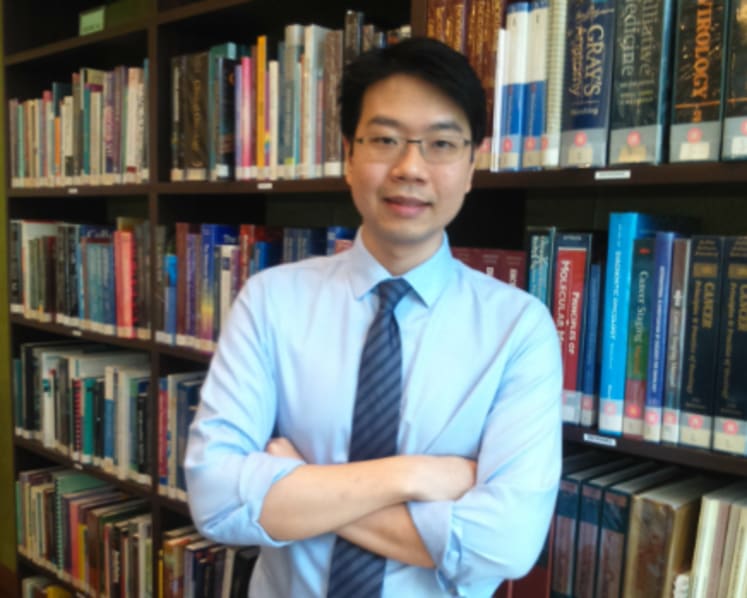
Dr Daniel Tan, consultant of the Department of Medical Oncology at the National Cancer Centre Singapore. He is lead investigator of one of the studies at NCCS. Photo: Lynette Tan


SINGAPORE — A new drug could offer hope to some late-stage lung cancer patients, after positive results in the early phase of clinical trials.
The drug, Ceritinib, stabilised the tumour growth of trial participants for an average of eight to 10 months after they had developed resistance to another drug called Crizotinib.
The early-phase clinical trials involved 246 patients at 20 centres in nine countries, including the National Cancer Centre Singapore (NCCS). The patients had a type of lung cancer called non-small cell lung cancer, caused by an abnormality in the anaplastic lymphoma kinase (ALK) gene.
Patients in the trials were initially administered with Crizotinib, which controlled tumour growth for six to 11 months. They were given Ceritinib after they became resistant to or intolerant of the first drug — previously the only available targeted treatment for patients with this type of late-stage lung cancer.





Lung cancer is among the most common cancers here, and non-small cell lung cancer accounts for 85 to 90 per cent of all cases.
About 8 per cent of non-small cell lung cancer cases are driven by a rearrangement of the ALK gene, which causes the kinase, a type of enzyme, to fuse with other enzymes to produce an abnormal protein that promotes the development and growth of certain tumours in cancers.
Like Crizotinib, Ceritinib blocks kinase activity but is 20 times more potent and binds more effectively.
The drug was approved by the Health Sciences Authority in April after only two phases of clinical trials instead of the usual three, as the results were very positive. Clinical trials began in 2011.
“We are expanding on that experience and conducting trials with multiple ALK inhibitors, as well as new drug combinations such as with immunotherapy,” said Dr Daniel Tan, who is from the NCCS’ Division of Medical Oncology and the lead investigator of one of the studies.
The cost of Ceritinib will be comparable to Crizotinib, said Dr Tan.
The son of a trial participant with stage-four lung cancer told TODAY that his 70-year-old father’s condition improved after taking Ceritinib in 2013.
“Last time (my father) was skinny, but now he has put on weight and he can exercise by himself ... He can also walk short distances,” said the son, who only wanted to be known as Mr Samsuri.
Although his father finds the drug hard to swallow due to its size, he has not complained of side effects, which include diarrhoea, nausea and vomiting.




