New method to spot high-risk hypertensive patients earlier
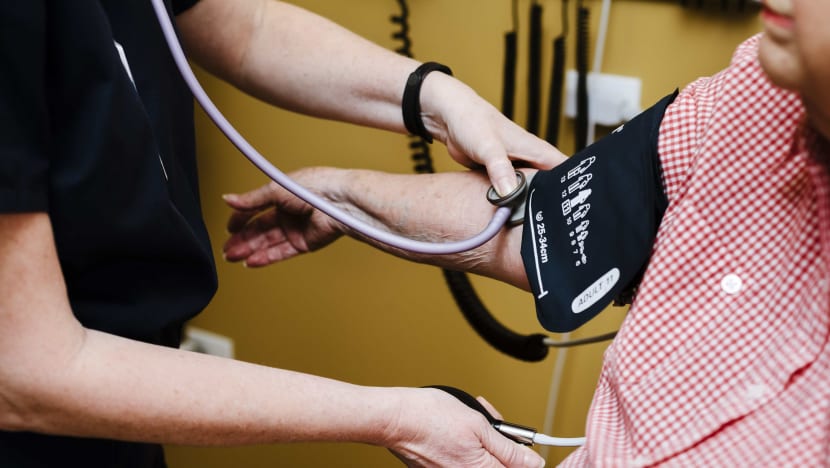
The New York Times file photo


SINGAPORE — Two patients may have the same blood pressure reading but be at different risk of developing heart failure or other cardiac complications.
To address the limitations of relying on blood pressure to assess the risk of patients with hypertension, researchers at the National Heart Centre Singapore (NHCS) have come up with a new index that looks at how much the heart muscle tissues expand or thicken.
This, they hope, will enable some high-risk patients to be spotted earlier and treated, averting a catastrophic episode such as a heart attack.
The thickening of heart muscles as a result of increased blood pressure – also known as hypertrophy – is a normal response up to a certain level, after which the heart’s function begins to deteriorate, said Dr Calvin Chin, an NHCS consultant leading the development of the Remodelling Index (RI).





The index seeks to uncover this “tipping point”, he said.
To have their scores for the index computed, patients must undergo a heart scan via magnetic resonance imaging.
Based on the research team’s hypothesis, males aged 30 to 39 with readings below 4.8 or above 8.8 on the index could be at high risk. Females in this age group with readings below 5.4 and or above 10.6 could be at high risk. These thresholds decrease with age.
A preliminary study of 256 patients with high blood pressure but who have not developed any cardiac complications showed that about a quarter of them (65 patients) experience hypertrophy. Of this group, 15 were assessed to have a low RI and one of them had a heart attack six months after his heart scan.
The patient, 46, who did not want to be named, said he had experienced occasional chest pains and fatigue four to five months before the heart attack but had brushed the symptoms off.
“Conventionally, cases like this are labelled ‘high risk’ only after the heart attack or complication happens. The RI could help us to test novel treatments that may help avert such episodes,” said Dr Chin.
“The index aims to better stratify patients with hypertension, to allow for more targeted management and closer follow-up of these patients.”
His team will be using personalised therapies, such as drugs to reduce cardiac fibrosis (stiffening of the heart muscle), on low-RI patients to test if their scores can be raised. The doctors will also monitor a wider sample of patients over a longer time period of three to five years to confirm the usefulness of the index.
There are many limitations in relying only on blood pressure to assess a hypertensive patient’s risk, said Dr Chin.
Blood pressure levels fluctuate throughout the day and may vary depending on one’s activities, mood and the person taking the measurement. Patients often have elevated blood pressure just from being nervous when doctors are taking their readings – a phenomenon commonly known as “white coat hypertension” in medical circles.
Such variations have been “significant enough to make a diagnostic difference”, said Dr Chin.
In addition, the United States issued new guidelines last year that lower the definition of hypertension to 130/80 millimetres of mercury (mmHg) – which meant close to half of adults there are now considered hypertensive. The number of men younger than 45 with such a diagnosis tripled while that for women younger than 45 doubled.
Singapore’s Health Ministry, however, said it would keep to the definition of blood pressure readings beyond 140/90mmHg.
Slightly less than one in four Singapore residents aged 30 to 69 have hypertension.
According to the US’ Centres for Disease Control and Prevention, the first number of a blood pressure reading, called systolic blood pressure, measures the pressure in blood vessels when one’s heart beats. The second number is called diastolic blood pressure and measures the pressure in blood vessels when the heart rests between beats.