







New rides will cost more as policy curbs set in next year
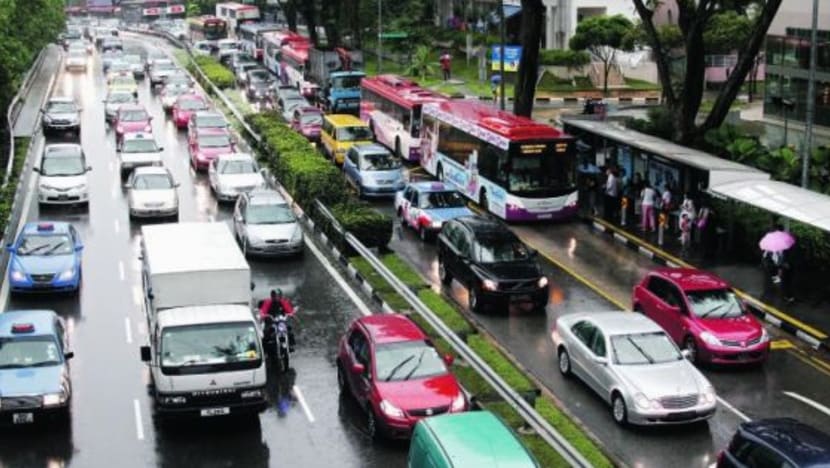
TODAY file photo.


SINGAPORE — The cost of owning a new car is set to rise in the next few years — but it may not be due to the latest move by the authorities to cut vehicle growth rate to zero.
Industry players pointed to other factors such as stricter emission standards that will raise taxes on most cars when they take effect in January.
The reduction of vehicle growth rate from 0.25 per cent to zero for cars and motorcycles from February next year would remove about 1,500 Certificates of Entitlement a year, and have minimal immediate impact on COE premiums, said motor traders.
But it may encourage car owners to renew COEs instead of scrapping their cars in the longer run, which would further crimp the supply of COEs.





Traders interviewed by TODAY said stricter exhaust emission standards — to account for four other pollutants beside carbon dioxide — will likely have a more significant impact in lifting car prices.
Car models which currently enjoy a rebate may now be slapped with surcharges, said Ricardo Cars director Jeremy Soh, who is also honorary secretary of the Singapore Vehicle Traders Association (SVTA).
Regardless of how COE premiums move, the new emission standards will make new cars more expensive, said Tan Chong Motor Sales’ general manager Ron Lim.
However, Yong Lee Seng Motor director Raymond Tang said he would not rule out a possible surge in COE premiums before the growth rate is reduced to zero.
“We could see some panic buying as people may rush in to bid before the curb sets in… We already see some of such behaviour now, in view of the higher emission standards next year,” Mr Tang said.
As car prices go up, more owners could opt to renew the COEs of their cars, instead of scrapping them and bidding for new COEs.
They may renew their existing certificates for a five or 10-year period by paying the prevailing quota premium, which is a three-month average of quota premiums for the respective vehicle category.
Mr Lim noted that one in four COEs that would have expired last year were renewed, more than double the proportion (10 per cent of less) from 2012 to 2015.
Halting vehicle growth could fuel this trend as consumers would want to refrain from competing for a tighter supply of COEs, said Mr Tang.
According to figures from the Land Transport Authority, about 93,100 cars will be due for deregistration next January. This pool will shrink 26.9 per cent to 68,100 in 2019, and be further reduced by about 44.8 per cent to 37,600 in 2020.
If the overall population of cars continues to shrink and more drivers choose to renew their COEs, premiums could go up by between 20 to 30 per cent in the long run, CarTimes Automobile managing director Eddie Loo said.
“The upcoming policies are an attempt to convey that cars are ‘luxury items’. It is not going to be cheap (to own one),” Mr Loo said.




