







NKF on solid ground, but needs more donors in a hurry: Analysts
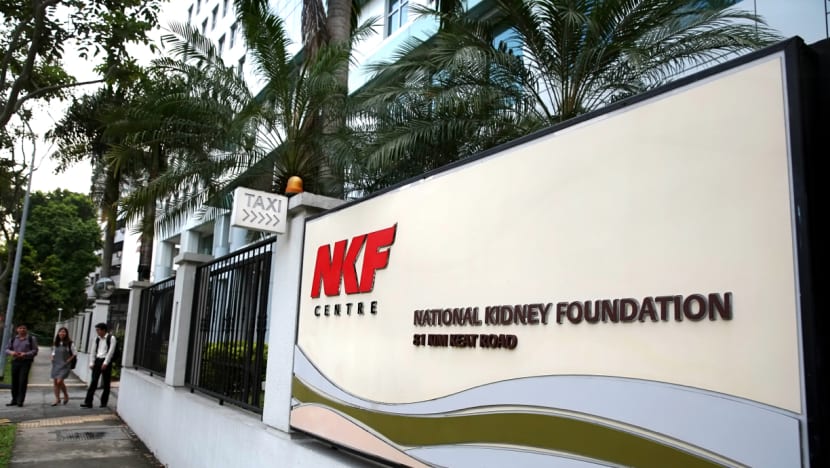
NKF headquarters at Kim Keat road. Photo: Nuria Ling

SINGAPORE — Eleven years after it was hit by a damaging scandal involving its then-CEO T T Durai, the National Kidney Foundation (NKF) has not only rebuilt its reputation but also seen its donations and grants rise to within touching distance of the levels witnessed during its heyday, despite a sharp drop in the number of donors.
However, its expenses are soaring — operating costs are projected to rise to S$200 million a year in 2020, double the amount last year — and as it weathers its latest storm from the sudden sacking of its chief executive officer Edmund Kwok, the foundation will have to find ways of raising more money.
Experts and charity sector players say that they do not expect the latest scandal to have a huge impact on fundraising for the NKF in the long term, but much will hinge on how quickly the foundation finds a new CEO and how well it minimises disruptions.
On Wednesday (Nov 16), the NKF said that it had fired Mr Kwok for a “personal indiscretion” involving a male staff member, and the matter is being investigated by the police.





NKF chairman Koh Poh Tiong, flagging the charity’s growing expenses, also revealed that the NKF now has 160,000 donors, compared with about 280,000 in 2005, before it was hit by revelations of Durai’s extravagance and mismanagement.
He appealed to the public to not let the behaviour of one man affect their support.
According to figures posted on its website, donations, grants and sponsorships for FY2015/16 added up to about S$61 million.
This is close to the S$62.3 million in donations and grants that the foundation collected in FY2005, before the impact of the Durai scandal was felt. It is also a leap from the S$26.6 million in donations and grants it collected in FY2006/07, when the foundation canned its televised fundraising show after the scandal.
Still, total expenses stood at S$96.7 million in FY2015/16, up 20 per cent from S$80.3 million in the previous year, and up 54.5 per cent from S$62.6 million in FY2005.
Singapore Management University’s Assistant Professor of Strategic Management Geng Xue Song pointed out that the biggest uncertainty stems from the suddenness of the dismissal, with Mr Kwok’s predecessor Eunice Tay having to step in quickly as interim CEO without the benefit of a proper handover.
“Usually, there would be some kind of transition period, where the CEO helps his successor get up to speed ... Although Ms Tay is the former CEO, things might have changed in the past few years, and Mr Kwok might be privy to certain information that he did not have the chance to pass on,” said Asst Prof Geng.
But organisations with good management would have a team in place instead of relying on one person, he added.
Mr Keh Eng Song, CEO of Movement for the Intellectually Disabled of Singapore, agreed: “At least Ms Tay is not picking it up from scratch. A lot of it also depends on the team already in place, if they have been very much involved, then business continuity should not be a problem.”
Professor Ho Yew Kee, of the Department of Accounting at National University of Singapore Business School, said: “The thing to watch out for is that there must not be any deterioration in the quality of service to the clients during this period. The interim management team has to keep NKF going, with business as usual particularly when it comes to the end of the year for fundraising over the Christmas period, and the end of the year for tax deduction donations.”
Prof Ho added that a search for a new CEO might be easier in the current economy, as “there may be some very highly qualified individuals looking for a meaningful job”.
Habitat for Humanity national director Yong Teck Meng commended the swift response of the NKF to Mr Kwok’s alleged actions.
“The fact that management reacted so fast, in trying to mitigate the impact and pre-empt the response from the public, is a good thing. This is because charities survive on that image that we are trustworthy,” he said.
Added Asst Prof Geng: “It has been very different from the Durai case. The response was quite swift, with very clear communication, and a clear message of continuity.”




