







Not frozen beef: Nearly 13 tonnes of pangolin scales worth S$52 million seized in Singapore
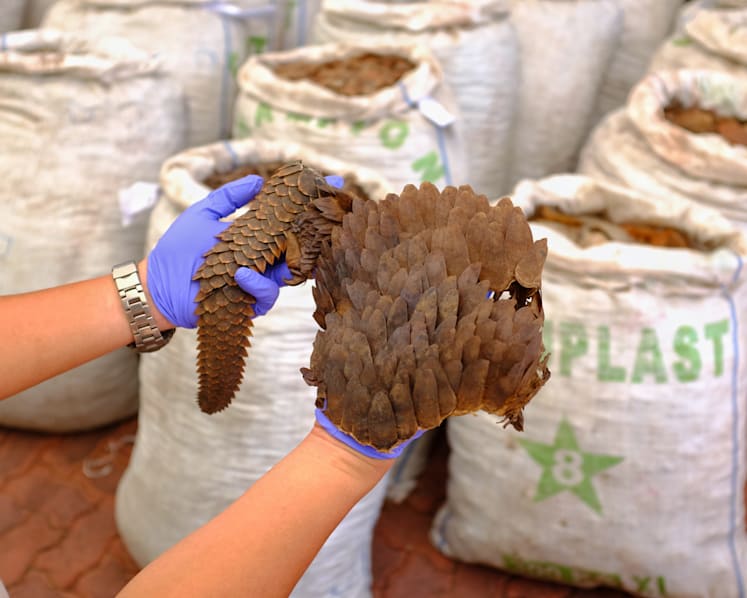
An estimated 17,000 pangolins from four African species were killed to produce 12.9 tonnes of pangolin scales that were seized by NParks and Singapore Customs on Wednesday (April 3).


SINGAPORE — Nearly 13 tonnes of pangolin scales, worth over S$52 million, were seized by the National Parks Board (NParks) and Singapore Customs on Wednesday (April 3).
This is the largest shipment of pangolin scales seized in a single haul globally in the past five years. The valuation of the seized wildlife parts was based on known market prices, said NParks.
In a joint operation at 2pm on Wednesday, authorities discovered 12.9 tonnes of pangolin scales packed in 230 bags, along with 177kg of cut-up and carved elephant ivory in the shipment.
Pangolins are endangered mammals with large, protective scales covering their skin. Its scales are believed to have healing properties in Chinese medicine.





Approximately 17,000 pangolins were killed for such a large volume of scales, estimated NParks.
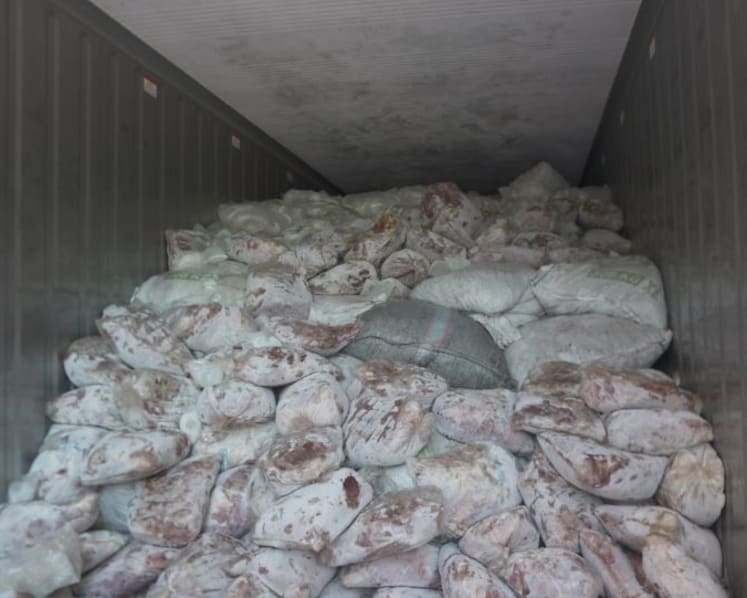
Elephants and pangolins are protected species under the Convention on International Trade in Endangered Species of Wild Flora and Fauna (CITES), which Singapore is a signatory to.
“We adopt a zero-tolerance stance on the use of Singapore as a conduit to smuggle endangered species and their parts,” said NParks’ wildlife management group director Adrian Loo.
HIDDEN BEHIND FROZEN BEEF
The illegal shipment was en route from Nigeria to Vietnam, and was declared to contain frozen beef, before being uncovered in an inspection by Singapore Customs and NParks.
Singapore Customs added that they received information about the shipment “from sources”.
The illegal wildlife parts were found to be hidden behind five tonnes of frozen beef in a 40-foot (12m) shipping container at the Pasir Panjang Export Inspection Station.
| Species | Weight |
Scales seized |
| White Bellied Tree Pangolin | Up to 1.5 kg | 3,438kg (60 bags) from approximately 11,460 pangolins |
| Black Bellied Tree Pangolin | Up to 2.7kg | 1,428.5kg (27 bags) from approximately 2,645 pangolins |
| Temminck’s Ground Pangolin | Up to 12kg | 5,234.5kg (97 bags) from approximately 2,181 pangolins |
| Giant Ground Pangolin | Up to 33kg | 2,812 kg (46 bags) from approximately 426 pangolins |
The past two seizures of pangolin scales in Singapore — in 2015 and 2016 respectively — amounted to 440kg in total.
The previous largest known seizure of pangolin scales was in China, where nearly 12 tonnes were seized in 2017.
Details on the possible perpetrators and enforcement action were not revealed, as investigations are still ongoing.
NParks said that the case will be reported to CITES and information will be forwarded to customs both locally and abroad to assist in investigations.
The pangolin scales will be destroyed in Singapore following the conclusion of the investigation.
Under the Endangered Species (Import and Export) Act, the maximum penalty for illegal import, export and re-export of wildlife is a fine of up to S$500,000 and/or two years’ imprisonment.
WHAT PANGOLIN SCALES ARE USED FOR
A common use for pangolin scales is in traditional Chinese medicine, where it is believed to be a cure for various medical conditions, said Dr Loo.
“The Pangolin scales are made of Keratin and that is the same material as your hair. So scientifically, there is no basis for its purported cure for illnesses,” he added.
Dr Loo said it was a “heartbreaking” sight to see the sheer number of animals killed for this illegal trade.
The seizure this week marked NParks’ first operation in wildlife trade since taking over Agri-Food & Veterinary Authority of Singapore (AVA)’s portfolio in wildlife management on Monday (April 1). The Singapore Food Agency was formed this month and the AVA was dissolved.
In addition to enforcement, NParks will look into increasing education efforts and raising awareness of illegal wildlife trade. Dr Loo cited platforms such as NParks’ annual Festival of Biodiversity, as well as plans to further educate students about the illegal wildlife trade in schools.
“People need to spread the message that this illegal wildlife trade cannot be tolerated, it is pointless and it is based on false (beliefs),” said Dr Loo.
“This will really help in this fight against illegal wildlife trade.”




