







NTU scientists uncover way to make antibiotics more effective
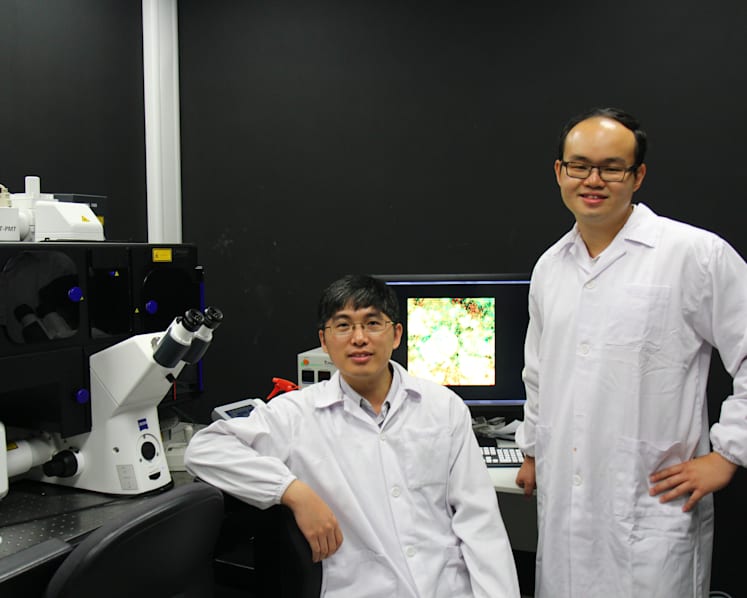
Assistant Professor Yang Liang (left) with Dr Chua Song Lin (right) at a lab in the Singapore Centre on Environmental Life Sciences Engineering (SCELSE), NTU. Photo: Clifford Lee/TODAY


SINGAPORE – Scientists at the Nanyang Technological University (NTU) have found a way to make antibiotics more effective, potentially paving the way for faster treatment of bacterial infections.
The scientists, from the Singapore Centre on Environmental Life Sciences Engineering (SCELSE), discovered the mechanism that increases bacteria’s immunity or tolerance to antibiotics and how to disrupt it.
According to Assistant Professor Yang Liang of the Singapore Centre on Environmental Life Sciences Engineering (SCELSE) at NTU, bacterial communities are protected by something called biofilms which reduces antibiotic penetration and which also helps the cells become tolerant to drugs.
The researchers found that within the biofilm formation, this came about because of cell-to-cell communications between the bacteria. What they did was to interfere with this communication using a drug known as erythromycin. Disrupting the cell-to-cell communication “eradicates the tolerance (of the bacteria) and (patients) are cured more efficiently by current antibiotics,” he said.
These findings were published in the academic journal Nature Communications in February.
While erythromycin is also an antibiotic, more tests will be done to find other chemicals that can disrupt cell-to-cell communication. Seaweed, garlic, horse radish, onions and ginger are some common foods that have chemicals with this property.




