New chemical, biological lab opened near Changi Airport to boost Singapore’s pandemic response
The facility would speed up the screening of air cargo and provide additional clinical testing capability in a pandemic.
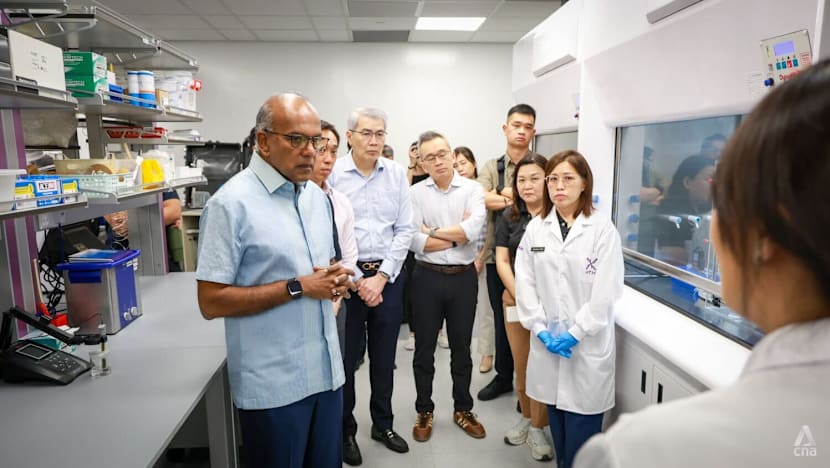
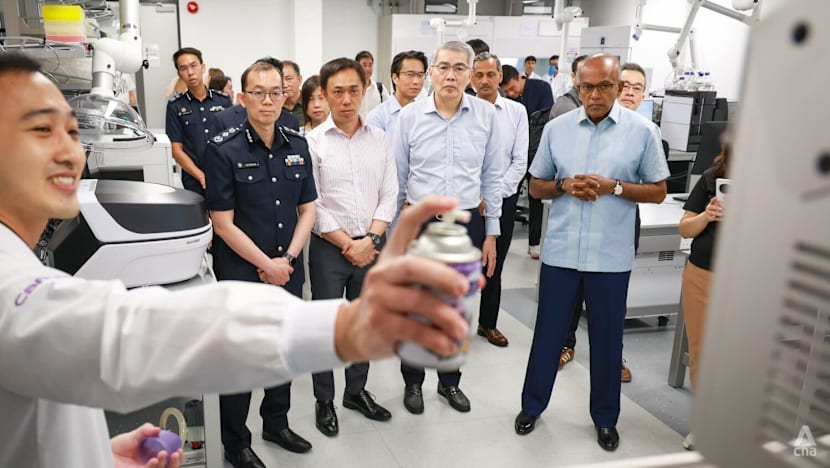
Coordinating Minister for National Security K Shanmugam touring the Chemical, Biological, Radiological, Nuclear and Explosives (CBRNE) lab in Changi Airfreight Centre on Jan 16, 2026. (Photo: CNA/Raj Nadarajan)

This audio is generated by an AI tool.


SINGAPORE: To better prepare Singapore for the next pandemic, a new Chemical, Biological, Radiological, Nuclear and Explosives (CBRNE) lab was launched near Changi Airport on Friday (Jan 16).
Located within the Changi Airfreight Centre, the CBRNE@Changi was designed based on lessons from the COVID-19 pandemic.
“People may wonder why? COVID-19 is over,” Coordinating Minister for National Security K Shanmugam told reporters after a tour of the facility.
“When the next pandemic strikes, you're not going to have time to prepare this. So with the lessons learnt, we have put in a state-of-the-art facility for testing for pandemics.”
PROXIMITY TO AIRPORT





Its proximity to Changi Airport significantly reduces response time for CBRNE screening of air cargo, according to the Home Team Science and Technology Agency (HTX).
“The world is changing before our eyes. We see it. The threats are evolving, and there are people around the world who want to do bad things,” said Mr Shanmugam.
The location of the new facility lets the Immigration and Checkpoints Authority’s (ICA) Air Cargo Command quickly pass cargo swab samples to HTX for on-site, real-time processing, leading to earlier detection and response to threats.
Such cargo swab samples from Changi previously had to be sent to HTX’s Woodlands Checkpoint Lab for testing instead.
“It's good to have a facility on-site near the airport. In the past, we used to send it to Pasir Panjang or Woodlands, takes time,” said Mr Shanmugam, who is also the home affairs minister.
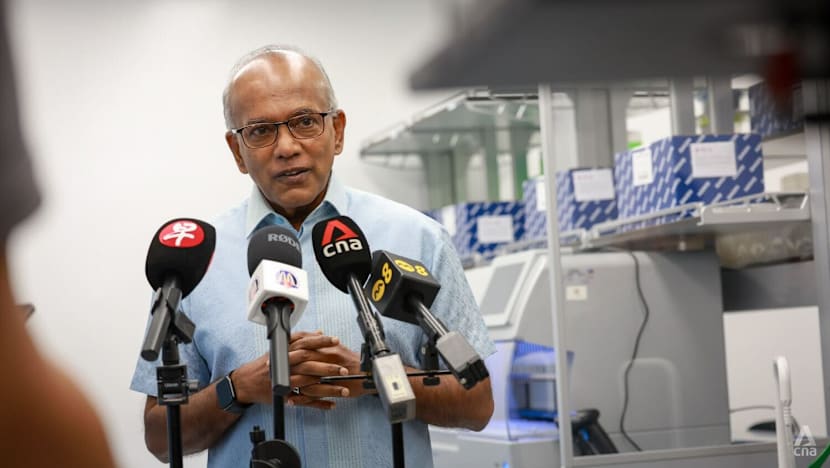
There is now a shorter turnaround time, and the process is safer and more digitised and automated, he added.
“It's part of the way the Home Team, the entire Ministry of Home Affairs, is transforming,” he said.
The Changi facility is the fourth such lab in Singapore, with the other three located in the northern, southern and western parts of Singapore.
It was established with the support of the ICA and Changi Airport Group.
The new facility strengthens border security, “as we can now achieve higher screening throughput with improved accuracy and respond more swiftly to potential threats”, said Senior Assistant Commissioner Siew Chui Lin, ICA’s air domain commander.
Airports offer a chance for early pathogen detection and rapid response, due to the high volume of people and goods passing through daily, according to HTX.
Having in-situ laboratory capabilities located near an airport would improve the efficiency of sample testing during a pandemic, which is crucial in preventing the spread of a pathogen.
LESSONS FROM COVID-19
During the COVID-19 pandemic, the CBRNE Centre of Expertise helped process samples at its Pasir Panjang lab. The design of the new Changi lab was based on takeaways from that period.
For instance, CBRNE@Changi was specially designed to let both CBRNE testing and regular clinical testing run concurrently and at a higher capacity during a pandemic.
During a pandemic, the CBRNE@Changi team will be among the first responders, forming the first line of support and processing samples until commercial labs can be mobilised to help.
“The problem that we were experiencing during COVID was we had to look after the border screening, as well as conduct human COVID swab testing, so these two processes are actually clashing,” said HTX CBRNE Centre of Expertise director May Ong.
Back then, the team had to give up CBRNE screening and proceed with the clinical testing of COVID-19 samples, she said.
“So this facility addresses this shortcoming, whereby actually two labs can now operate without being in conflict,” said Ms Ong, adding that the effort required careful infrastructural planning, design and coordination.
OUTSIDE OF A PANDEMIC
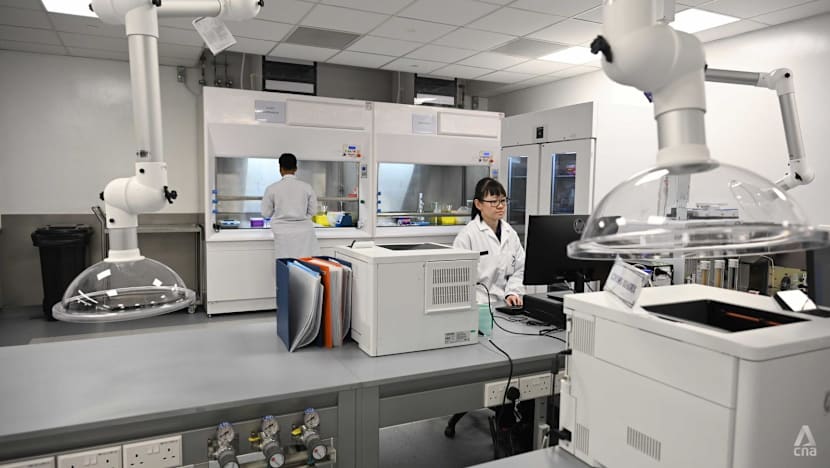
A key feature of the new facility is a designated CBRNE area, where scientists perform tasks in day-to-day operations, such as testing cargo swab samples from Changi Airport.
There is also a separate clinical workflow area to conduct research towards pandemic preparedness.
There is also a research lab, known as the FAST Lab, where scientists will conduct research and development on new capabilities to secure Singapore’s borders.
The area can be reconfigured to provide additional testing capacity during a pandemic, according to HTX.
Outside of a pandemic, the lab is used for research because “we can't build a lab to wait for a pandemic”, explained Ms Ong.
Ms Ong said the facility is in the process of applying for its licence under the Healthcare Services Act.
“If we do need to stand up for a pandemic, it will take us 48 to 72 hours to basically do a clean-up of the laboratory, ensure everything is sterile, before we start handling pandemic samples,” she said.
The layout of the whole place is designed to optimise the efficiency of testing operations during a pandemic.
For instance, the testing process in the clinical workflow area is completely digitised. The RFID system in place allows for 96 samples to be registered at one go, compared to previously, when scientists had to manually handle each sample, according to HTX.
In a pandemic scenario, the corridor between the areas designated for pandemic operations and the day-to-day operations spaces, can also be shut to prevent cross contamination.