







Parliament streamed live for the first time on Jan 4, garnering over 4,000 viewers
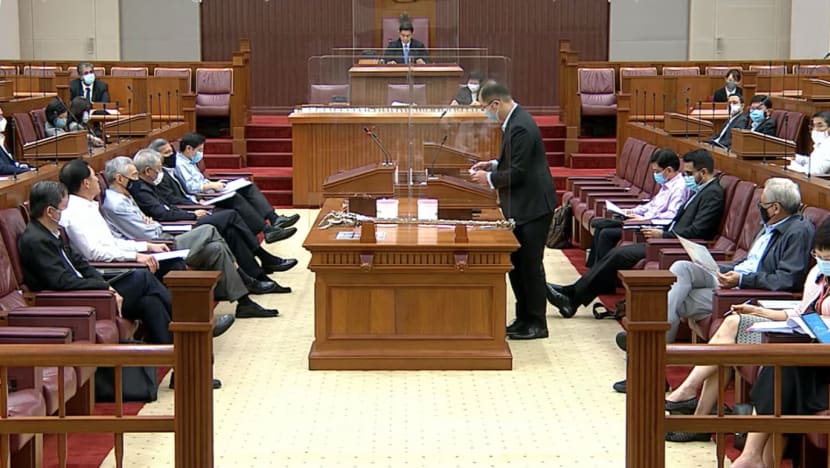
The first livestream of parliamentary proceedings took place on Jan 4, 2020. At its peak, over 4,000 viewers tuned in for the maiden broadcast


- The first livestream of parliamentary proceedings took place on Monday
- At its peak, over 4,000 viewers tuned in for the maiden broadcast
- Minister for Communications and Information S Iswaran said technological advancements have made the live feed possible
- Members of the public said they welcomed the move
SINGAPORE — For the first time, parliamentary proceedings were streamed live to the public on Monday (Jan 4) from the Ministry of Communications and Information’s (MCI) YouTube channel.
The move comes after repeated calls from Members of Parliament (MPs) and some members of the public for the Government to provide a live, publicly accessible feed of parliamentary sittings.





In response to these calls, Minister for Communications and Information S Iswaran said in September last year that preparations were underway to do so.
At about 2pm on Monday, half an hour after the Parliament session and livestream began, there were about 4,201 people tuning in to view the feed.
The first question to be dealt with during the sitting was from Ms Tin Pei Ling, MP for MacPherson, who asked for an update on how the Government planned to live-stream parliamentary debates. Workers' Party (WP) MP Leon Perera of Aljunied Group Representation Constituency (GRC) had also asked, in a question filed for a written answer, how the public could access the livestreams.
In his reply to the House, Mr Iswaran said there would be two livestreams accessible for public perusal — one with English interpretation of the speeches made in the vernacular languages and one without.
Each video stream would be available on MCI’s YouTube channel for six months, he added.
Members of the public can also continue to access parliamentary proceedings through other currently available means, such as in person from the strangers’ gallery, the written parliamentary records known as the Hansard, and video clips uploaded online onto the Government’s YouTube channel hours after each sitting.
“These arrangements already give us the full benefits of transparency, accountability and accessibility,” said Mr Iswaran.
He added that the Government agreed to the move “in view of the global and technological channels which have made online streaming more feasible and enabled legislators around the world to livestream their proceedings”.
Responding to Ms Tin’s question on whether the live feed of the proceedings will be implemented in a way that does not diminish the quality and tone of parliamentary debates, Mr Iswaran stressed that this responsibility lies with those participating in the proceedings.
“Ultimately, the responsibility rests with all members of this House, present and future, who must continue to uphold the highest standards of conduct and decorum as we engage in the cut and thrust of parliamentary debate,” he said.
Mr Louis Ng, MP for Nee Soon GRC, asked if sign language interpretation will be available for the livestream.
Responding to him, Mr Iswaran said that there are no plans to provide sign language interpretation at the moment.
However, the feed on YouTube will have auto-captioning available for the English interpretation stream.
WP MP He Ting Ru of Sengkang GRC also filed a question on the livestream for a written reply. She asked whether a full video archive of previous parliamentary proceedings will be made publicly available online.
In his written reply, Mr Iswaran said the Hansard remains the official record of all parliamentary proceedings and is available permanently online.
Video footage of the Parliament will also be archived online for six months on CNA’s website, he added.
PUBLIC VIEWS ON LIVE FEED
Members of the public TODAY spoke to welcomed the move to livestream the parliamentary debates.
Freelance performer and writer Isaac Tan, 30, who previously wrote a letter published in TODAY in support of the live broadcast of Parliament sittings, said: “It is a step in the right direction. This makes our Parliament more accessible and citizens can hold politicians accountable”.
He also hopes the move will be accompanied with greater outreach efforts to educate the public on parliamentary proceedings and how they can make their voices heard.
Agreeing, Mr Chirag Agarwal, who also joined the calls for the live feed, said the move was a great way to start the new year.
“I hope it gets more people interested in the important discussions and debates that take place in Parliament,” said the 33-year-old consultant.
Though he may not tune in to every session, student Chan Yu Siang, 24, who tuned into the livestream on Monday, said he was glad the livestream exists as he would want to tune in to debates on topics that are of interest to him, such as privacy and tech issues.
But former diplomat Bilahari Kausikan said he felt the livestream was “a mistake”.
“It will undoubtedly be hailed as a step in the direction of ‘transparency’. But the real effect will not be genuine transparency,” he wrote in a Facebook post on Monday, saying that he is concerned the move will encourage MPs to play to the gallery.
“In the long run, it will change the political dynamic in such a way as to incentivise a certain sort of personality to enter politics and not the kind who ought to be a political leader,” he added.




