Preschoolers learn to prep emergency kits in pilot to boost psychological resilience
Children at Sunflower Preschool @ Hillview were introduced to these skills under a new pilot programme as part of this year’s Total Defence exercise.
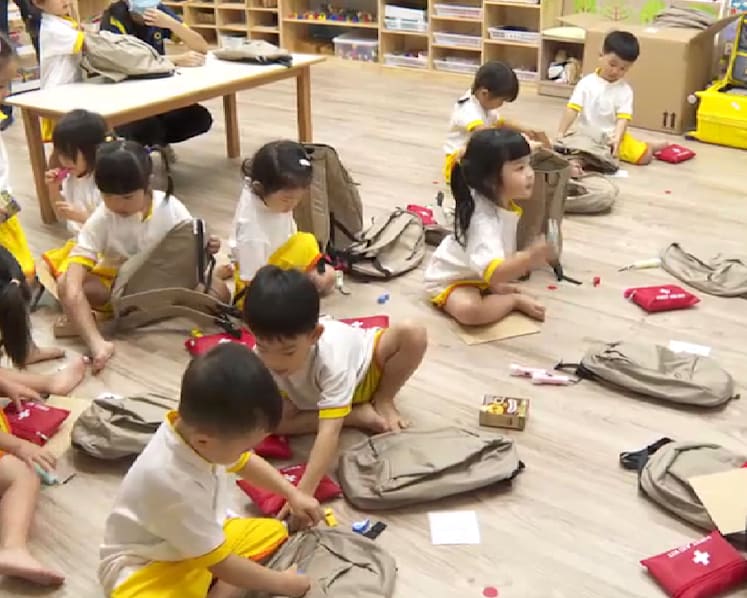
Packing emergency kits and navigating unfamiliar environments in the dark may not be typical preschool activities, but children at Sunflower Preschool @ Hillview were introduced to these skills under a new pilot as part of this year’s Total Defence exercise.

This audio is generated by an AI tool.




SINGAPORE: Packing emergency kits and navigating unfamiliar environments in the dark may not be typical preschool activities.
But children at Sunflower Preschool @ Hillview were introduced to these skills under a new pilot programme as part of this year’s Total Defence exercise.
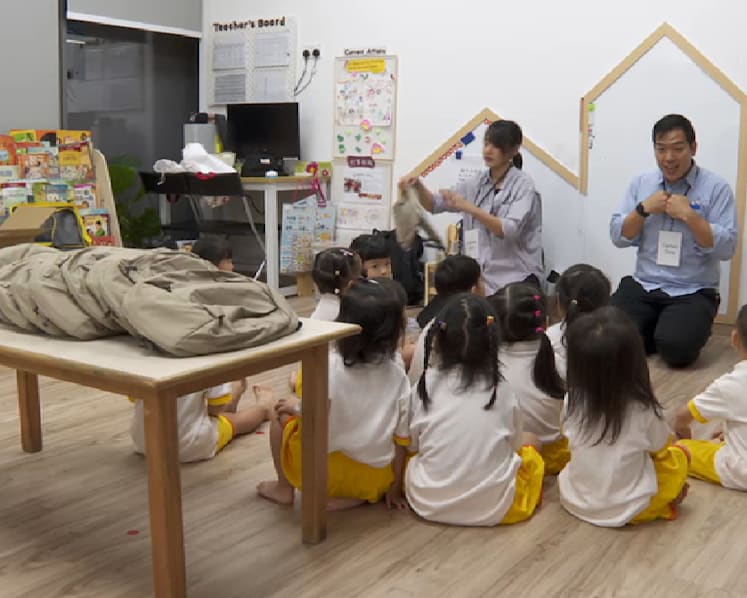
The initiative introduces preschoolers to psychological resilience through a three-part immersive workshop.
“We see the children displaying learning dispositions such as perseverance and resilience,” said the preschool’s centre manager Mastura Adam, adding that these skills are transferable to their daily lives.





“On top of that, we also see them displaying social and emotional competencies, such as lending their friends a helping hand when they are faced with challenges and uncertainty.”
BUILDING RESILIENCE EARLY
This comes as Singapore steps up efforts to strengthen psychological resilience among young people under the Total Defence exercise.
Early childhood practitioner Samantha Tan, a member of the Advisory Council on Community Relations in Defence (ACCORD), said it is important for children to begin developing resilience from a young age.
“It's not that we only foster it in adulthood, and it's not that we only can have experiences that are challenging in adulthood. It can happen to anyone, anytime, at any age,” said Ms Tan, who is the founder of constructivist education and play centre Kurios Oasis.
“So with this programme, we hope that parents will know that psychological resilience is something that can be fostered through real experiences, not something that is explicitly taught in the classroom.”
Experts said starting early is key to building strong support systems before crises occur.
Dr Annabelle Chow, principal clinical psychologist at Annabelle Psychology, said a common misconception is that children are too young to understand difficult situations around them.
She added that resilience can be nurtured from as young as four, provided age-appropriate methods are used.
“It can be built into their daily challenges and tasks. It helps them to build the capacity to manage bigger matters later,” said Dr Chow.
“It can start from even basic emotional awareness, (such as) getting them to label their feelings, learning that this distress, whatever they experience, will come and go, and that it's not permanent,” she added.
“The earlier you teach them these skills, the more resilient and creative they can get with managing their stress. I think helping to manage and adapt to stress is a really important life skill.”
NURTURING LIFE SKILLS
Resilience in young children can be built through everyday interactions, including helping them identify their emotions, experts said.
For older children, the focus shifts to healthy coping strategies such as exercise or play, along with creating space for reflective conversations about their thoughts and concerns.
But experts emphasised that it is never too late to develop resilience.
At a psychological first aid course run by the Singapore Red Cross (SRC), participants are equipped with skills to support people coping with shock, grief and emotional distress following crises.
The aim is to support recovery and reduce the risk of long-term trauma.
Ms Mifie Gunawan, a participant, signed up for the course out of personal interest and because her work in human resources makes such knowledge especially relevant.
When individuals are equipped during a crisis, it helps prevent panic from spreading and stops an already difficult situation from escalating further, she added.
“It's very important to have resilient individuals in the community, then the community will also be calm.”
SRC said growing its youth base trained in psychological first aid remains a priority.
Youth currently make up around 20 per cent of participants, a figure the organisation hopes to increase by a further 5 percentage points.