







Prize money, sponsorship deals could make Olympic champ Schooling Singapore’s richest athlete
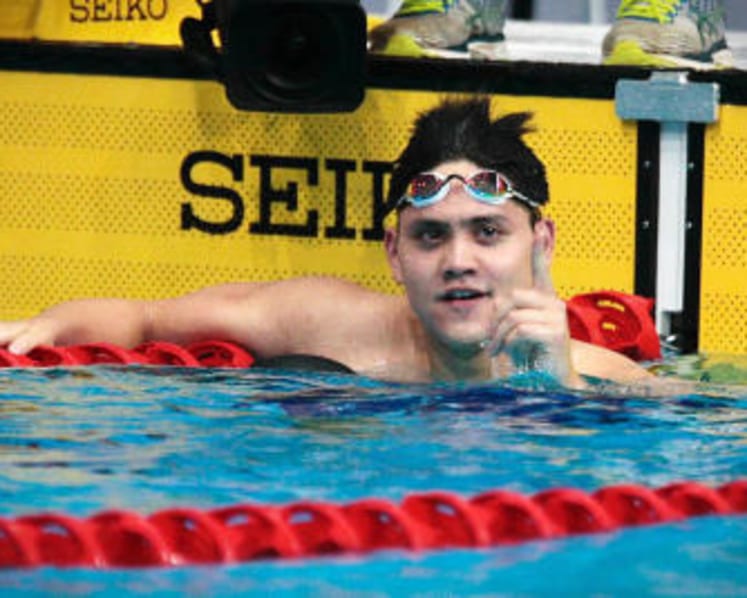
National swimmer Joseph Schooling is set to become Singapore’s most bankable athlete after signing several commercial deals since turning professional in March. TODAY FILE PHOTO


SINGAPORE — He is young, good-looking, and already an Olympic champion in the swimming pool. With all of his attributes and achievements, national swimmer Joseph Schooling is undoubtedly Singapore’s biggest sports star, and its most bankable athlete.
The 22-year-old, who turned professional last month, has already been snapped up by international and local sponsors such as Hugo Boss and DBS Bank, with more deals expected to be announced.
Last week, sports marketing agency Dentsu Sports Asia said that it had been appointed Schooling’s commercial partner to assist the swimmer in advising and managing his commercial and strategic opportunities, among other matters.
The sponsorship deals will see Schooling joining Singapore sports’ million-dollar club — in terms of career earnings — which includes football legend Fandi Ahmad, paddlers Li Jiawei and Feng Tianwei, and golfer Mardan Mamat.





However, sports marketing experts and former athletes said that Schooling still has some way to go before hitting the big leagues of American great Michael Phelps and South Africa’s Chad le Clos.
Phelps, the most decorated swimmer of all time with 23 Olympic gold medals and 26 world championship titles, boasts an estimated net worth of US$55 million (S$73 million) from career winnings and endorsements.
Four-time world champion and Olympic gold medallist le Clos, who lends his name to watchmaker Omega and swimwear brand Arena, has reaped more than S$500,000 from competing professionally in the Fina World Cup series.
NEED TIME TO BUILD NAME AND VALUE
Mr James Walton, sports business group leader of financial consultancy Deloitte Southeast Asia, said that while Schooling may already be a household name in Singapore, he will need time to catch up with swimming’s big boys.
“At this stage, it is still early in his career, he doesn’t have the same name recognition that they have yet. Remember that Phelps has dominated swimming over many Olympic cycles, and le Clos has been winning medals at major Games for eight years now,” he said.
He pointed out that Olympic sports such as swimming are often “very nationalistic” in terms of branding — unless the athletes “can dominate and transcend the sport” the way Usain Bolt, Mo Farah and Phelps have done.
“But if he can be seen as the ‘Asian hope’ to take on the West in swimming at the Olympics for the next two cycles, then he may be able to cross borders, too,” he added.
Mr Adrian Staiti, executive vice-president of global partnerships at sports marketing and entertainment agency Lagardere Sports, said that Schooling’s value “will increase proportionately to his victories in the pool, making it more profitable for companies to sign him on as an ambassador”.
Mr Staiti highlighted that “geographical proximity and market relevance” are important factors for potential sponsors to consider, and that Schooling could be a perfect fit for some brands.
“If (Schooling’s fanbase is) predominantly Singapore or the region, companies that would benefit from being associated with Schooling are brands that desire to connect with his domestic fanbase.
“By this measure, Schooling may be a much more valuable brand ambassador than an international athlete with little in-market relevance in Singapore,” he said.
Former football international R Sasikumar, who runs sports marketing agency Red Card Sports Group, is hopeful that more international brands will sign on to support Singapore’s biggest and brightest star.
He said: “Michael Phelps set the level really high… it’s good to see an international brand like Hugo Boss behind (Schooling). I would like to see more, maybe a watch company, a car company… that’s what the mandate will be for (his agent) Dentsu.”
WINNING IS KEY
Since striking gold at the 2016 Rio Olympics, Schooling had, by his own admission, taken the foot off the pedal, as the swimmer struggled to find motivation.
At last year’s Fina World Championships in Budapest, the University of Texas senior was denied a gold by former Bolles School teammate Caeleb Dressel and finished joint-third in his pet event, the men’s 100m butterfly.
Schooling also endured a poor campaign in his final National Collegiate Athletic Association (NCAA) swimming championships in Minnesota last month, as he failed to win a medal in his individual and relay events.
Conversely, American rival Dressel was crowned Swimmer of the Meet for the third consecutive year after winning four gold medals, including two titles in the 50-yard free and 100-yard fly in NCAA and American record times.
Despite the setbacks, experts and ex-athletes do not believe that Schooling’s star power has dimmed.
“Ultimately, athletes are human and they go through good and bad times,” Mr Sasikumar said.
“He hit a peak at the Olympics and after that, it was a downward cycle. I wouldn’t be too worried for him. He is still an Olympic champion, and that’s a big thing.”
Former national swimmer Ang Peng Siong, 55, who in 1982 became the first and only Singaporean to be ranked world No 1 in the men’s 50m freestyle, said that athletes can sometimes become “distracted” by attention after achieving success.
Mr Ang, who won the 100m freestyle gold at the 1982 New Delhi Asian Games, is confident that Schooling will be able to regain his winning form at major meets such as the 2020 Tokyo Olympic Games.
As for Schooling’s commercial success, he said that it will be tied to the swimmer’s performances in the pool. Finding the right balance between sponsorship commitments, training and competition will be important, he added.
“The reality is, it boils down to how well he performs… Companies are sponsoring his ability to win at the medals game, and that is the baseline for sponsorship.
“That is the priority of an athlete, and he has to remember that.”
Drawing on basketball superstar Michael Jordan’s multi-million dollar partnership with Nike, Mr Staiti told TODAY that “strong results (by star athletes) in the competitive arena have been shown to impact the success and profitability of brands and even their stock prices”.
“Research has shown that sports sponsorship — of a major sporting event or athlete — can significantly increase a brand’s appeal. For example, it was reported that 55 per cent of customers who were aware of a brand’s Olympic sponsorship had a higher propensity to recommend the brand to their friends and family,” he said.
Mr Walton also believes that Schooling’s stock will rise if he does well at the upcoming Asian Games in Indonesia this August, and at the Tokyo Olympics.
“It has been two years now since the Rio Olympics, and that’s a long time in international sports, so his name recognition outside Singapore is not at the same levels,” he said.
His take is that Schooling’s appeal lies beyond his success in the pool, as the swimmer is a “great role model for youth” due to his good looks, humility and strong personal values. Mr Walton added that these “biggest selling points make him an appealing brand ambassador”.
BIGGER THAN FANDI?
Singapore’s favourite football hero Fandi was the country’s first millionaire sportsman in 1993, as his storied career saw him turning out for the Netherlands’ FC Groningen from 1983 to 1985, and lifting the Malaysia Cup five times with Singapore, Kuala Lumpur, and Pahang. He was also the face for a number of international and Singapore brands, including Royal Sporting House, Uncle Tobys, and Milo.
While experts and insiders told TODAY that football has a bigger selling power and is more popular among Singaporeans, they believe that Schooling has the potential to emerge as the highest earner among the country’s sports fraternity.
Mr Ang believes that Schooling will bank over a million dollars if he can still sustain podium finishes over the next two Olympic cycles, and “that trickles down to other major Games”.
He added: “He has another eight to 10 years. There are also many opportunities like the Fina World Cup series which is another platform for earning (money).”
Mr Sasikumar, who stressed that swimming cannot be compared to football due to their different nature and popularity levels, said that Schooling needs to raise his marketing game if he wants to become a global name and reap the big bucks.
“He needs to stand out a bit… for example, Cristiano Ronaldo, in his season (break), is in the United States mingling with Hollywood stars and that helps in getting a wider appeal,” he said.
“It’s about the company you keep. Maybe Joseph can get a cameo appearance in a movie of television show.”
Ultimately, winning is everything, and Schooling has far more ground to cover.
Mr Walton said: “Once he turns professional, he will be competing around the world and at more global events, and have the opportunity to market himself more visibly.
“(Getting) big-stage success again to reinforce his status as a returning Olympic champion will be the final piece that could lift him into the branding stratosphere. The sky is the limit for him.”




