







Productivity growth this year set to reach 7-year high
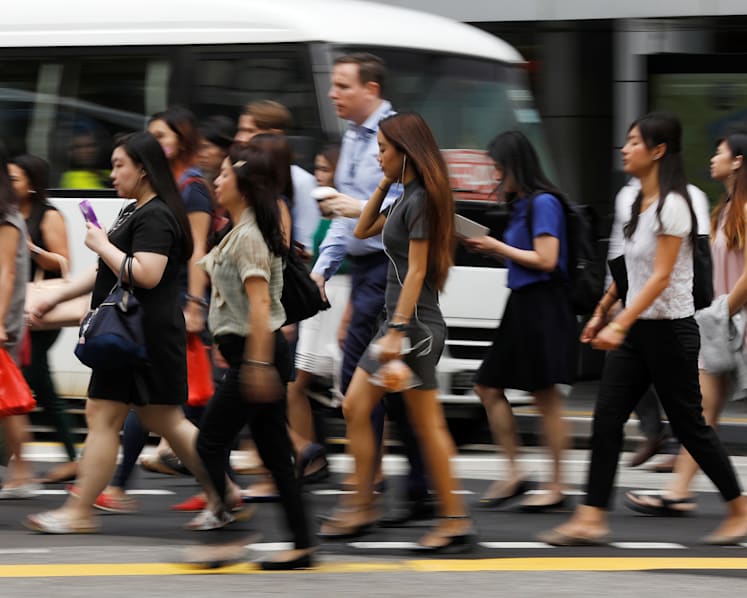
Office workers cross a street in Singapore's central business district. Photo: Reuters


SINGAPORE — After several years of sluggish performance including protracted periods of zero growth, Singapore's productivity is expected to grow by at least 3 per cent this year, hitting a seven-year high.
Speaking at the Singapore Productivity Awards Gala Dinner on Friday (Nov 24), Manpower Minister Lim Swee Say noted that the Republic was "likely to see no net increase or even a decline in total employment".
This means that "most, if not all of the projected GDP (gross domestic product) growth of more than 3 per cent, will come from productivity gains", he said. "So, instead of manpower-driven growth of the past, we are transiting to productivity-driven growth of the future," he added.
Economic expansion comprises both manpower growth and productivity growth.





On Thursday, the Ministry of Trade and Industry raised its full-year forecast for GDP expansion this year to between 3 and 3.5 per cent - up from 2 to 3 per cent - following a robust economic showing between July and September.
The Republic's economy expanded 5.2 per cent year-on-year in the third quarter, the fastest pace in more than three years, and beating an advance estimate of 4.6 per cent.
In his speech, Mr Lim noted that manpower growth has slowed from 4 per cent a year in 2012 to 2014, to 2 per cent in 2015, and 1 per cent last year. Meanwhile, productivity growth went up to 1 per cent last year, having been flat between 2012 and 2015.
Singapore had been grappling with low productivity for the past decades. While productivity surged by 12 per cent in 2010, this was due to a cyclical rebound following the global financial crisis.
Mr Lim reiterated that productivity growth is critical to Singapore's progress, as it transforms the economy. "Without productivity gains, we will eventually lose our competitiveness. Wages will stagnate too," he said.
He said that people should not fear that productivity growth will take away jobs and slow down total employment growth. Instead, they should "embrace productivity growth because it will help enhance the quality and attractiveness of jobs". This in turn will help local employment grow "faster and better", he said.
The net gain in Singapore's total employment for 2017 is likely to be "zero or negative", much lower than the 8,600 recorded last year. However, local employment this year is likely to grow faster, higher than last year's figure of 11,200.
Stressing the difference between total and local employment growth, Mr Lim said: "As we become more manpower lean, lower growth or no increase in total employment need not mean jobless growth for our local workforce, as long as local employment growth remains positive."
Singapore's total employment (excluding foreign domestic workers) fell by 20,000 in the first three quarters of this year, but local employment grew by about 9,000. This was because the loss of 43,000 jobs in the marine and construction sectors "affected mainly the foreign workers, not our local workers", he said.
On the economic restructuring, Mr Lim said the transformation of 23 sectors which account for 80 per cent of the economy has seen "encouraging" response from small and medium enterprises.
More companies have joined the Lean Enterprise Development Scheme, bringing the total to more than 5,000 companies in just two years, he said. The scheme helps SMEs "transform and grow in the new manpower-lean landscape", according to the Manpower Ministry's website.
Citing the manufacturing sector as an example, Mr Lim said productivity gains have made the sector less reliant on manpower.
As more foreign workers are let go progressively while Singaporeans and permanent residents are re-trained to operate in smart factories, wages for locals in the manufacturing sector has been going up, for example, in tandem with productivity improvement, Mr Lim said. The local share of employment in this sector has also increased, he added.
Other sectors that have shown productivity improvements are finance, professional services and wholesale trade, he added.
However, Mr Lim said there are sectors that continue to see a decline in local share of employment. These include food and beverage services, admin and support, accommodation, retail, and community, social and personal services.
"These sectors will need to do more to embrace change, redesign jobs, upgrade skills, improve productivity and wages," he said.




