







Public transport fare formula review ‘aims for affordability’
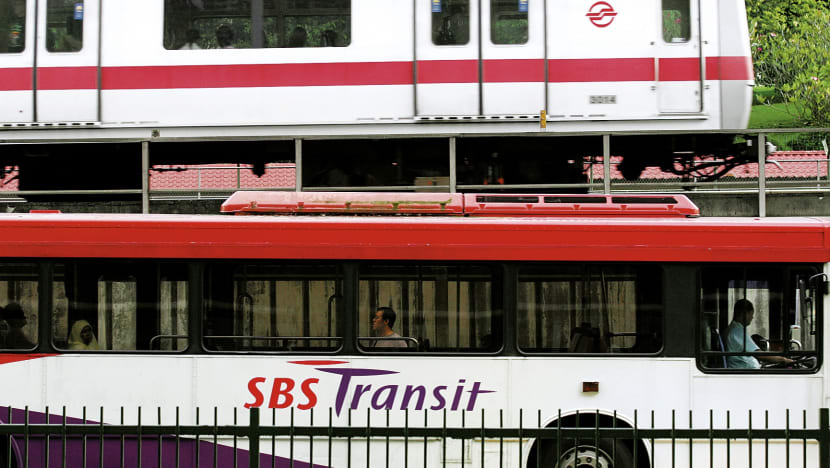
TODAY file photo


SINGAPORE — Noting that the public transport system has evolved and service standards have improved, Public Transport Council (PTC) chairman Richard Magnus said it aims to keep fares affordable for commuters while keeping an eye on “longer-term financial viability”.
Mr Magnus’ remarks came as the PTC, an independent body which regulates public transport fares, announced on Wednesday (April 5) that it had started the review of the public transport fare adjustment formula and mechanism.
Reiterating a signal from Transport Minister Khaw Boon Wan earlier that fares would have to rise, Mr Magnus noted: “Service improvements come at a cost. There will need to be equitable cost sharing among commuters, taxpayers and public transport operators.”
During the Committee of Supply debate last month, Mr Khaw had said: “Remember, the PTC cannot always bring good news, sometimes they have to adjust fares upwards. And when they do, I hope commuters will be understanding.”





Mr Magnus noted on Wednesday that service improvements would have to “come at a cost”, and there would need to be “equitable cost-sharing among commuters, taxpayers and public transport operators”.
The PTC review comes at a time when Singapore’s public transport system has undergone several changes in recent years, such as the Government having taken over ownership of bus and rail assets under the Bus Contracting Model and New Rail Financing Framework.
The changing landscape means that the purpose of a new fare formula would be vastly different and much more complex to work out, several transport analysts said on Wednesday.
While the existing fare formula is designed to regulate public transport operators and ensure that they “do not make excessive profits from their monopoly”, economist Walter Theseira from the Singapore University of Social Sciences (SUSS), felt that the new formula would shift its focus to distributing the cost of public transport between the commuter and the general taxpayer, and provide a “visible price signal of the real costs of using public transport services”.
Linking the costs explicitly to the real costs of providing world-class transport would give commuters transparency on system costs and subsidies, and show them that improvements are “not free”.
The current formula is pegged to changes to the Core Consumer Price Index, the Wage Index and the Energy Index over the preceding year.
Dr Theseira suggested tweaking the formula by incorporating new variables, such as real long-run operating costs. Such costs could include the capital investments in MRT lines and refurbishments, as well as in bus depots and buses, and the changes in operating costs resulting from offering a greater quantity and quality of services.
System reliability is another measure that the PTC needs to pay attention to, as the authorities are able to set hard targets and the performance of the various public transport services can be audited, said National University of Singapore transport researcher Lee Der-Horng.
While he lauded indicators such as the Mean Kilometre Between Failure (MKBF) — a key measurement of how far trains across the nation’s network travel before encountering a delay of more than five minutes — Professor Lee felt that from the commuters’ viewpoint, it would more useful if the number of kilometres chalked up before a train breakdown or delay occurs could be represented in terms of days.
Passenger satisfaction should also be taken into account, although it would be harder to quantify, he said.
While the current formula links fares to the general cost of living, Dr Theseira said such a formula is not sustainable since public transport costs “do not logically” have to keep pace with the cost of living.
“If the public demands higher quality public transport, costs must go up ... Likewise, if the public accepts a generally lower quality of service, costs will fall — although this seems unlikely given that higher incomes mean our expectations are much higher,” he said.
Singapore Management University transport expert Terence Fan was among those who felt that the current fare formula does not need “any fundamental tweaking”, since it has served Singapore well over the years.
Instead, it would make more sense to have a “one-time adjustment” for public transport fares, by taking into account the baseline costs arising from the Bus Service Enhancement Programme and extensions to rail services.
He added that since commuters are now enjoying better public transport services on the whole, “one could argue that (they) ought to chip in” by paying for at least a part of that improvement in services.
However, in ensuring that fares remain affordable, the authorities will have to engage in a difficult balancing act when it comes to deciding how much taxpayers and commuters have to pay, said SUSS’ transport expert Park Byung Joon.
He cautioned against going down the path taken by Seoul, the capital of South Korea, in over-subsidising fares even as maintenance costs go up, since this could lead to public transport sector becoming a “black hole”.
The PTC is expected to complete its review by the first quarter of next year, and will implement the changes from the 2018 annual fare review exercise.
HOW FARES ARE CALCULATED
- The formula for calculating public transport fares has been changed twice.
- The first formula, in force from 1998 to 2005, was based on Consumer Price Index (CPI) + “X”, where “X” is the net effect of wage changes after deducting productivity gains. “X” was worked out to be 2.4 per cent.
- Between 2005 and 2008, national wage averages, also known as Wage Index (WI), were added to the equation, alongside a discount to account for half of the productivity gains by operators over the preceding six years. This discount was pre-set to 0.3 per cent for three years, making the formula 0.5CPI + 0.5WI - 0.3.
- The discount was later revised upwards to 1.5 per cent from 2008 to 2012 (0.5CPI + 0.5WI - 1.5).
- The current formula, which took effect from 2013 and is valid until the end of this year, switched to using core CPI instead of headline CPI. Fuel costs (Energy Index, or EI) were also added to the equation: 0.4cCPI + 0.4WI + 0.2EI.
- Two concession schemes — for lower-income groups and the disabled — to be funded by taxpayers were also created, while five existing ones were enhanced, which will be cross-subsidised directly by full-fare-paying adults.




