Revised curriculum will bring it in line with top universities, says NUS communications and new media department head
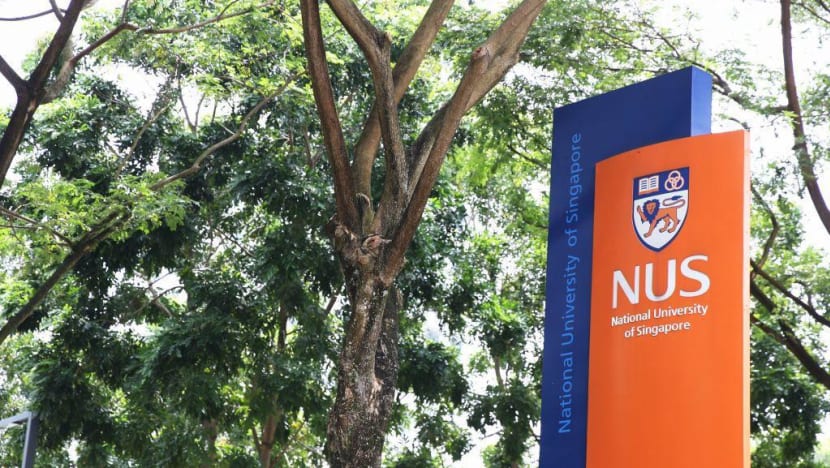
A newly proposed curriculum that is in the works will be in line with similar programmes offered at leading universities such as the London School of Economics, said the head of NUS’ communications and new media department, Professor Audrey Yue.


SINGAPORE — The National University of Singapore’s (NUS) communications and new media department is conducting a curriculum review which, it believes, will bring it in line with top universities in the West, with almost 50 modules to be gradually phased out.
In response to TODAY’s queries on Friday (Jan 11), its department head, Professor Audrey Yue, also said that the proposed curriculum has been designed based on current industry trends and is rarely found in Asian universities.
The department held a townhall on Wednesday to explain to students — who were informed of the session on Dec 21 via email — about changes to the curriculum and staff movements.
In a report last month, students and former lecturers previously told TODAY that some modules — which include those on news writing and photography — had been axed since last August. But Prof Yue said that none has been discontinued as the curriculum revision, which started last July, is still ongoing.





At the moment, there are 116 modules offered by the department which are specific to the course. Under the proposed curriculum, 48 of these will be phased out over the next five semesters from August, when the new academic year starts, with three new modules to be introduced and three others enhanced.
In addition, eight out of 16 General Education and other modules offered by the department will also be phased out over the same timeframe.
This means there will be 82 modules in all in the new curriculum.
Some modules will be axed due to reasons such as overlapping of content.
Prof Yue said: “Discontinuing a module is not the same as discontinuing the teaching of a topic. All popular and industry-relevant topics such as social media, photography, videography and news writing will continue to be taught in the proposed new curriculum.”
Given the large number of modules in the course catalogue before the proposed revision, Prof Yue said that “some students may not be aware that the topics they are interested in are duplicated in multiple modules”.
She explained that the frequency at which modules are offered is based on past student interest and enrolment. Thus, some modules may not be offered every semester.
For instance, some modules originally scheduled for the first semester of the 2018/2019 academic year were rescheduled for subsequent semesters.
“We apologise for the confusion caused by these changes,” she added.
The new curriculum, she said, was designed in consultation with students, teaching faculty and an Industry Advisory Council comprising experts in the media and communications industries.
More than 90 students provided their feedback through focus groups and a survey in 2018, she added, and the main points were shared during the townhall.
The new curriculum will cover areas in media studies, communication management, interactive media design and cultural studies, said Prof Yue. These areas are consistent with those offered in similar programmes at the University of Pennsylvania, University of Michigan and London School of Economics, she added.
“In terms of the range of disciplines represented, curriculum design, and the breadth and depth of module content, the communications and new media (department’s) new proposed curriculum is comparable to programmes at these leading universities,” said Prof Yue.
“In Asia, it is rare for top media and communications programmes to offer this unique combination of media studies, communication management, interactive media design and cultural studies.”
The TODAY report last month also touched on resignations at the department which had caused anxiety among students.
The departures took place in the midst of a handover between the outgoing head of department Prof Mohan Dutta — who resigned in March and left NUS in June — and his successor Prof Yue.
Prof Yue, a Singaporean who previously taught at the University of Melbourne before joining NUS in July 2017, officially assumed the post on June 13.
TODAY had reported that there were eight resignations in as many months. Addressing the staff movements, Prof Yue said the department has already hired two lecturers, who joined this month, and plans to employ six more lecturers by this August.
Several students who spoke to TODAY said that Prof Yue’s explanation reassured them of the department’s future direction.
Ms Quinn Tasha Ong, a Year Two student and the president of the communications and new media society, said that she believes the department has “our best interest at heart with this change, in terms of updating the curriculum and preparing us to be ready for the workforce upon graduation”.
“I’m personally looking forward to the updated curriculum and learning more about these new topics,” said the 22-year-old.
Another student, who wanted to be known as Ethan and is in his third year, noted that the department is taking steps to improve the curriculum.