







S-League clubs ‘relieved’ that funding cuts were less drastic than feared
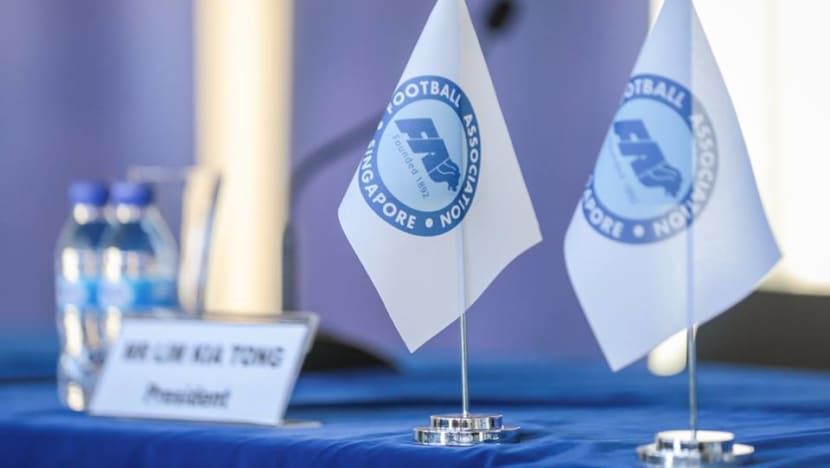
On Monday (Dec 18), the Football Association of Singapore (FAS) announced that S-League clubs would be receiving S$888,200 in subsidies for the 2018 season, which is 19 per cent lower than this year. Photo: Football Association of Singapore/Facebook


SINGAPORE – Despite having their funding slashed by almost a fifth for the coming season, S-League clubs which TODAY spoke to expressed relief that the cut was not as drastic as initially feared.
Nevertheless, they said they will need to tighten their purse strings and look for more revenue streams.
On Monday (Dec 18), the Football Association of Singapore (FAS) announced that S-League clubs would be receiving S$888,200 in subsidies for the 2018 season, which is 19 per cent lower than this year.
This after months of uncertainty, as talk swirled of the league turning semi-professional amid the possibility of a severe funding cut of close to 50 per cent.





The money, which comes from the Tote Board, forms a significant part of clubs’ average annual budgets of between S$1.2 million and S$1.5 million.
The new S-League season kicks off on March 31, with the opening match between Albirex Niigata and Tampines Rovers held at the Singapore Sports Hub.
Tampines Rovers committee member Nicholas Narayanan said: “We are quite relieved that the budget was cut by around 19 per cent and not what we initially feared... We will have to be financially disciplined and look at all areas, not just in cost cutting but exploring other revenue streams.”
Apart from fundraising and sponsorship activities, the Stags are exploring the possibility of running jackpot operations to help raise revenue for the club. A clubhouse is also in the works, with plans to be finalised next year.
Tightened regulations for fruit machines kicked in last month, as the authorities moved to ensure that clubs operate jackpot machines only to supplement recreational facilities, rather than have them as a primary operation.
Prudency is also key for Balestier Khalsa, one of seven local outfits in the nine-team S-League for next season.
“We will tighten up in every area, but it’s not that we are overspending,” said the club’s general manager Cheng Tim Nee. “We are a budget team, and of course we will work doubly hard to find more money.”
Age quotas and foreign player restrictions that kick in next season will also see wage bills coming down, the clubs noted.
For the 2018 season, S-League clubs will have to register at least six under-23 players in their squads, and eight have to be under-30. Foreigner player quotas will also be reduced from three to two.
Warriors FC general manager Paul Poh said: “The Prime League is no more, so that’s one lesser (team). We did some calculations, and (the budget) is almost the same as there are fewer tournaments next year. The players are younger and they don’t demand higher salaries.”
Apart from age quotas for players, the FAS’ plan for a revamped S-League will also see an emphasis on fitness, with the Yo-Yo test replacing the current 2.4km run as the S-League’s mandatory fitness test. Every club will also have to engage a fitness coach who will work closely with the FAS’ fitness department.
With this in mind, FAS president Lim Kia Tong called for clubs and players to adopt a “professional mindset” as the ailing league – which has struggled to attract fans in recent times – looks to rebuild for the new season.
It is a call that Tampines plans to heed. Narayanan said: “We are definitely in favour of that vision, and we hope to live up to those high standards. Our first objective is to at least try to run the club more professionally and I hope that translates to the pitch as well, and attracts crowds to the stadium.”
While agreeing that fitness is the “biggest area” that the Warriors need to work on, Mr Poh said securing a permanent workout facility is an issue which his club needs to sort out. “Our track (at the stadium) is open to the public, and even when we put up cones, joggers will complain. The Sport Singapore gym there is also open to the public and it is difficult to do training there.”
He added: “It would be good if there is a (shared) centre for S-League clubs to do their fitness training.”
Mr Koh Mui Tee, general manager of Japanese outfit Albirex Niigata, which swept all the trophies on offer in the 2017 season, was also hopeful that more efforts will be put in to market the S-League next season.
“If you see the English Premier League for example, when Liverpool plays Manchester United, before the game there is a lot of hype on which players to look out for, the key battles,” he said. “I hope there can be more marketing efforts to create pre-match hype as it’s important to get fans excited.”




