







Salary criteria for Employment Passes and S Passes will be raised: MOM
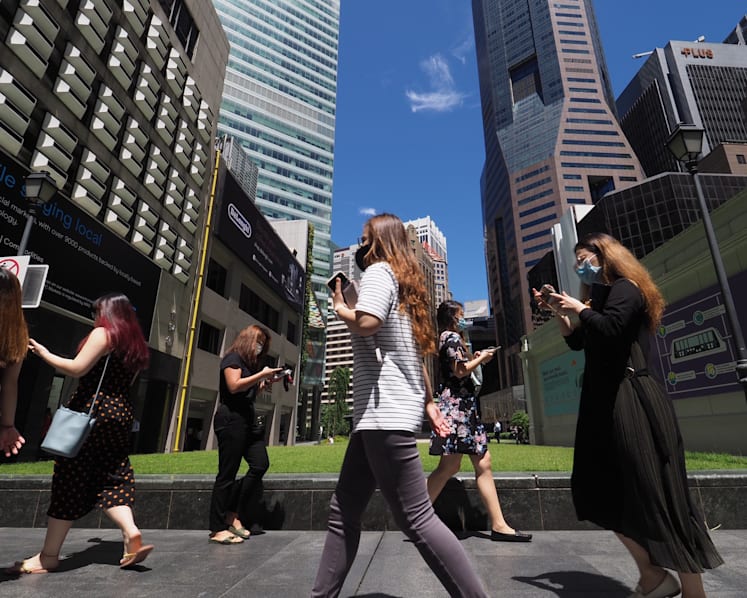
Minister for Manpower Josephine Teo said Singapore’s foreign workforce policies have been designed to support economic growth, so as to create good jobs for Singaporeans.
SINGAPORE — The Government will raise the salary criteria for Employment Passes and S Passes amid weak labour market conditions, Minister for Manpower Josephine Teo said on Wednesday (Aug 26).
Currently, those on Employment Passes need to earn at least S$3,900 a month, while S Pass holders earn a minimum of S$2,400 a month.
“With Covid-19 and the economic disruption it has caused, there is now more slack in the labour market. We will therefore make further adjustments to our foreign workforce policies,” Mrs Teo said.
“Even as we stay open to the world to accelerate our recovery, the crisis makes it all the more important that employers give fair treatment to Singaporeans.





This was announced in the addendum of the Ministry of Manpower (MOM) to President Halimah Yacob’s address at Monday’s opening of the 14th Parliament.
Madam Halimah said job competition from work pass holders could become a divisive issue and will be addressed. The President also spoke of the need to strengthen social safety nets for the long term amid the Covid-19 crisis.
In MOM’s addendum on Wednesday, Mrs Teo said Singapore’s foreign workforce policies have been designed to support economic growth, so as to create good jobs for Singaporeans.
“There is regular calibration, to enable firms to access the manpower they need while ensuring a strong Singaporean core,” she said.
Today, nearly six in 10 locals in the workforce are employed in professional, managerial, executive and technician (PMET) jobs, Mrs Teo said, adding that for every Employment Pass holder, there are nearly seven locals employed in PMET roles.
JOB OPPORTUNITIES
Before the Covid-19 pandemic, Singapore had been preparing workers and employers for the future economy, but these efforts must now “shift to even higher gear”, said Mrs Teo.
Laying out the various initiatives that have been launched to help Singaporeans keep their jobs or find work, Mrs Teo noted that the National Jobs Council is spearheading an effort to create 100,000 jobs and skills opportunities through the SGUnited Jobs and Skills Package.
MOM and its agencies are working with employers to make jobs available to job seekers willing to acquire new skills, through heavily subsidised training and the Jobs Growth Incentive, a wage subsidy programme for new local hires.
If companies are cautious about hiring, the Government will support them to host traineeships and attachments by co-funding the training allowance, Mrs Teo said.
More support will be given to employers that take in middle-aged and mature workers, she added.
MOM will also intensify efforts to help Singaporeans in their job search through the SGUnited Jobs & Skills Centres, digital career matching services, as well as private employment agencies serving as SGUnited Jobs & Skills placement partners.
SUPPORT FOR LOW-WAGE WORKERS
Mrs Teo said that raising the wages of low-wage workers remains a key priority, pointing out that full-time workers in sectors where the Progressive Wage Model has been fully implemented have seen their gross monthly incomes increase by around 30 per cent in the last five years.
The Progressive Wage Model will be expanded to more sectors over time, she said, but in a way that is “practical and ensures we preserve low levels of local unemployment”.
“This effort to raise wages at the lower end will require long-term commitment and new mindsets among employers, service buyers, and society at large.
“We may have to pay slightly more for services, so that lower-income workers are able to take on better jobs and earn higher wages,” Mrs Teo said.
The Workfare and Silver Support schemes — cash supplements for low-wage workers and low-income elderly Singaporeans — will be regularly reviewed, she said, noting the that schemes were updated this year. Workfare payouts were raised, and the criteria for the Silver Support scheme was broadened.
To better support people with disabilities, Mrs Teo noted that the Enabling Employment Credit was introduced, which will cover about four in five of employees with disabilities. The wage offset scheme to encourage businesses to hire people with disabilities was introduced in the February Budget.
“We will continue to look out for gaps in our social safety nets and enhance support in sustainable ways, and ensure every Singaporean who makes the effort gets a fair chance to bounce back from employment setbacks,” Mrs Teo said. CNA
For more news like this, visit cna.asia




