







Separate lives: Families living under quarantine for Covid-19
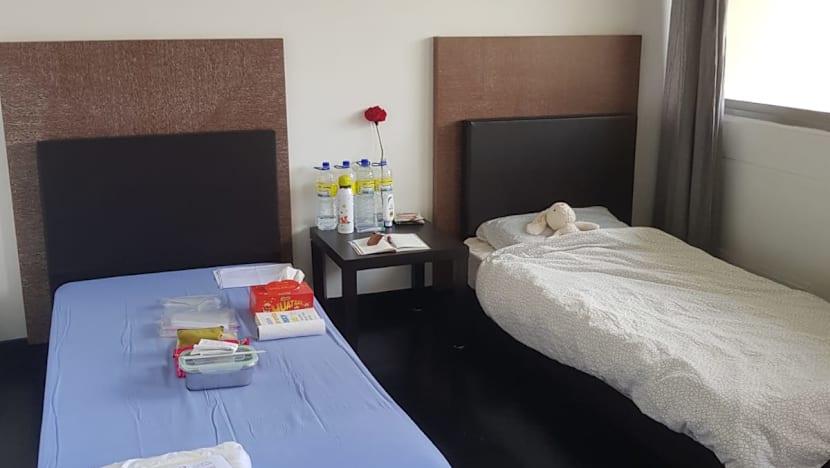
Ms Qu Haiyan’s room at Heritage Chalet where she has been under quarantine since Feb 9.
SINGAPORE — It has been more than three weeks since Ms Qu Haiyan last saw her family.
The 41-year-old Chinese national and Singapore permanent resident has been cooped up in a small room for the past two weeks at Heritage Chalet located along Pasir Ris Road.
Her only means of communication with her husband and two children, aged five and six, has been through her mobile phone.
Ms Qu is one of 1,122 people in Singapore who are currently under quarantine as of Feb 21 to limit the spread of the Covid-19 virus.





They are housed in SAF Changi chalets, HomeTeamNS Sembawang chalets and Heritage Chalet, all of which are designated as government quarantine facilities. Others are being quarantined in hospitals or in their homes.
To date, 1,574 people who have been suspected of being in close contact with an infected person have completed their two-week quarantine order.
Speaking to TODAY over the phone from her room, which she estimated is around 30 square metres, earlier this week, Ms Qu said that she and her family had been in Wuhan to visit her father for his 70th birthday on Jan 4.
While the situation in Wuhan, which is the epicentre of the Covid-19 outbreak, had been calm initially, the situation escalated on Jan 20 when the number of those infected with the disease shot up.
“That’s when everybody started to cancel dinner gatherings and outside plans. We stayed home and looked for ways to get some face masks,” recounted Ms Qu.
SEPARATED FROM FAMILY
A week later, China suspended all flights going in and out of Wuhan. The move left Ms Qu and her family, who are based in Taiwan, stranded.
But Ms Qu’s husband, Mr Faisal Bushfield, who is a Singaporean, was able to secure a flight back to the city-state after making arrangements with the Singapore embassy.
While Mr Bushfield and his two children returned to Singapore on Jan 30, they had to leave Ms Qu behind as Chinese nationals were barred from leaving Wuhan.
She eventually returned to Singapore on Feb 9 in a flight arranged by Singapore authorities.
At Changi Airport, Ms Qu was screened for her body temperature before being taken by a shuttle bus to Heritage Chalet, where she was housed in a room on the second floor.

Her first few days in the room, which is simply furnished with a bed, wardrobe and side table, were “rough” and filled with sleepless nights.
“On the day of my arrival, I heard that my friend’s mother in Wuhan had passed away from the virus. Her mother’s death is a wake-up call for me. Until then I never really felt that this was so real and so close to us,” said Ms Qu.
However, the days soon became easier to pass for Ms Qu, after she settled into a routine.
She would receive a call from the chalet’s security guard thrice a day during meal times informing her to pick up her food and other necessities such as fresh towels and bedsheets, on a tray on the first floor. These were the only times she would step out of the room.
After breakfast, she would spend her time catching up with relatives back in Wuhan, as well as with her husband and children who were quarantined in a chalet at Civil Service Club Loyang (formerly known as Aloha Loyang) until Feb 13 before they returned to Taiwan that weekend.
The food catered by the chalet, however, had become rather repetitive.
“Do Singaporeans really like fried rice so much? I’ve yet to be served white rice,” she said, laughing.
After lunch, Ms Qu would pass her time watching drama serials on her mobile phone or exercising.
A TIME TO REFLECT
On her experience so far, Ms Qu struck a positive note, saying that it had been an opportunity for her to pause and reflect.
“I think about how I should spend time with my children as a mother. Sometimes I lose my temper at them, but I really miss them,” she said.
With Taiwan having barred Chinese nationals from entering the territory indefinitely, it is likely to be a while before Ms Qu is reunited with her husband and children.
Speaking to TODAY over the phone from Taiwan, Mr Bushfield said that his quarantine experience had also been positive, with his daily routine revolved around keeping his two children entertained.
“We knew we would be quarantined so we were very prepared. We made sure we had a lot of toys and colouring books to occupy the kids,” said the 54-year-old East Asia area service manager for Danish pump manufacturer Grundfos.
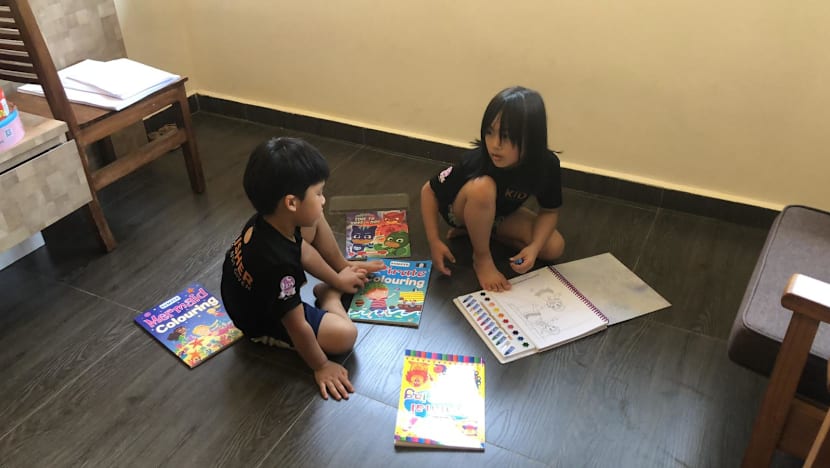
Unlike his wife who was confined to a room, Mr Bushfield and his children were allocated an entire chalet unit.
Mr Bushfield said he tried to maintain a semblance of normalcy for his children, and got them to engage in activities that they usually do at home, such as making their own beds.
“We told the kids to see it as an adventure and not as a quarantine. We wanted it to be an opportunity for them to spend time with me.”
When their quarantine period ended, they were just happy to be outdoors. Mr Bushfield immediately booked his family into a hotel where they went for a swim, and took them to Pasir Ris Park the next day where they spoke to their mother over the phone, while watching her in her chalet from a distance.
LIVING SEPARATELY, UNDER THE SAME ROOF
Like Ms Qu and Mr Bushfield, another couple also found themselves living separately during their quarantine period, albeit under the same roof.
A staff member from Grace Assembly of God, the church with the largest cluster of confirmed cases here, said that he had to keep a distance from his wife. He had been quarantined, while his wife had to serve a leave of absence.
Unlike those under quarantine who are legally bound to remain in isolation, those serving a leave of absence may go out briefly to attend to matters.
The church employee, who declined to be named, said that he was first contacted by a Ministry of Health (MOH) official as part of the ministry’s contact-tracing process.
An officer then paid a visit to his house, where they recorded his temperature and took down details of his household before explaining the do’s and don’ts of being under quarantine.
He was required to record his temperature three times a day. An officer from MOH would also call daily to check on his health, typically after the timings when he was expected to take his temperature.
The church staff member also said that living apart from his wife while under the same roof was a “unique” experience.
Typical family routines had to be changed. For instance, he and his wife had to sleep in separate bedrooms and use different toilets.
“I imagine the quarantine process to be a lot more challenging if both husband and wife were issued with a quarantine order, for those with immobile parents to look after, or those living alone,” he said.




