







Sharp dip in private school grads who found full-time jobs 6 months after graduation
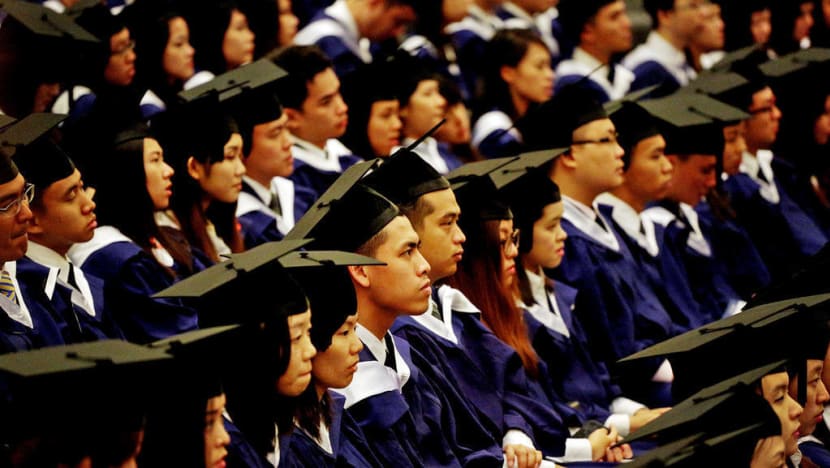
Only one in two private school fresh graduates secured full-time jobs six months after graduation, a sharp decline from the six in 10 figure achieved by the previous batch, the latest employment survey has found. TODAY file photo


SINGAPORE — Only one in two private school fresh graduates secured full-time jobs six months after graduation, a sharp decline from the six in 10 figure achieved by the previous batch, the latest graduate employment survey has found.
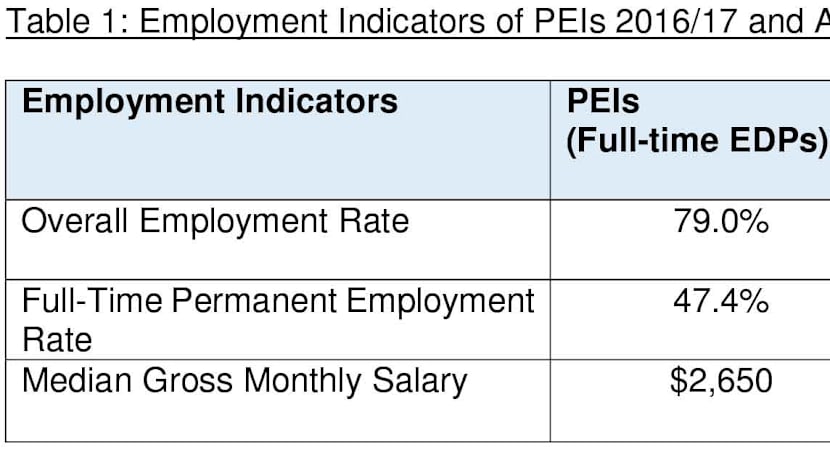
Releasing its findings from the latest Private Education Institute (PEI) Graduate Employment Survey on Tuesday (April 3), the Committee for Private Education (CPE) said overall employment rate for private school graduates who graduated from full-time bachelor’s level external degree programmes between 2016 and last year was 79 per cent, down from 84.3 per cent for the previous batch. Full-time employment rate, however, tumbled steeply, from 60.1 per cent for the 2015/2016 graduates to 47.4 per cent for the Class of 2016/2017.
More graduates opted for freelance employment, with the rate going up 1 percentage point year-on-year, to hit 3.7 per cent in the latest survey.
The proportion of those in part-time or temporary employment also went up from 21.5 per cent in the previous survey to 27.9 in the latest survey.





Reflecting the “soft” labour market, the graduate employment survey for National University of Singapore, Nanyang Technological University and Singapore Management University also saw a dip in the proportion of graduates starting work within six months of completing their final examinations from 89.5 per cent in 2016, to 88.9 per cent last year.
Among fresh graduates from the three autonomous universities (AU) currently in the labour force, 78.4 per cent secured full-time permanent employment last year, down from the updated 2016 figure of 79.9 per cent which marked the first time that the proportion fell below 80 per cent.
The 2017 figure for fresh AU graduates is the lowest since the survey was first carried out for the 2012 cohort. In contrast, the proportion of those doing freelance work edged up from 1.7 per cent in 2016 to 2.4 per cent a year later.
While fresh PEI graduates saw a S$100 uptick in gross monthly salary, with the latest batch earning S$2,650, the AU graduates continued to earn more, with a median gross monthly salary of S$3,400.
In contrast, the overall employment rate for post-National Service polytechnic graduates was 89.8 per cent, with about six in 10 in full-time permanent employment. They earned about S$2,480.
Conducted between last November to February this year, the CPE surveyed some 2,800 graduates from full-time external degree programmes who have no previous experience in full-time permanent jobs. It does not include part-time students and mature learners.
Unlike the inaugural survey, which was conducted July and September 2017, for students who graduated between May 2015 and April 2016, resulting in a considerable amount of time elapsing beyond the six-month mark of the students' graduation, the latest survey was conducted between November last year and February this year for those who graduated between May 2016 and April 2017.
The latest survey also excluded international students working or seeking employment overseas to ensure the findings reflect local employment conditions, the CPE said.
Acknowledging that more could be done to bridge the gap between graduates from private schools and the AUs, SkillsFuture Singapore’s Director-General for private education Brandon Lee said: “We want students to consider these figures, (along with their) other interests and sectors that best suits their needs, and to make a more informed decision about their (choices).”
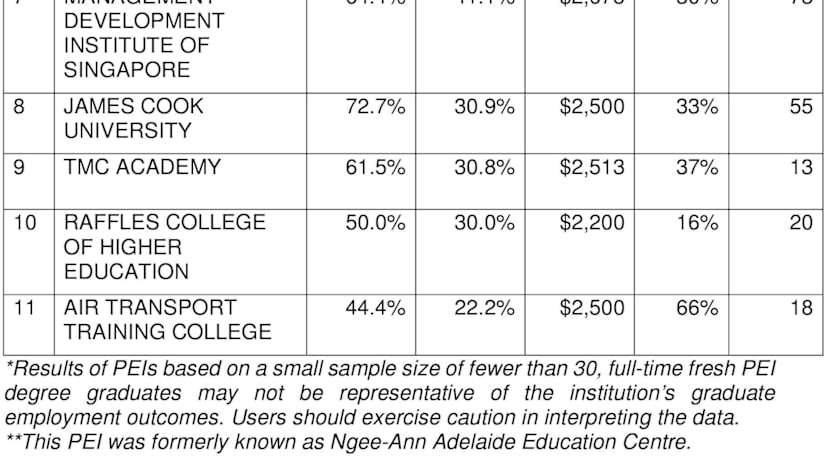
Prospective students should also consider that outcomes may differ across the various PEIs and industries, he said, noting that computing graduates also obtained higher employment rates and starting salaries than those from the general disciplines.
Welcoming the committee’s efforts to promote greater transparency in the private education industry, PSB Academy chief executive officer Derrick Chang pointed out that according to its independent graduate and employment survey in 2015, nine in 10 of its students found employment within six months of graduation, which are a reflection of its “academic rigour and relevance to industry”.He added that his school has focused on skill-based programmes — such as specialised courses like life and sports sciences, cyber security, and nursing — which helped to nurture students with application-based skills who can “contribute to the country’s high growth industries”.
While the results differ across the PEIs, Kaplan Singapore’s chief operating officer and provost, Associate Professor Rhys Johnson said Kaplan has emerged among those with the “best results”. Its graduates obtained a 75.4 per cent overall employment rate, and earned about S$2,500.
He added that such results as an “indicator”, rather than a comprehensive measure of graduate performance in the job market. This is because over 60 per cent of its students are working adults, who are studying part-time and therefore are not covered by the graduate employment survey.
He added that it is their “commitment” to continue working closely with the government and industry to address demand for key skills, be it by working with professional leaders and entrepreneurs in their respective fields and providing students and alumni with Workforce Skills Qualifications training and other certification courses in areas like digital marketing, project management and cyber security.




