







She was in and out of jail. Then her mother died and she had to attend her funeral in handcuffs
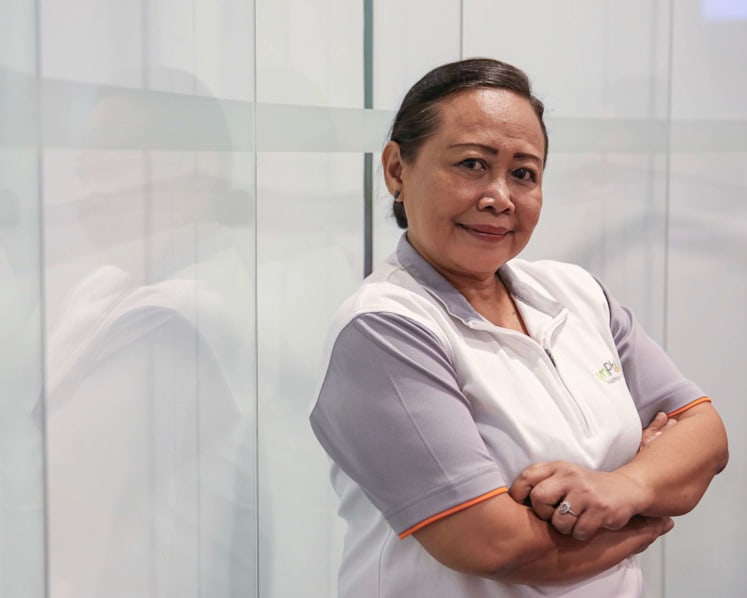
Ms Kasmawati Kali Ubi, a Bronze Certificate of Achievement recipient at the Yellow Ribbon Celebrating Second Chances Award Ceremony on Oct 12 – for her commitment to staying crime- and drug-free for six years – poses for a portrait on Oct 15.


SINGAPORE — When the prison officers invited her into their office that Saturday, she had no idea of the dramatic news she was about to receive.
Ms Kasmawati Kali Ubi had been in prison multiple times and she initially thought that she was being given a day out — but she soon realised it must be something more serious when they asked: “Does your mother have any illness?”
She recalls: “They asked me to sit down. When I sat down, I cried. Because I know that when they ask you to sit down, it is surely something bad. They then informed me that my mother had passed away.”
More than two decades on, Ms Kasmawati, now 57, reflected on the memory with emotion during an interview with TODAY on Tuesday (Oct 15) after receiving a Bronze Certificate of Achievement at the Yellow Ribbon Celebrating Second Chances Award Ceremony on Oct 12.
The awards, held every two years, recognise the determination of ex-offenders in staying crime-free and drug-free and giving back to society. They were organised by the Community Action for the Rehabilitation of Ex-offenders (CARE) Network with Mr Amrin Amin, Senior Parliamentary Secretary, Ministry of Home Affairs and Ministry of Health as guest of honour.
Now a grandmother with three grandchildren, aged eight to 10 years old, Ms Kasmawati was on the brink of tears as she said it was her greatest regret that she was in prison at the time her mother died.
She recounted how she had attended the funeral in handcuffs.
CHANGED COMPLETELY
She was imprisoned six times altogether, all for drug-related offences, serving about 11 and a half years in total, before finally being released in 2013. But since then, she has turned her life around.
Now a peer leader at counselling firm Acorn Quest and a therapist at health solutions start-up Synphne, Ms Kasmawati said that she has changed completely.
Synphne is one of more than 5,300 employers to have registered with the Singapore Corporation of Rehabilitative Enterprises (Score) to employ ex-offenders.
The start-up’s business involves a device it has developed which allows patients who have suffered from a stroke or other injuries, to do guided exercises from videos. The device consists of a headset and gloves with sensors.
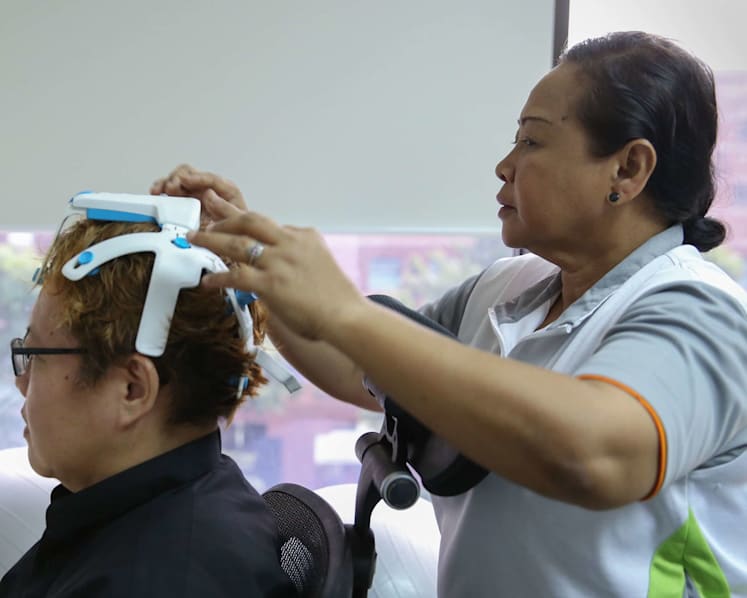
Speaking to TODAY at Synphne’s office in Orchard Road, Ms Kasmawati said that her initial period on the job was challenging. She joined the firm in 2017.
“My computer skills were totally bad. They asked me to use (Microsoft) Excel and Word and all that. I don’t know anything. They signed me up for an online course and during the online course, I cried. It was a long time since I used a computer.”
She came close to giving up countless times. Most people took six days to pass the course, but she passed only after one month.
She said: “I called my friend and my mentor. I asked how to do this and how to do that. I only studied until I was in Secondary 2 and sometimes I couldn’t understand the English (instructions).”
But through the guidance and support from her boss, she finally managed to succeed, which she described as an extremely proud moment.
She said: “When I wanted to give up, my boss said to me: ‘Don’t run away from your problems, try to solve it. I cannot help you unless you help yourself.’ So I searched for solutions and got help because I needed this job.”
His advice struck a chord with her and she has not looked back since.
JUGGLING TWO JOBS
Before landing a full-time position at Synphne, Ms Kasmawati had been juggling two jobs — one as a cleaner at a private estate in Thomson Road and another as a cleaning supervisor at a mall in City Hall.
Her first shift would be from 7am to 3pm, and the second would start two hours later, from 5pm to 10pm, leaving her only one hour to rest after deducting travel time.
She said: “My mentor asked me, for how long did I want to be a cleaner. I said it was a good job, there was nobody to control me and I don’t have to worry about using a computer… But she asked me again: 'But for how long?'.”
It was a wake-up call. Soon, her mentor told her of an opening at the company and encouraged her to give it a shot.
When she got called back for the third, and final round of the selection process, Ms Kasmawati did not believe it at first.
“Because of my age, nobody would want to employ me. I am already old. My education is also only until Sec 2, how would I even get an office job?” she said.
On top of the self-doubt that she felt, there was also an extensive selection process — she had to go through an interview with the directors, attend a training course, and then a final interview.
Dr Subhasis Banerji, founder and managing director of Synphne, said: “Being a certified therapist is not easy and she comes from a secondary school background. She’s intelligent and has strong people skills, (which) are a good thing.
“In the last two years since she’s worked here, she has faced a lot of challenges on the other part of it — like how to manage your family’s expectations, how to manage her own habits, her own reactions.”
He added: “I think the fact that she is still here is, in itself, a big deal."
'NOT ALL EX-CONVICTS ARE BAD PEOPLE'
Even though she was one of the 134 recipients of awards at the Yellow Ribbon awards, Ms Kasmawati said that the shame she feels and prejudice she experiences, still makes her day-to-day life a challenge.
Describing her first few weeks with the company, she said: “(For ex-convicts), we feel like sometimes people look down on us. I am only Sec 2. The people working here have university degrees or are doctors. All very high up. I thought they were playing with me, at first.”
She explained that ex-convicts have difficulty trusting others and opening themselves up to people.
When asked about what she wanted others to know about ex-convicts, she said: “Not all ex-convicts are bad people — we have done things wrongly (in the past) but there is another part to us. We are human beings — we also need some love and care.
“Talk to us then you know that some might have a lack of love or don’t have family support.”
CORRECTION: An earlier version of this story said that Ms Kasmawati had served about eight years in prison in total. She has since clarified that she actually served about 11 and a half years in total.




