







Singapore, India conclude bilateral naval pact
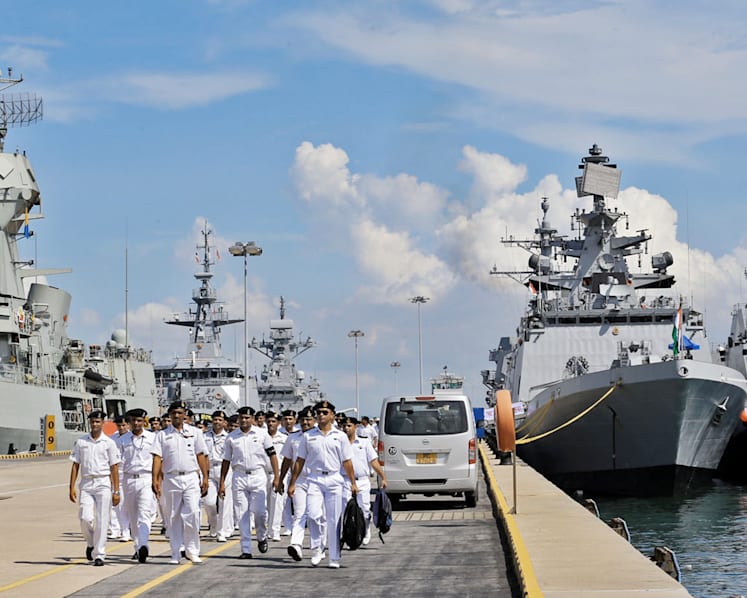
India Navy personnel are seen among warships from various countries at Changi Naval Base. TODAY file photo


SINGAPORE — The navies of Singapore and India will work closer together in maritime security and logistics support, as well as hold joint exercises and support temporary deployments from each other’s naval facilities, following the conclusion of a bilateral cooperation agreement on Wednesday (Nov 29).
Defence Minister Ng Eng Hen and his Indian counterpart Nirmala Sitharaman witnessed the exchange of the inaugural pact, after a Defence Ministers’ Dialogue held in New Delhi between the two countries.
At the meeting, Dr Ng and Ms Sitharaman discussed among other things expanding collaboration between Singapore and India in defence research and development and industry, “which has unrealised potential”, as the Indian Defence Minister put it.
Singapore’s Ministry of Defence (Mindef) said in a press release that the two ministers also “reaffirmed the strong and long-standing defence relationship, and discussed ways to strengthen bilateral cooperation”, exchanged views on strategic regional security and defence matters, and welcomed India’s proposal of “institutionalising engagements, including maritime exercises, with Southeast Asian countries”.





Mindef said that Dr Ng expressed his appreciation for India’s offer of its “test ranges and infrastructure to Singapore for the conduct of testing and evaluation for R&D projects”.
Speaking at a joint press conference, Dr Ng said in a transcript provided by Mindef he was “very thankful” for the conclusion of the bilateral naval agreement which will facilitate “more bilateral and multilateral maritime exchanges, especially in India’s waters, as well as the Straits of Malacca, the Indian Ocean and the Andaman Sea”. Both countries also agreed to not only renew existing agreements between their armies and air forces, but also to step up the level of engagements, Dr Ng added.
Dr Ng reiterated that Singapore “strongly supported” India’s engagement plans with the Republic and its neighbours, and will do its utmost as chair of the Association of Southeast Asian Nations (Asean) next year “to do what we can to facilitate (it)”. Asean is India’s fourth largest trading partner, with two-way trade totalling about US$76 billion (S$102.2 billion). The region has also accounted for about 12.5 per cent of investment flows into India since 2000.
On whether the enhanced mutual cooperation between both countries’ navies would include Indian naval ships berthing in Singapore for an “operational turnaround”, Dr Ng said: “I think the question was whether Singapore, my Ministry and the Singapore Armed Forces (SAF), would be comfortable with more Indian ships berthing in Changi Naval Base. I would (seek) to respond categorically that not only would (we) be more comfortable, I would encourage the Indian Navy to visit Changi Naval Base more often.”
Dr Ng reiterated that the bilateral naval agreement has provisions for mutual logistics support. “It makes sense when we conduct exercises and patrols in your waters, as you do in ours, that we try to economise and support each other,” he said.
Hailing the conclusion of the pact - which means the SAF will be the only military to have bilateral agreements with India for all its service arms - Mindef said it was “testament to the breadth and depth of military-to-military ties between the SAF and the Indian Armed Forces.
A joint statement issued by Dr Ng and Ms Sitharaman after their meeting also reaffirmed both countries’ commitment to “step up practical cooperation to address common security concerns, such as in the areas of counter-terrorism and maritime security.
Both countries recognised India’s vital role in regional security, in particular India’s participation and support for the ASEAN Defence Ministers’ Meeting Plus, and welcomed further cooperation both bilaterally and multilaterally, Mindef said.
The two ministers also acknowledged the importance of maintaining freedom of navigation in international waters, and the free flow of maritime trade in a manner consistent with international law.




