







Smart transport should make life easier for commuters: Experts

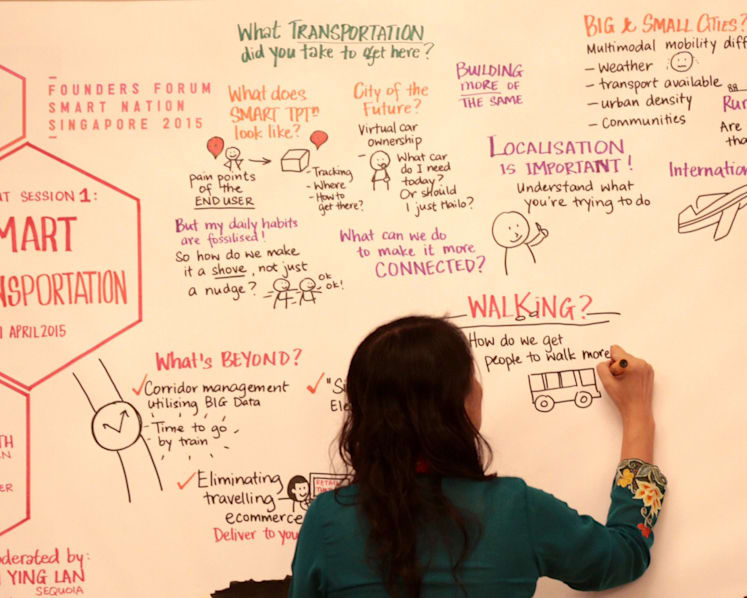


SINGAPORE — With more transport systems embracing big data, the next step forward is to make “big action” a reality, said experts in smart transportation yesterday.
This means, for instance, that city dwellers about to end work for the day get personalised information about traffic congestion along their usual routes home and that they receive suggested alternative routes so they do not end up as angry commuters tweeting about their bad experience, said Mr Ben Whitaker, CEO of Masabi, which provides mobile ticketing technology for the transport sector.
To make a more meaningful difference to commuters, there is a need to move towards truly intelligent systems that not only measure, but use models and predictive intelligence to suggest interventions, said Dr Geoff McGrath, vice-president of supercar company McLaren Applied Technologies.
“If I’m seeing a queue forming, what can I do to eliminate it? If I know where people are going to be in the future, what can I do to try and deliver a better experience?” he said.





Technology companies should address the “pain points” of consumers to get through to the mass market, given how difficult it is to change people’s daily habits, said the experts at the smart transportation session at the Founders Forum Smart Nation Singapore 2015 yesterday. Held at Raffles Hotel, the forum brings together digital entrepreneurs and is being held for the first time in Singapore.
On what governments can do better, the experts suggested making more data available.
Innovation is also impeded when end-to-end transportation is broken down into individual modes of transport, said Dr McGrath. This makes it “really hard to understand what the true limits of performance are, let alone how far we can optimise”, he said. “Lack of that data means you make false investments.”
State or city authorities should also not shut out smaller companies — where the most exciting innovations are happening — through their procurement processes, said Mr Whitaker.
Old-fashioned big-state procurement tends to be worth hundreds of millions or billions of dollars and include many different deliverables, which does not promote innovation, he said. “I’m not saying they have to work with smaller providers, but they have to at least have an environment in which smaller providers are not just shut out by the procurement mechanisms,” he added.
Impactful data and inventions were also discussed by healthcare technology experts at the forum. Technology has to deliver “more for less” and data should be used to provide accountability more efficiently, said Sir Mark Walport, chief scientific adviser to the United Kingdom government.
He also advocated a public conversation about fairness, issues of privacy and autonomy, as well as the threats and opportunities of the Internet of Things.
Personalised, data-driven medicine is “incredibly powerful”, but it exists within a larger system of regulations and parties who may not favour the opening up of data for analytics, added Dr Mike Lynch, founder of technology investment and advisory firm Invoke Capital.




