







SMU graduates take unconventional routes to success
SINGAPORE — At 18, he left his polytechnic engineering course after a year, having failed his examinations multiple times.
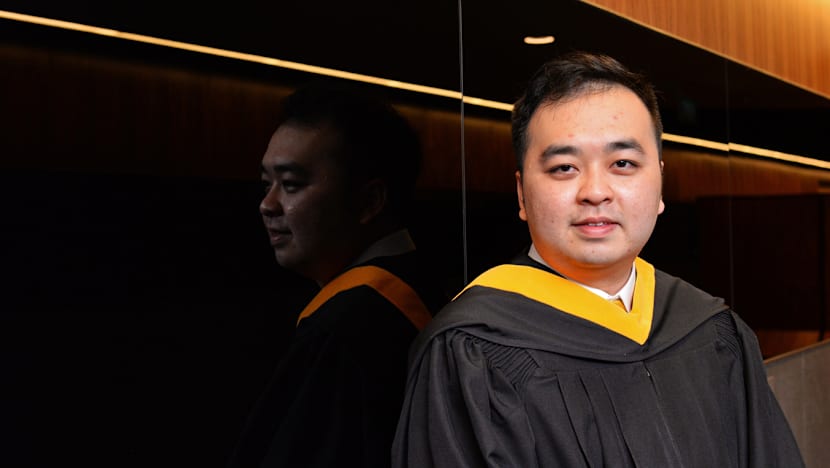
When he applied again for IT courses in polytechnics after his National Service and didn’t hear back for some time, Mr Teh Kaiwen, 28, was about to give up hope of continuing his studies.
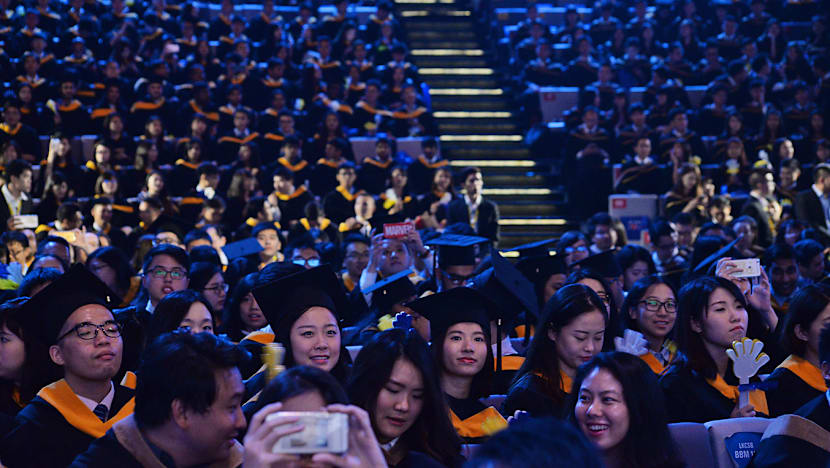
But in the end, he managed to go back to school, and on Wednesday (July 13), Mr Teh was among more than 2,600 students who graduated at Singapore Management University’s (SMU) 13th commencement ceremony. This was SMU’s largest batch of graduates since its inception in 2000.
Looking back at his “longer route” to academic success, Mr Teh said he received an offer from Temasek Polytechnic to study cybersecurity just before he was about to accept a job at a restaurant.





Although the course was not his first choice and he was “not too sure what it was about”, he decided to take the offer.
Little did he know that he had serendipitously discovered his passion.
By the end of his first year at the polytechnic, he was attending talks, workshops and competitions, trying to further his cybersecurity knowledge.
“At first I thought it was about hacking, but the difficulty really comes from protecting systems and how to balance cost and security,” said Mr Teh, who did well and graduated as valedictorian from Temasek Polytechnic in 2012.
Hoping to understand business processes well enough to apply his knowledge about cybersecurity, he went on to study at SMU’s School of Information Systems at the age of 24, three to five years older than most undergraduates.
“Even though I took a longer route, I have no regrets, because I am doing what I’m passionate about now,” said Mr Teh, who is working as an information security analyst at a bank.
“I’m going to try to catch up with my peers, by working as hard as I can and getting certifications to improve myself.”
Mr Teh said his father, a taxi driver, and mother, a homemaker, were “really proud” as they had not expected the family to have a university graduate.
“When I first dropped out of poly ... they said to think carefully about what I wanted to do and at least do a proper job, don’t be a hooligan... Now, they’re really happy,” he added.
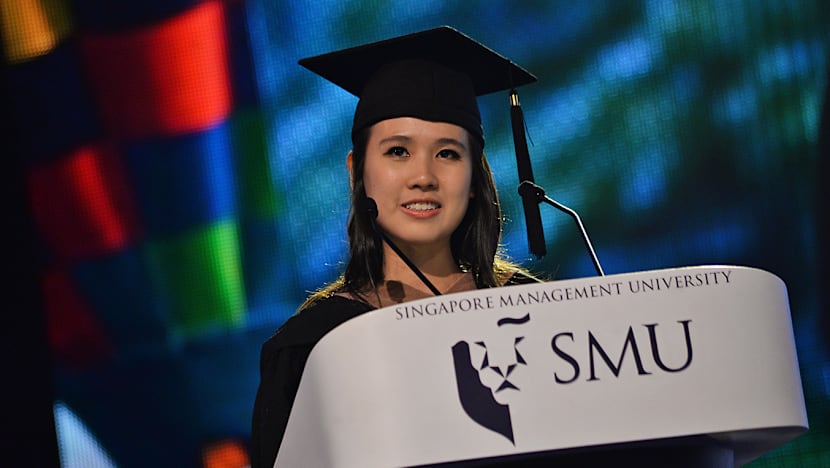
Among the SMU graduates on Wednesday is Ms Sharon Yeo, from the business school and a recipient of the SPH Valedictorian Award.
While her friends were getting prestigious jobs at banks and consulting firms, Ms Yeo, 23, decided to chart her own path as a full-time entrepreneur.
She turned down a job offer from Bain & Co, a top consulting firm that offered her a job after her third-year internship.
Instead, she hopes to improve mentoring programmes with her start-up Protege, co-founded with fellow SMU graduate Stephenie Pang in 2014.
Ms Yeo wanted to be an entrepreneur so she could “directly decide” on “the kind of positive change and impact” that she wanted to make.
“When you’re in a corporation, there’s always the feeling that whatever you’re doing is kind of churning the wheel,” she added.
Yet, her decision did not come easy. Ms Yeo acknowledged that she did wonder what she was “missing out on” as her friends accepted prestigious jobs.
Potential clients have also questioned her team, saying they are too young and lack credibility.
Her team’s software helps match mentors and mentees in a company based on interests and expertise, and tracks the progress of relationships using data analytics.
Ms Yeo started Protege after attending a disappointing mentoring programme, where she noticed that mentors and mentees might lack similar interests and expectations, and did not provide mentorship programme managers with regular feedback.
The start-up secured seed funding of S$50,000 from SPRING Singapore, an agency under the Ministry of Trade and Industry, and S$15,000 through competitions.
Ms Yeo and Ms Pang also pitched in with about S$10,000.
Ms Yeo said she realised the importance of mentorship after working with a mentor under the SMU alumni mentoring programme, a founder of a technology start-up, who guided her in business and IT.
“I thought that it was so powerful to get a mentor and everybody should have access to great mentors, so that’s how we started doing this,” she said.
The start-up has itself benefited from many industry mentors, who give them advice on technology, product development, sales and more. “It’s almost like a board of advisers,” said Ms Yeo.




