







More companies plan hiring freeze for 2026: SNEF survey
A new survey by the Singapore National Employers Federation (SNEF) found that more firms expect to pause hiring and temper pay increases amid weaker business sentiment.
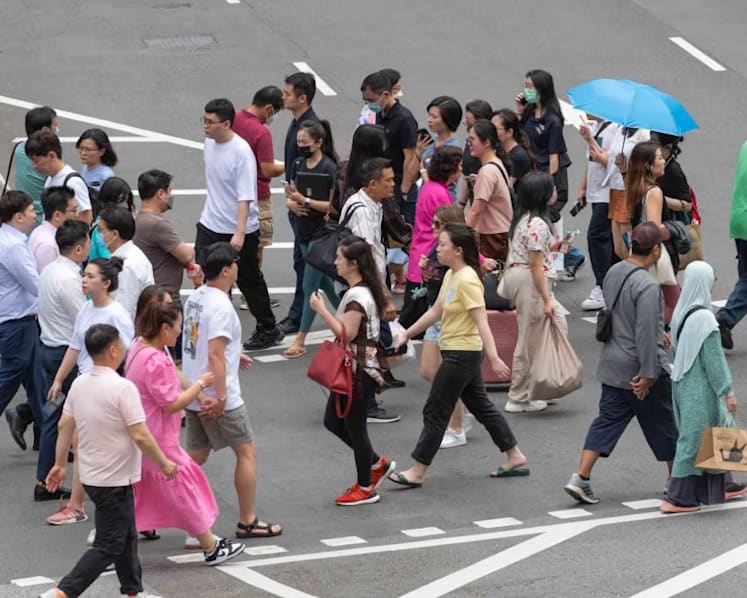
File photo of people in Singapore crossing a street. (Photo: TODAY)

This audio is generated by an AI tool.


SINGAPORE: Nearly three in five employers plan to freeze headcount in 2026 amid uncertain business prospects, the Singapore National Employers Federation (SNEF) said on Tuesday (Dec 2).
About 240 employers hiring more than 120,000 workers responded to an SNEF survey conducted from Jun 25 to Aug 15. The survey found that 72 per cent of employers faced uncertain business prospects this year, up from 58 per cent in 2024.
This translated to 58 per cent of employers intending to freeze headcount next year, compared with 50 per cent in 2024, with small employers more likely to do so at 63 per cent.
The proportion of employers planning to reduce headcount was similar to last year, SNEF added, with large employers being more likely to reduce headcount.





The survey, which aimed to understand employers’ business sentiments, manpower challenges, hiring plans, wage outlook and HR priorities, also found a more cautious wage outlook.
Close to half (48 per cent) of employers planned to exercise wage moderation or freeze wages for the 2025/2026 financial year, up 10 percentage points from the previous year.
“This indicates more caution in wage outlook among employers, particularly among small and medium-sized employers,” the federation added.
Employers cited rising manpower costs as the top manpower challenge for the next 12 months, similar to last year.
Other challenges included attracting and retaining professionals, managers, executives and technicians (PMETs), and a shortage of high-skilled, local talent.


To tackle these challenges, 62 per cent of employers surveyed planned to provide competitive salary and benefits packages, down from 70 per cent in 2024.
The other methods of alleviating manpower challenges included upskilling/reskilling employees to meet evolving business needs and providing more flexible work arrangement options. However, the latter saw a significant decrease from 49 per cent in 2024 to 30 per cent in 2025.
Despite the cautious outlook, SNEF noted that 96 per cent of employers employing lower wage workers planned to provide them with built-in wage increases in the coming year, “reflecting continued employer commitment to uplift this group of workers”.
Nearly 40 per cent of employers intended to give proportionally higher increments to lower wage workers than other employees, while 33 per cent planned similar increments for all employees.
“Employers are navigating 2026 cautiously, in view of rising costs of doing business and uncertainties in the overall global economy,” said SNEF CEO Hao Shuo.
“However, it is heartening to see that many employers continue to invest in their people, especially lower-wage workers, as such investments ultimately help them build a stronger, more resilient, and future-ready workforce that can help businesses capture new opportunities in uncertain times.”
Employers were also encouraged to align their wage decisions with the recently released National Wages Council guidelines “so that wage adjustments are fair and sustainable”, Mr Hao added.




