







S’pore firms kept up innovations to attract talent, enter overseas markets
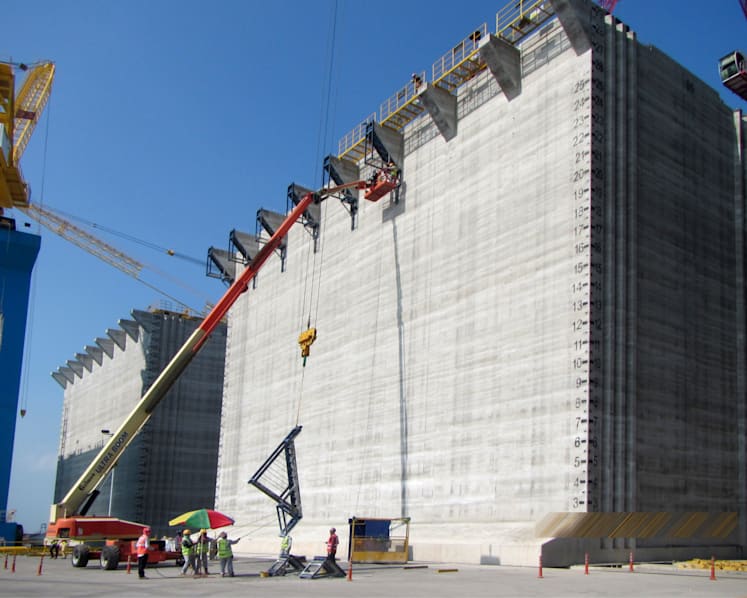
Concrete caissons for reclamation produced by Pan-United Corporation, a 60-year-old company born in Singapore. Photo: Pan-United Corporation Ltd


SINGAPORE — With the use of technology, a concrete product that is made pliable helps to cushion the landing impact of aircrafts, reducing constant maintenance and downtime costs at airport runways.
Another type of concrete shields the human body from radiation and can be used in rooms where cancer patients receive treatment and therapy.
These products are produced by Pan-United Corporation, a 60-year-old company born in Singapore that has become a multinational corporation with a presence in Indonesia, Malaysia and Vietnam, and dealing in concrete and cement products, among other ventures.
The firm, which has 1,200 employees, was highlighted as an example of a business that has embraced innovation, research and development (R&D), Finance Minister Heng Swee Keat said in his Budget speech on Monday (Feb 19).





The company has invested significantly in R&D to produce new products to meet customer needs, he noted, and this has helped Pan-United expand into regional and global markets.
In an interview with TODAY, its CEO May Ng said that the company embarked on research and development in 2012 to stay relevant.
Its concrete products include those that are temperature-controlled, ultra high-strength, light-weight, anti-corrosion, coloured, waterproof, and self-compacting.
For the product used at airport runways and taxiways, it is laid below the asphalt surface and has a special concrete base. It requires only a few hours of downtime before it hardens and is ready for use, Ms Ng said.
“(This) is critical for international airports with heavy traffic where downtime is an important factor, as compared to other flexible concrete which may take days to set for use,” she added.
The product, which took 18 months to develop and test, is now in the process of getting a patent. Ms Ng said that the company is also the only company in South-east Asia that offers a type of concrete which can shield against the rays of proton radiation and it can be used in hospitals where cancer patients receive proton therapy.
Among the projects in Singapore that has used Pan-United’s products is the Helix Bridge at Marina Bay, where the concrete can be used underwater. There is also eco-friendly concrete which has a very high proportion of recycled materials mixed in the production process. This was used in Gardens by the Bay, the Singapore Sports Hub and Parkroyal on Pickering hotel.
Ms Ng said: “Businesses have to innovate not just through product development. We have to transform our business models, find new revenue streams which are of sufficient scale, and shape our industries.”
The company also pushes for innovation to attract talent — more so for a “traditional” industry like theirs, she said, where there are often misconceptions that it is labour-intensive.
A COMPLETE SWITCH
Another Singapore business that had to make a breakthrough is electronics firm Addvalue, which first dealt with the design and development of wireless consumer electronic products. Over the years, it shifted its focus to higher value satellite communication ground terminals. In 2006, the company fully exited the consumer electronics business to focus on satellite communication.
With about 90 staff members globally, Addvalue now has an average turnover of around US$12.3 million (about S$16 million).
Its spoksperson said: “In the satellite communications industry, pricing is not always a key factor. Innovation, services, quality, responsiveness, timely delivery are sometimes more important than price... It is very important to have continuous innovation if we want to compete globally.” Both companies said from experience that innovation is a long-term process and it requires commitment to see results. The Addvalue spokesperson said: “It is a long-drawn process. You need time to build up the in-house expertise, penetrate the market, gain market acceptance and recognitions, which are very important if you want to be successful in the satellite communication industry. All these take time.”
Ms Ng said: “Investment in innovation is a long-term commitment. It is both intensive and extensive — from investing in our people, facilities, quality systems, product development up to commercialisation and marketing. Then we have to scale up to enable us to break into new markets.”




