S’pore leaders need to change their ways to be digital-ready: Report
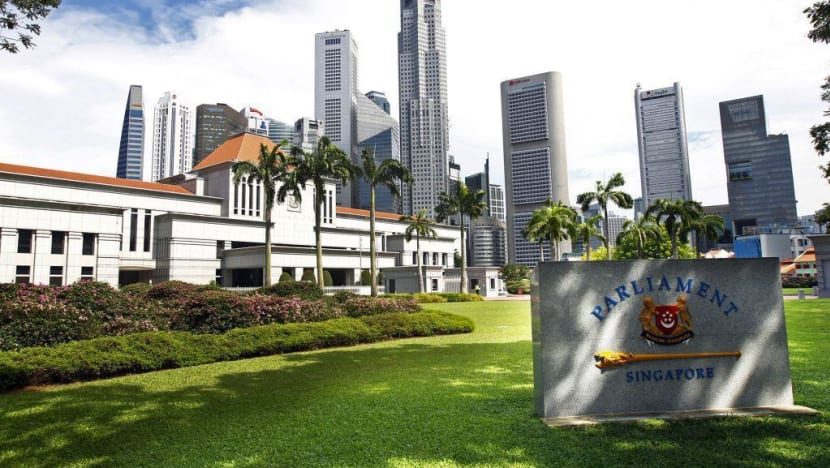
TODAY file photo


SINGAPORE — Singapore might be at the forefront of digital transformation in South-east Asia, but the preference of its leaders — both in the public and private sector — to operate in a “very structured environment” defined by rules and regulations will limit their ability to drive innovative and new ideas.
The Republic’s leaders have to make substantial changes to the way they lead, in order to close the significant gaps with the “great digital leader archetype”.
These were among the findings of an in-depth research released on Thursday (March 29) by global consulting firm Korn Ferry, looking at how digital-ready leaders are in Asia Pacific (APAC).
The report “analysed the leadership profiles of more than 9,000 leaders from eight APAC countries and territories and compared these profiles against the traits, competencies and drivers of great digital leaders”, said the company, which has about 7,000 employees in more than 50 countries.





The places involved in the study were Australia, China, Hong Kong, India, Japan, Malaysia, Singapore, and South Korea. Overall, much of the region is “struggling with the scale of change required and looking for a way through the complexity”, the report said.
On Singapore, the report noted that its Smart Nation efforts are “well underway at the enterprise and government level”. But while Singapore leaders show a strong entrepreneurial spirit, they lag behind in traits such as curiosity, confidence and risk-taking. They are also uncomfortable with ambiguity, the report added.
It noted that adapting to the ever-changing digital world “will not come naturally to Singaporean leaders”. They need to develop greater comfort in making decisions in situations where not all information is available yet, the report said.
Korn Ferry Singapore’s senior client partner Graham Poston said some business leaders in the Republic are “not fulfilling their true potential to lead transformative, disruptive change”. He said: “The pressure to perform in the short term and a lack of leadership bench strength, results in them being drawn into firefighting today. They lack the bandwidth to envision and experiment with tomorrow’s breakthrough idea.”
He urged them to have the courage “to think bigger, to play to win (rather than not to lose) – experimenting with ideas where success is not guaranteed and to trust and empower their teams”.
The report examined 13 characteristics across more than 500 digital leaders in the business and public sector — spanning traits such as curiosity, risk-taking, adaptability, tolerance of ambiguity, confidence. It also looked at whether the leaders are motivated by independence, structure, or challenge, and if they are able to cultivate innovation, as well as engage and inspire others.
Speaking to TODAY, former People’s Action Party Member of Parliament (MP) Inderjit Singh described Singapore as having “very heavy handed regulation”.
Mr Singh, who is the CEO of consumer electronics firm Solstar International, pointed out how China has far surpassed Singapore in the e-payments landscape, even though Singapore has had the Nets payment system for some time.
Instead of penalising companies for trying new things, he felt the Government should “take a step back” and allow more room for “experimentation and messiness”.
Bishan-Toa Payoh GRC MP Saktiandi Supaat, who has spoken in Parliament previously on the Smart Nation efforts, said it was unfair of the report to paint all leaders with the same brush.
Some industries may be more ahead of the curve than others, said Mr Saktiandi, who is an executive vice president at Maybank Group.
For instance, some Singapore-based firms such as gaming hardware company Razer have disrupted overseas markets while the Republic’s precision engineering and electronic production industries are more advanced than in other countries, Mr Saktiandi said.
Apart from leadership, there are other hurdles that Singapore faces, said Association of Small and Medium Enterprises president Kurt Wee, citing the small domestic market which has seen firms scale up digitalisation in phases in order to spread out the risk.
Nevertheless, while he has seen a “heightened consciousness” among business owners to go digital, he acknowledged that they may not have the “bandwidth” or the know-how.
Similarly, East Coast GRC MP Jessica Tan reiterated that innovation is not just about leadership but also involves mindset and culture.
Ms Tan, who is a director at Raffles Medical Group, said, “Leaders can’t dictate to people to go be innovative, but it’s about providing the spaces and putting the right programmes, incubators, policy support and this creates a whole ecosystem to flourish.”
Apart from Australia and India which were described as the “few bright stars” in the region, the Korn Ferry report hailed China as a leading digital force, with firms including Alibaba, Tencent and Baidu spearheading the digital revolution.
Nevertheless, the report said that while Chinese leaders are highly entrepreneurial, they still prefer a structured environment and are uncomfortable with ambiguity. They end up sticking to a “safe approach” rather than give free rein to more entrepreneurial thinking.
In Hong Kong, its leaders’ ability to engage and inspire allows them to motivate their people to achieve success. However, they also have a preference for structure and this creates working environments that “stifle innovative thinking and don’t allow people to challenge the status quo”, the report added.