







Study explores viability of getting treatment by same doctors, nurses
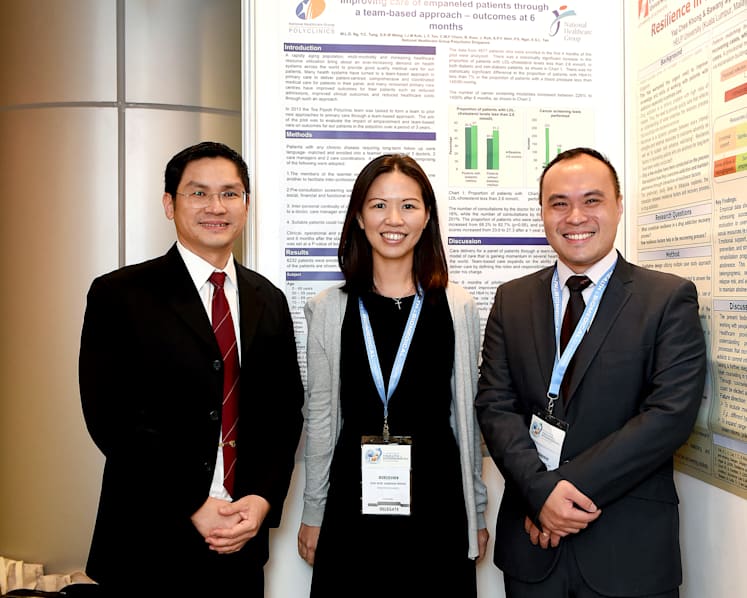
Dr David Ng (right), deputy head of Toa Payoh Polyclinic and clinical lead of the study, with his co-authors Dr Tung Yew Cheong (left) and Dr Sabrina Wong. Photo: National Healthcare Group Polyclinics


SINGAPORE — Instead of seeing a different doctor every time for a check-up, patients with chronic conditions could be cared for by the same few doctors and team of nurses in the future through a new model of care being explored in a six-month pilot project at Toa Payoh Polyclinic.
The study initiated by the National Healthcare Group Polyclinics was based on a patient empanelment healthcare model in the United States, where a group of patients are assigned to the same team of healthcare providers in a medical home.
“As people grow older, more complications arise from their (chronic) medical problems, as well as social issues, like who cares for the elderly at home or whether they have financial issues,” said Dr David Ng, deputy head of Toa Payoh Polyclinic and clinical lead of the study.
“So, what used to work well for us in the form of episodic care will not be able to sustain itself in 15 years’ time ... Hence, we need to move away from a more episodic, transactional model in polyclinics to a more relationship-centred one.”





In February last year, 6,200 patients with chronic diseases requiring follow-up were assigned to a team comprising three doctors, two care managers and two care coordinators at Toa Payoh Polyclinic.
With this system, doctors can build relationships with their patients based on familiarity. From there, the team can assess if patients with well-managed chronic conditions can have longer intervals between follow-up appointments.
Hence, the doctors can now delegate certain aspects of care to other team members, instead of having to make every clinical decision. It frees up their time to focus on other patients who need more consultations and help in managing their condition.
For example, a 56-year-old woman with hypertension and diabetes would need her blood sugar and blood pressure to be well-controlled. Her other preventive health needs would include getting her mammogram, Pap smear and colorectal cancer screenings done every few years.
All of this would usually have been managed by the doctor.
But in this pilot project, care coordinators, who are enrolled nurses, can help schedule screenings and appointments, and educate patients on self-management of their conditions at home.
Registered nurses, who are trained in chronic disease management and are also known as care managers, can then help to monitor the patient’s blood sugar and blood pressure levels. If the levels are high, doctors can step in, explained Dr Ng.
So far, results have shown that patients seem more satisfied with this new care arrangement.
According to surveys, patient satisfaction scores increased by 14.5 per cent and the patient empowerment index increased by 18.6 per cent.
“Most patients were pretty happy to see the same doctor again because they know that they are in good, trusted hands. We even had some patients requesting to see the same doctor and were willing to wait (to see them),” said Dr Ng.
The study also found that the proportion of patients with well-controlled cholesterol levels improved by 57 per cent.
Uptake of cancer screening tests, such as Pap smears, increased by 1,400 per cent. At the same time, the frequency of visits to doctors for chronic medical problems dropped by 16 per cent.
While Dr Ng has “quiet optimism” about the findings, he stressed that the results are preliminary and not representative of the entire population. On whether the model can be extended to other polyclinics, Dr Ng said it was too early to determine its impact and benefits.
He is looking to let the study run for the next three years.
This was one of the research projects presented at the Singapore Primary Care Research Scientific Competition, held in conjunction with the Primary Care Forum 2015, which took place over the weekend.




