







Not about gender, but values and principles, says one of Syariah Court’s first female divorce arbitrators
Two women have been appointed to the court’s panel of Hakams, which has traditionally comprised only men.
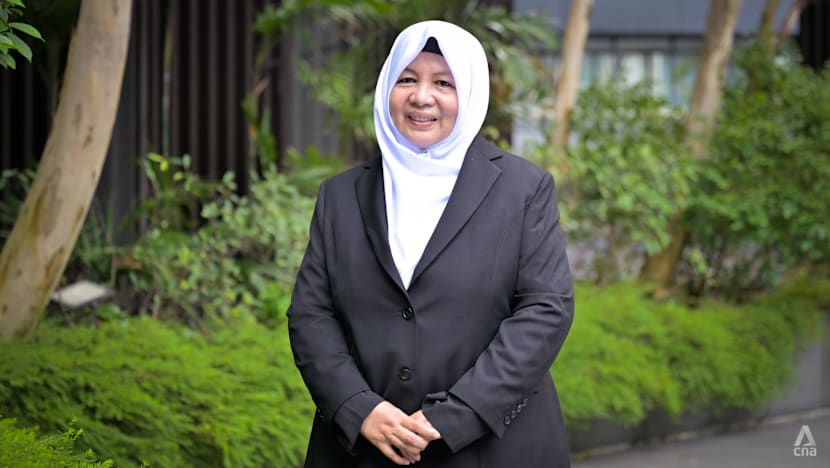
One of Singapore’s first female “Hakam”, Dr Rohana Ithnin, photographed after her empanelment ceremony on Apr 17, 2026. (Photo: CNA/Syamil Sapari)

This audio is generated by an AI tool.


SINGAPORE: Despite becoming one of the first two female divorce arbitrators in Singapore’s Syariah Court, Dr Rohana Ithnin does not view herself as a trailblazer simply on the basis of her gender.
“It's not about being the first, but more about being entrusted with a responsibility,” the 63-year-old told CNA.
“What matters most is not about gender, but is about the values we uphold: empathy, wisdom and fairness.”
Dr Rohana was one of two female Islamic religious teachers, or asatizah, who were appointed to the Syariah Court’s Hakam panel on Friday (Apr 17), during the court’s Hari Raya celebration at Parkroyal on Beach Road.





It was the first time the panel had moved beyond its traditionally all-male composition.
A Hakam is a facilitator in the Syariah Court's divorce process, who helps disputing parties either reconcile or split amicably.
One way the inclusion of females on the panel improves the process is that it presents a wider range of Hakams for couples to choose from, said Dr Rohana.
“It’s about creating a conducive environment for communication. Sometimes they are more comfortable with a female Hakam involved,” she explained.
Even as the institution becomes more inclusive, with women like herself on the Islamic Religious Council of Singapore (MUIS) Fatwa Committee and now on the Hakam panel, Dr Rohana noted that it is ultimately still based on merit, judged by one’s contributions, knowledge and service.
“So for me, it's about carrying this responsibility well, especially when the families are going through difficult situations,” she said.
Dr Rohana said she feels a deep sense of responsibility in her new role, especially as she has been in the field for three decades and seen her fair share of cases.
“Over the years, I've been working with individuals and families, and I have seen how complex marital conflicts have been, not just legally but also emotionally,” she said.
When the opportunity to join the Hakam panel came, Dr Rohana instantly saw it as a way to contribute more meaningfully.
She noted that different Hakam have different strengths. For herself, she intends to bring her background in counselling and understanding of Islamic principles, to improve the process.
The new Hakam panel of 22 people will serve for three years from Apr 1 this year.
The court’s child-centric and therapeutic justice approach was on Friday also boosted by an expanded Child Representative Panel, comprising trained professionals who represent children’s welfare in divorce proceedings.
“The importance of achieving amicable divorce extends far beyond immediate proceedings, as it preserves parent-child relationships despite marriage dissolution and enables both parties to continue as effective co-parents where appropriate, when children are involved,” the Ministry of Culture, Community and Youth (MCCY) said in a media release.
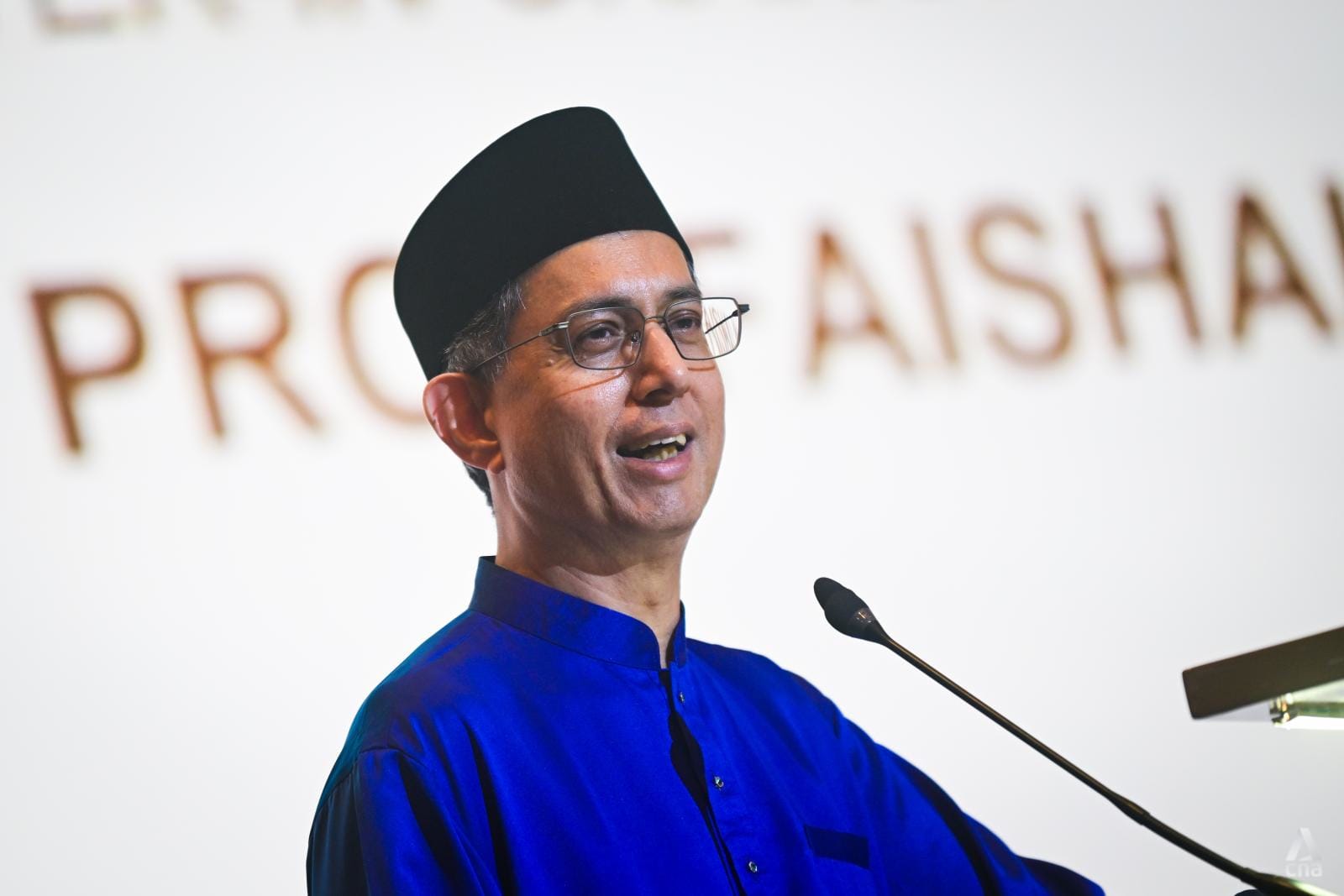
In his speech during the event, Acting Minister-in-charge of Muslim Affairs Faishal Ibrahim noted that the Syariah Court has evolved beyond a purely adjudicative role.
“Through close collaboration with asatizah, counsellors, social service agencies, and community stakeholders, the Court has become not just a place of decision, but also a space of guidance and support,” said Assoc Prof Faishal.
Noting the expansion of the Hakam and Child Representative panels, Assoc Prof Faishal, who is Senior Minister of State for Home Affairs, said the changes “will enable us to better serve families and provide more inclusive support to couples navigating difficult situations”.




