Why Tangs and Takashimaya thrive while other Singapore department stores struggle
CNA reviewed financial results for five major department stores and found that owning or controlling retail space makes the critical difference between profit and loss.
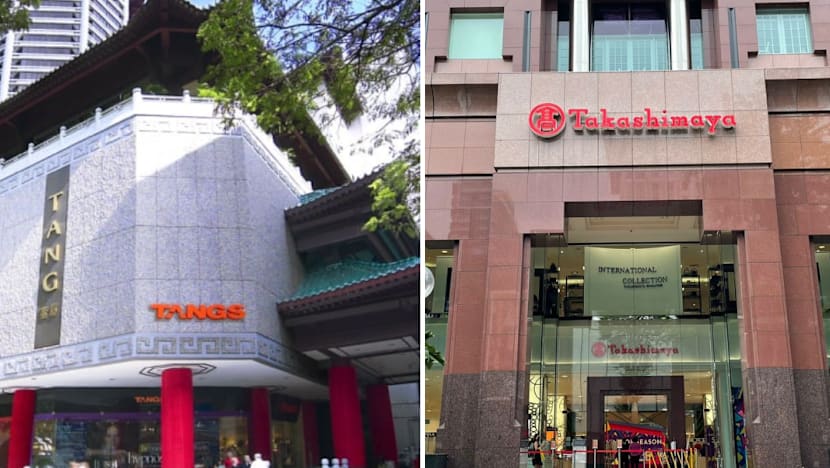
View of Tangs and Takashimaya in Orchard. (Photos: TODAY, Takashimaya website)

This audio is generated by an AI tool.


SINGAPORE: Retiree Laura Chan pauses between stalls at Takashimaya's food basement, savouring a kueh as she absorbs the Christmas bustle around her.
"I still like to see things in person," she said, adding that she particularly enjoys the regional food fairs and special events the department store organises – experiences impossible to replicate online.
The experiential element still draws customers, but e-commerce has blunted that edge. Faced with rising operating costs, declining sales and what some describe as an outdated retail format, some department stores are finding it hard to stay afloat.
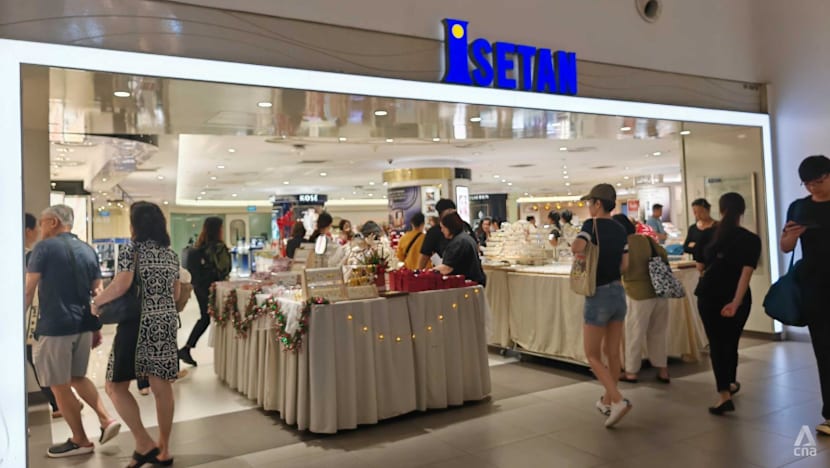
On Monday (Dec 8), Isetan said it will close its outlet in Nex, just one month after it shuttered its Tampines Mall location. This leaves the retailer with only two stores in Orchard Road: its flagship Isetan Scotts at Shaw House and a lease-out operation at Wisma Atria where it has tenant shops.





"Isetan Scotts remains the core of our retail operations in Singapore. We continue to invest in upgrading various retail areas, refreshing concepts and introducing new tenants to strengthen the overall shopping experience," a spokesperson told CNA.
Earlier this year, BHG closed its Junction 8 store and downsized its Bugis Junction flagship from three levels to two.
These closures follow a string of high-profile exits dating back to the 1990s, including Daimaru, John Little, Robinsons and OG's departure from Orchard Road.
The numbers tell a sobering story. While Singapore's overall retail sales rose 1.4 per cent in 2024, department store sales fell 4.5 per cent over the same period, according to the Department of Statistics Singapore’s retail sales index.
STARK DIVIDE
CNA's review of financial statements for five major operators – Takashimaya Singapore, C K Tang (which operates Tangs), Isetan Singapore, BHG Singapore and Metro Holdings – reveals a stark divide.
Only Takashimaya and Tangs, both of which own or control their retail space, were profitable.
Takashimaya Singapore reported net profit of S$43.18 million (US$33 million) for the year ended December 2024, slightly down from 2023 but far outpacing its competitors. C K Tang remained in the black with S$1.25 million net profit in FY2024, down from S$4.61 million the previous year.
Retail has "always been challenging", said Ms Evelyn Chua, Tangs' group director of leasing and operations. "Customers today have endless options both online and offline, and expectations are understandably high."
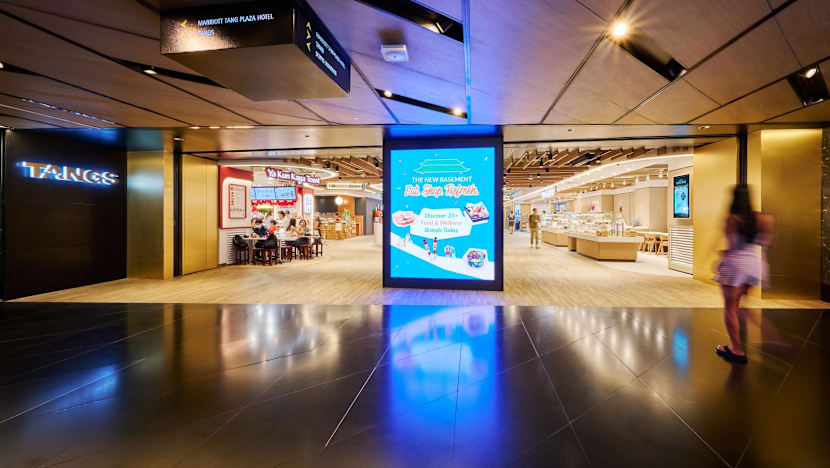
Its revamp of its VivoCity outlet in 2022, and more recently, the reopening of Tang Plaza's basement on Aug 18 this year, reflect a wider transformation guided by customer feedback, Ms Chua said.
Metro Holdings, a mainboard-listed company with interests in property investment beyond retail, recorded S$14.6 million profit after tax in FY2024, down from S$25.3 million the year before.
But by March 2025, the company plunged deeply into the red with a S$224.7 million loss after tax, which it attributed primarily to its China real estate segment. Its retail operations recorded a S$7.61 million loss, reversing a S$2.05 million profit the previous year, with the company citing lower sales from its two Singapore department stores.
Meanwhile, Isetan's losses widened to S$6.05 million in FY2024 from S$1.16 million in FY2023. BHG Singapore saw its FY2024 loss expand to more than S$6 million from S$3.46 million the year before.
Tangs was the only department store among those contacted by CNA to provide comments on its operating challenges. Isetan, BHG, Metro and OG either declined or did not respond to requests for comment.
STRUCTURAL ADVANTAGES
Industry observers point to key structural advantages for Takashimaya and Tangs: prime locations, control over retail space and positioning as destination stores rather than mass-market retailers.
As de-facto master tenant of Ngee Ann City, Takashimaya operates a department store and specialty shops across six levels, occupying roughly 35,000 sq m of gross floor area, said National University of Singapore (NUS) professor of real estate Lee Kwan Ok.
Tangs' flagship is in Tang Plaza, a freehold property owned by the company at the prime intersection of Scotts Road and Orchard Road, while its second store operates in VivoCity.
From a property perspective, Takashimaya and Tangs are closer to “landlords with a big house brand”, while BHG, Isetan and Metro function as “big tenants subletting small pieces”, said Prof Lee, who is deputy head of NUS' business school.
"The first model gives more resilience and more control over how every square metre of gross floor area is used," she said.
Knight Frank's head of retail Ethan Hsu concurred that master tenants or owner-operators enjoy "far greater control".
"They can make long-term investments, curate the tenant and merchandise mix with strategic intent, and internalise the value created from their property.
"Crucially, they also have the flexibility to manage rental economics in ways that optimise productivity rather than being bound by rigid lease structures. In a low-margin sector, this structural advantage compounds over time," Mr Hsu said.
Beyond merchandise sales, Takashimaya generates revenue from consignment sales and operating leases of retail premises. Similarly, Tangs' revenue stems from goods sales, rental, licensing, interest and service fees, though its financial statements do not break down specific amounts for each category.
Traditional department stores like Isetan, BHG and Metro typically operate as rent-paying tenants whose income depends largely on sales-based commissions from concessionaires, Prof Lee said.
"When sales weaken, the landlord still expects market rent, and brands push back on commission – so the department store is squeezed from both sides," she added.


NOT ALL LOCATIONS ARE EQUAL
Even with favourable business structures, stores must still attract footfall and repeat purchases, said Singapore Management University’s associate professor of marketing education Seshan Ramaswami.
"In retailing, the specific location is really important. Not just the general location, especially in a crowded shopping environment like Orchard Road," he said.
Takashimaya and Tangs occupy prime positions in Singapore’s busiest, highest-spend retail corridor, ensuring steady flows of affluent locals and tourists that cushion weaker trading periods, the experts pointed out.
Tangs' VivoCity outlet benefits from a huge catchment area and direct links to Sentosa, cruise terminals and ferry traffic.
"These locations capture tourists, office workers and high-income local residents in one node," she said. "In that context, the department store is not just a 'big shop', but an urban anchor for an entire cluster."
Yet proximity to success does not guarantee it. Isetan and Metro both maintain Orchard Road stores, but with markedly different results. Isetan operates in Shaw House and Wisma Atria, both with direct MRT access. Metro sits in Paragon, a luxury mall opposite Ngee Ann City.
Not all Orchard Road addresses are equal, said Knight Frank's Mr Hsu. Visibility, the mall's tenant mix and the department store's location all matter significantly.
"Having an Orchard Road address helps, but it’s not a silver bullet," he said.
Prof Lee noted that Metro's outlets are "typically mid-sized formats" embedded in larger malls where landlords control the overall concept and tenant mix. "The department store is one anchor among many, not the 'spine' of the asset in the way Takashimaya is for Ngee Ann City," she said.
The compatibility with surrounding tenants is another factor, she added.
Paragon’s upper floors cater to luxury brands and medical specialists, putting pressure on a mid-market department store to justify its footprint against higher-rent specialty tenants.
Isetan’s stores tend to carry more generic mid-market merchandise that overlaps with other mall retailers and online offerings, resulting in weaker differentiation and synergy, Prof Lee said.
DOES HAVING A HEARTLAND LOCATION HELP?
Isetan's and Metro's suburban outposts – at Nex in Serangoon and Causeway Point in Woodlands respectively – are "double-edged swords", experts said.
While these locations are frequented by loyal neighbourhood shoppers, those customers are typically more price-sensitive. Competition from supermarkets, discount chains, specialty shops and e-commerce is intense, Prof Lee said.
"The average basket size and willingness to pay for premium brands are usually lower than in Orchard or VivoCity," she said.
At the same time, heartland malls increasingly allocate space to F&B, enrichment, healthcare and services that cannot move online as easily. Rising rents make large, multi-level department stores harder to justify.
The closure of Isetan Tampines reflects this broader reconfiguration of heartland retail space, Prof Lee said.
Mr Hsu pointed out that while heartland stores may benefit from lower rents, reduced footfall and sales density – the amount of revenue generated per square foot of retail space – means these outlets are unlikely to compensate for underperformance at flagship locations.
CURATION OVER AGGREGATION
Layout, merchandise, ambience, service quality and a clearly defined brand all influence performance, said SMU’s Prof Ramaswami.
In the e-commerce era, department stores survive by curating rather than merely aggregating brands, Prof Lee said. Those carrying generic, mid-priced apparel and household goods face pressure from both fast fashion and specialty retailers on one side, and online platforms and discount chains on the other.
"If the brand mix does not clearly answer the question 'why come here rather than go online?', the department store’s role becomes weaker," said Prof Lee.
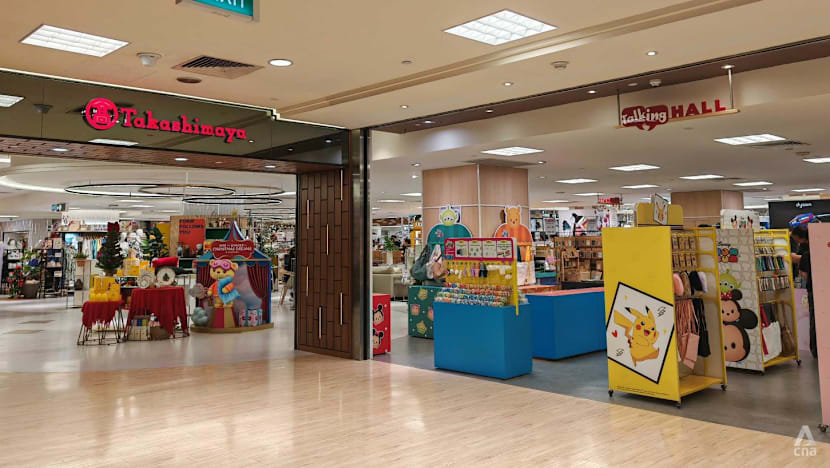
Takashimaya anchors its offerings with cosmetics, luxury and lifestyle brands where physical touchpoints remain important. The store's thematic events in its basement continue to draw crowds, customers and experts said.
"A well-curated mix directly drives dwell time and basket size," said property expert Mr Hsu. "Stores that evolve beyond a pure merchandise model and introduce experiences consistently see higher conversion per visitor."
Tangs, on the other hand, has leaned into a more lifestyle-oriented mix targeting urban, design-conscious consumers.
Tang Plaza's basement is home to more than 50 brands, 80 per cent focused on food and dining, with the remainder related to wellness. The VivoCity store targets younger families with a more youthful, colourful assortment, said the company's spokesperson Ms Chua.
Both Tangs and Takashimaya have "defined the upscale department store format for Singaporeans for decades", Prof Ramaswami said.
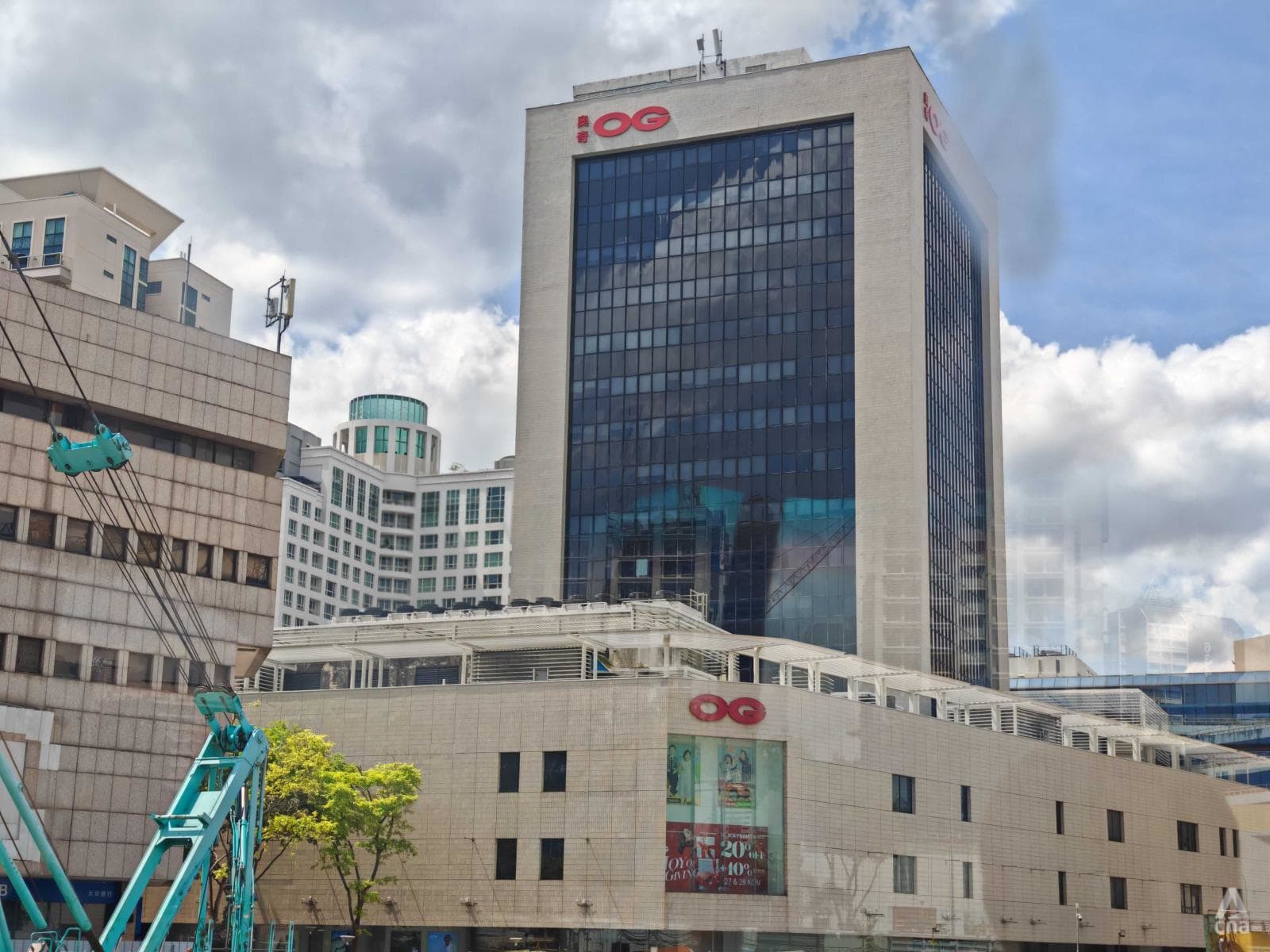
OG: A NICHE SURVIVOR
Less is known about OG, which operates as an exempt private company and is not required to file financial statements.
Experts noted that the closure of OG's Orchard Point location in 2022 signalled a strategic pullback from high-rent, high-competition districts. The company now operates two stores: one at OG Albert Complex and another at People's Park in Chinatown.
Mr Hsu said the brand was better viewed as a "niche survivor rather than a scale-driven department store player".
"What remains suggests a shift towards operating from lower-cost, lower-overhead premises where OG can maintain stable turnover without the heavy investment required for modern departmental retailing.
"While this is a pragmatic approach for sustaining operations, it does not position OG as a leader in scale, growth or experiential retail development within the sector."
Prof Lee observed that OG's remaining outlets are in older, price-sensitive districts with strong footfall from older locals and budget-conscious tourists.
One such shopper is Madam Lucy Ho, 85, who visited OG Chinatown last month to buy a cheongsam for her granddaughter's wedding. At S$80, the garment was far cheaper than the options at Takashimaya, which cost more than S$300.
Yet even Mdm Ho, who does part-time administrative work and has been an OG member for decades, rarely shops at department stores anymore. She said stores have increased their prices too much and offer insufficient incentives, even with loyalty programmes.
"Now everywhere they give points. That's why I say points are not attractive," she said. "I don't shop so often. How much points you give me? I'd rather pay 20 per cent less than get your points."