







Tower Transit bus drivers taught to live healthy lifestyle
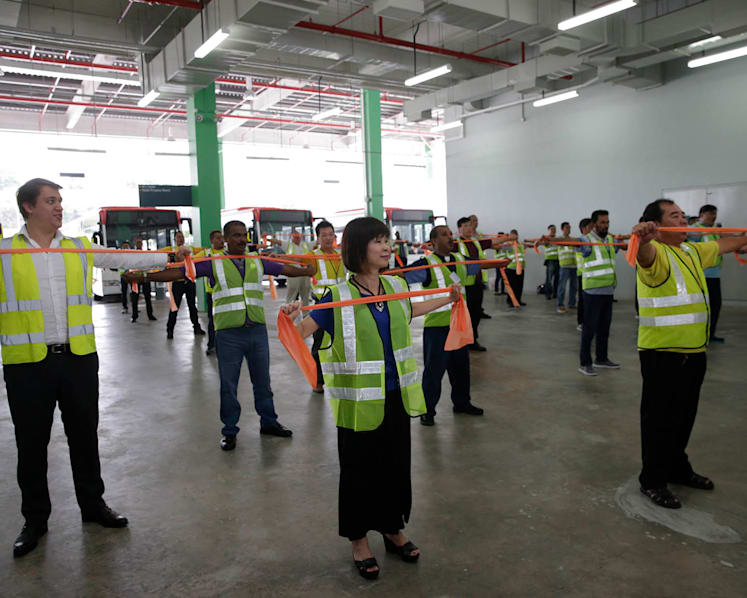
Dr Amy Khor, the Senior Minister of State for Health, joins in the mass exercise with the drivers of Tower Transit. Photo: Wee Teck Hian/TODAY


SINGAPORE – A healthy bus driver is a better driver. This is the philosophy of Singapore’s newest bus company, which is why Tower Transit is making it mandatory for all its drivers to learn how to live a healthier lifestyle.
Since January, about 300 of the company’s bus drivers have gone through a workplace health programme designed by the Health Promotion Board. The Starting Right programme is part of the orientation programme for all new drivers.
It includes a full-day workshop that teaches participants how to eat and drink healthily. Drivers learn how to read nutritional labels, prepare healthy food, and make healthier food choices through a virtual supermarket tour. It also includes mass exercise.





After the workshop, the drivers undergo health screenings that are conducted within Tower Transit’s Bulim bus depot. Two weeks later, they get one-to-one coaching sessions to help them achieve their health goals.
According to the HPB, Tower Transit is the only transport company to make the workplace health programme mandatory for its drivers. It is also the only company to have personalised coaching for participants.
“We look out for our bus captains’ personal, physical and mental wellbeing because a healthy, positive bus captain is a huge asset to us,” said Tower Transit Singapore managing director Andrew Bujtor. “A bus captain who is fit and well is better able to focus on his or her driving, and is more inclined to serve with a smile and enjoy his or her job.
“No amount of money in the world can buy that, which is why the ‘Starting Right’ programme is important to our bus captains, to us and to our passengers.”
The next phase of Starting Right will take place after June. This will address workplace-related health issues such as good driving ergonomics and sitting posture.
Apart from workshops, Tower Transit is also making sure that it provides a healthy environment for its drivers. The canteen at Bulim Depot does not serve white rice, only brown rice and about 70 per cent of drinks sold in the vending machines will bear the HPB’s healthier choice symbol. The depot also has table tennis and foosball tables to encourage the drivers to be more active.
The programme is already making a difference with some drivers. “I used to think brown rice was hard and tasteless, but we were taught how to cook it so that it becomes soft and fluffy,” said bus captain Tay Hwee Yeow. “Now I’m more encouraged to eat healthily and to make healthier choices at the supermarket or at hawker centres with my family.”
Dr Amy Khor, the Senior Minister of State for Health, visited Bulim bus depot on Wednesday (March 9) and dropped in on the programme to observe it in action. Speaking to reporters later, she said: “It is a reflection of the strong commitment of Tower Transit in investing in the health of workers – ensuring that they keep healthy, and in fact, this is something we can emulate and encourage all employers to do the same – invest in the health of mature workers, keep them healthy as well as skilled.”
She said the national workplace health programme (WHP), which aims to reach out to 120,000 mature workers, aged 40 and above, has engaged with more than 9,000 taxi drivers and 1,000 bus captains in the transport sector. She described the results as “very encouraging”, with almost half of the taxi drivers and bus drivers showing improvement in their health results on their second health screening.
She said: “With an ageing population, an ageing workforce is something that employers should see as a workforce of the future – and they should value their mature workers, because of the years of experience that they have, they should see them as an asset, and continue to invest in them, in terms of keeping them in good health, as well as upgrading their skills so that they can continue to be productive, and contribute, not just to the company, but to the economy.”




