







Upset, unreasonable passengers are common, say private-hire drivers on ERP charge
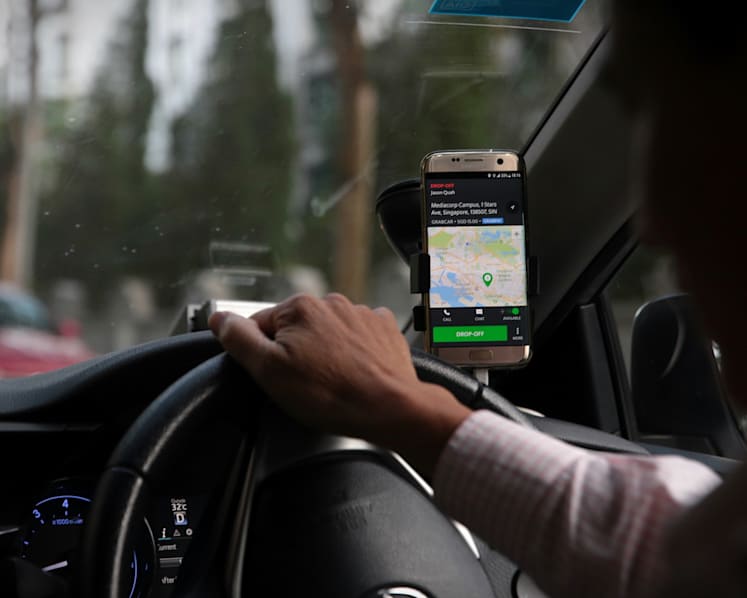
Drivers felt that the ride-hailing firms could do more to safeguard their interests by investing in training for drivers and educate customers on the ERP charge.


SINGAPORE — Dealing with unreasonable customers is part and parcel of the job, said some private-hire car drivers who told TODAY that they have met their fair share of passengers who refuse to pay Electronic Road Pricing (ERP) charges.
In order to avoid ugly situations or bad ratings, some resort to paying the additional fees out of their own pockets. The drivers also felt that the ride-hailing firms could do more to safeguard their interests by investing in training for drivers to handle such situations and educating customers on the ERP charge.
Earlier in the week, an online video of a disagreement between Gojek driver Kamaruzzaman Abdul Latiff and a passenger over ERP charges — which escalated and blew out of proportion — went viral, sparking outrage among netizens. It also triggered discussions on whether the driver had flouted privacy guidelines by recording the argument and posting the clip on social media.
Ride-hailing firms Grab and Gojek charge fixed fares that are subject to additional ERP surcharges where applicable.





Responding to queries, the Land Transport Authority (LTA) said on Thursday (Feb 7) that it met with Mr Kamaruzzaman for an interview in the morning to “look into the incident” and has also requested to meet the passenger.
‘NO POINT IN ARGUING’ OVER ERP FEES
To keep the peace, most drivers told TODAY that they would waive the extra ERP charges where possible.
Grab driver Samiulla Sharieff, 60, said he sees “no point in arguing” with unreasonable customers who refuse to pay the extra fee.
“I will just say ‘okay, cheers mate’ and let it go. This is my profession. It’s natural that we have to compromise,” he said.
Agreeing, Grab driver Paul Poh, 54, added: “We don’t want to get into trouble, so we just forget it. If we try to talk back, the situation gets worse and both sides are unhappy.”
Mr Poh said he would “rather accept the costs and get a better rating” as higher ratings would get him more driver incentives, which help cover losses.
While it is common for passengers to get upset when they learn of the additional charges, most would still pay the fees in the end, said the drivers.
“If we explain, they understand. For some routes there is no choice but to pass by an ERP gantry,” said Mr Poh.
“It is difficult to explain the protocol to some people, so they end up scolding me,” said Gojek driver John Leo, 34.
“But everyone who drives or has sat in a car knows what ERP is. They know it’s normal.”
Mr Azhadi Azali, 33, said he has been “lucky” as he has not met any unreasonable customers who refuse to pay the ERP charges.
“I’ve yet to encounter terrible situations where I can’t handle it. Most passengers who use ride hailing apps would know of the ERP charges,” said the Gojek driver.
IN-VEHICLE CAMERAS NOT ONLY SOLUTION
Instead of turning to in-vehicle cameras, ride-hailing companies could do more to safeguard drivers’ interests when dealing with unreasonable riders, said the private-hire car drivers.
Some like Mr Sharieff felt that video recording would infringe on a passenger’s privacy. “Sometimes couples come in and start smooching. Can you imagine if I’m recording them? That’s pretty weird,” he said.
He added that the companies should invest in proper training for drivers on how to handle such situations and customer education “to teach both sides how to behave, and how to react in such situations”.
More marketing and outreach efforts should be done by the firms to ensure that passengers do not go overboard with their requests, said Gojek driver Mohammad Shafie Shamsuddin.
“They need to raise awareness among passengers on what the exact terms and conditions are.”
As some passengers may request to travel by alternative routes that take more time, Mr Mohammad Shafie said that drivers tend to lose out in this situation. He suggested that the firms look into an “option for alternate prices based on routes requested by passengers”.
While most of the drivers TODAY spoke to did not have in-vehicle cameras installed, one recalled an encounter with a passenger where the device was of great help.
Two years ago, Mr Mohammad Shafie, who was then a Grab driver, picked up a passenger who was unwilling to pay the ERP charge. At her request, he dropped her off at the nearest bus stop, only to learn later that she had complained to Grab that he was rude to her.
“She claimed I hurled vulgarities at her and called her crude names,” said Mr Mohammad Shafie.
Fortunately for him, his in-vehicle recording device had captured the conversation and he had downloaded the video for his own “protection”.
A Grab investigating officer then contacted him and he was cleared of the accusation after he provided the video proving his innocence.
This incident had occurred before the LTA’s guidelines for inward-facing in-vehicle recording devices for public service vehicles (PSV) such as private-hire cars, taxis and buses took effect on June 22 last year.
GUIDELINES FOR IN-VEHICLE RECORDING DEVICES
The LTA’s new installation guidelines state that:
Private-hire drivers must obtain LTA’s approval to install the devices and these can only be carried out at LTA-authorised installation centres.
The devices cannot record any audio to avoid recording passengers’ conversations
Footage must clearly indicate a date and time stamp, as well as the car’s licence plate number to facilitate investigations in the event of misuse of the footage.
PSV owners are required to put up signs notifying passengers of the device.
Access to the footage is restricted and government agencies and LTA-authorised data controllers will be allowed access to it to support investigations and enforcement efforts. The Personal Data Protection Commission also said in its new advisory guidelines in April last year that drivers are not to upload videos from inward-facing in-vehicle cameras on social media.




