







The US-born Yemeni cleric who fuelled radical Islamists around the world
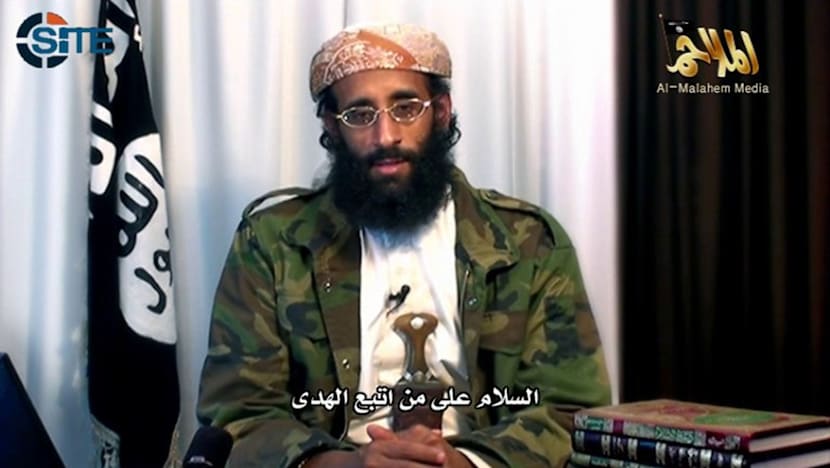
This video grab image released on December 20, 2011 by SITE Intelligence Group shows a clip from Al-Qaeda in the Arabian Peninsula (AQAP) focusing on slain Yemeni-American cleric Anwar al-Awlaki. Photo via AFP
SINGAPORE — The 27 Bangladeshi men who were arrested under Singapore’s Internal Security Act were described as subscribing to the extremist beliefs and teachings of “radical idealogues” such as Anwar Awlaki.
Awlaki was killed in September 2011 at the age of 40. He was the first United States citizen to be killed in an American drone strike.
US President Barack Obama had said the death of the radical Muslim cleric was a “major blow” to Al Qaeda and described it as “another significant milestone” in America’s fight against Al Qaeda.
However, Awlaki’s killing caused a furore in the US, and in 2014, a US federal appeals court publicly released large portions of a memo that was used to justify the killing.





Awlaki lectures and writing made him an influential figure in Al Qaeda and other radical groups, many of whom were involved in terrorist plots in the US, the United Kingdom and Canada. Awlaki was also believed to have had some association with the Sept 11 hijackers, though the precise nature of that connection was never established.
In addition to his lectures and teachings, he was a mentor to people such as Major Nidal Malik Hasan, the American army officer who killed 13 people at Fort Hood, Texas in 2009. He also inspired the man who planned to detonate a car bomb in Times Square, New York in 2010.
Awlaki remained influential even after his death. The attackers behind the Boston Marathon bombings in 2013 and the Charlie Hebdo attacks last year cited his works as an influence. In case after terrorism case, the inflammatory videos and bomb-making instructions of Awlaki, easily accessible on the Internet, have turned up as a powerful influence.
In December, the Counter Extremism Project, an advocacy group based in Washington, called on YouTube and other platforms to permanently ban Awlaki’s material, including his early, mainstream lectures.
“His work has inspired countless plots and attacks,” said Mr Mark D Wallace, a former diplomat and homeland security official who is the project’s chief executive. “It’s hate speech. It should come down, period. Like child porn, it should be expeditiously removed.”
Awlaki was born in the state of New Mexico in the US but lived in Yemen between the ages of seven and 19. He then returned to the US and after graduating with a degree in civil engineering, lived in Denver and San Diego. He subsequently served as an imam in San Diego, and then Falls Church, Virginia.
Following the Sept 11 attacks, he was interviewed by numerous media outlets such as the National Geographic and the New York Times where he came across as a moderate voice. But he left the US in 2002 amid attempts by US investigators to arrest him for passport fraud.
He lived in the United Kingdom for a while before moving to Yemen in 2004. There, his propaganda work for Al Qaeda accelerated. Arrested in 2006 by the Yemeni authorities, he was released the next year.
In 2009, he went into hiding after the Yemeni government began investigating him for ties with Al Qaeda. AGENCIES




