







'Don't think of it as counting money': Wang Laoshi on building her tuition business
A familiar name among parents seeking Chinese tuition for their children, Wang Laoshi never anticipated her business would reach this scale.
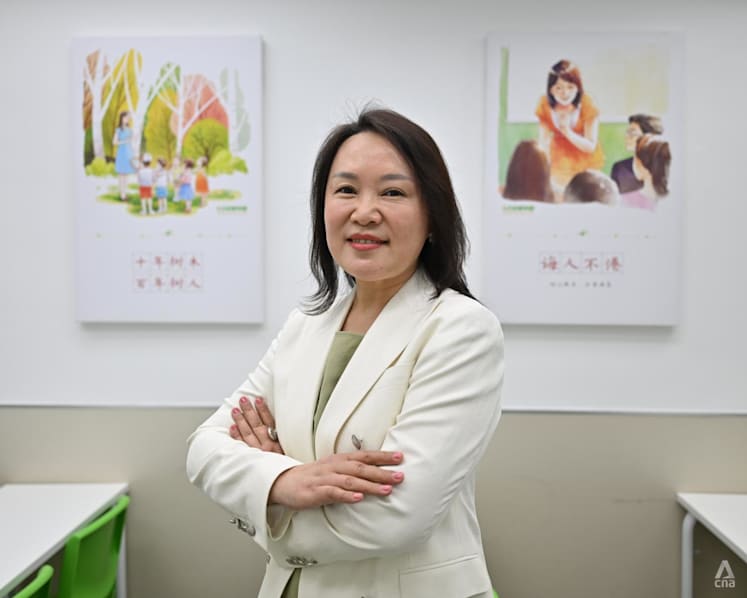
Ms Wang Jie aka Wang Laoshi, founder of Wang Learning Centre, on Dec 3, 2025. (Photo: CNA/Raydza Rahman)

This audio is generated by an AI tool.


SINGAPORE: At Wang Learning Centre, a Chinese proverb adorns the wall: it takes 10 years to grow a tree, but 100 years to cultivate people.
The saying, by ancient Chinese philosopher Guan Zhong, encapsulates founder Wang Jie's approach to education – that nurturing minds requires far more patience than growing a tree.
“It’s very important. One of my favourite sayings,” remarked Ms Wang Jie as she gestured to the poster during a tour of the centre.
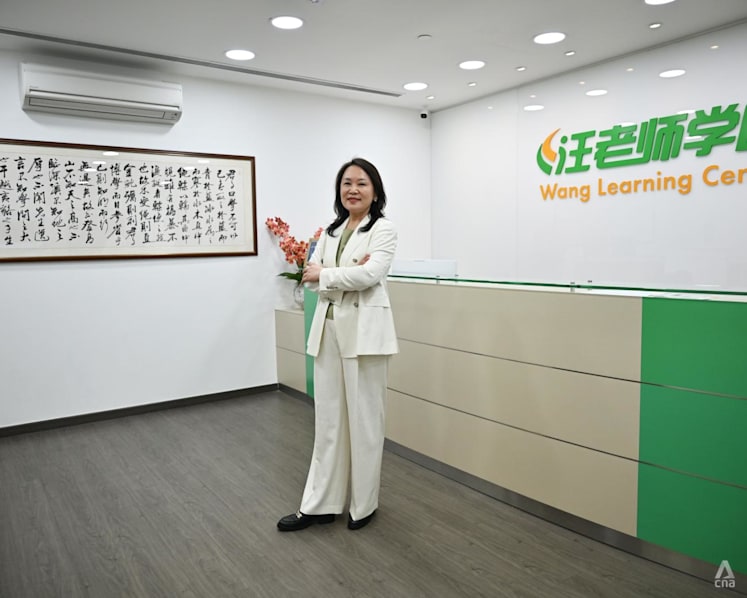
It has taken her 18 years to grow Wang Learning Centre from a single 50 sqm outlet at the foot of a condominium to a 12-outlet chain attended by more than 10,000 preschool, primary and secondary school students today.





But Ms Wang – whom students and staff refer to as Wang Laoshi, or Teacher Wang – insists she never set out to build a tuition empire.
“It wasn't that I wanted to start a tuition centre,” said the 61-year-old. “Some people say, ‘You're smart, you're capable, you chose the right track.’ This track ... I didn't choose it. My profession, my education, my own conditions pushed me onto this track.”


AN UNEXPECTED PATH
After earning a master's degree in education and psychology in China, Ms Wang taught at a university but found the work unfulfilling. She was teaching just six hours of classes a week – a schedule her mother likened to retirement.
She moved to Singapore in 1995 and took a job as a secretary. To supplement her income, she started tutoring four children in Mandarin, including two whose parents could not speak the language.
After relocating to the east of Singapore, she left her secretarial role and joined a tuition centre in the area, where she worked for six years. The centre, which no longer exists, had more than 2,000 students at its peak in the 2000s.
“I felt like a fish in water. It was a suitable environment for me,” she recalled.
Her attention to detail earned her employers' trust, and she eventually took on responsibilities including HR and curriculum planning. Parents praised her teaching, particularly her clear pronunciation.
“Since I have this ability, I see students improve when I teach, children like me, I have this experience – why not develop further in this industry?” she said.
In 2007, while walking around her neighbourhood with her family, Ms Wang noticed a shop unit available for rent in a nearby condominium.
In that 50 sqm unit, she saw her opportunity. “We contacted the owner. They had a complete set of tables and chairs ready. So we took over the unit,” said Ms Wang.
“I only thought, based on my language ability and knowledge background, the most suitable thing was probably Chinese tuition,” she said, describing herself as “very pragmatic” with no grand plans at the time.
Relying only on word of mouth, she ran the centre herself with help from her family. By the time her two-year lease ended, the centre was already full, and she was teaching 56 hours a week.
In 2009, she moved to a larger space at Eastgate in Katong, which remains the chain's headquarters. Within a year, the 500-student capacity had doubled.
From 2014 onwards, the chain expanded one outlet at a time. Parents who wanted to enrol their children urged her to open branches in other neighbourhoods, even going so far as to look for suitable units for her.
But Ms Wang has resisted rapid expansion. “If you open three or four at the same time, I can't manage them all.”
NOT JUST A BUSINESS
While the chain is successful, Ms Wang insists education cannot be approached purely as a business.
“If you don't treat the education industry as a business, then you can succeed. Don't think of it as a business, counting money every day. Think about going to teach with heart every day, about how to make students like it here, love Chinese and improve grades.”
She acknowledged that Chinese language teaching in mainstream schools "is already quite good" and that the centres follow the Ministry of Education curriculum.
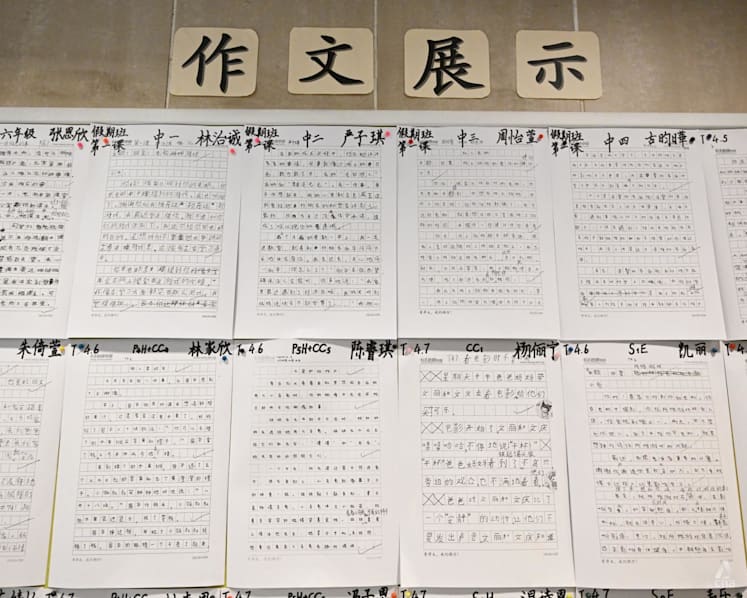
But some students want to do more, she noted. In school, students might write six compositions a year; at the centre, they can write 40.
Some parents also cannot practise Mandarin with their children at home. “So you need to send them to a tuition centre to let professionals help you,” she added.
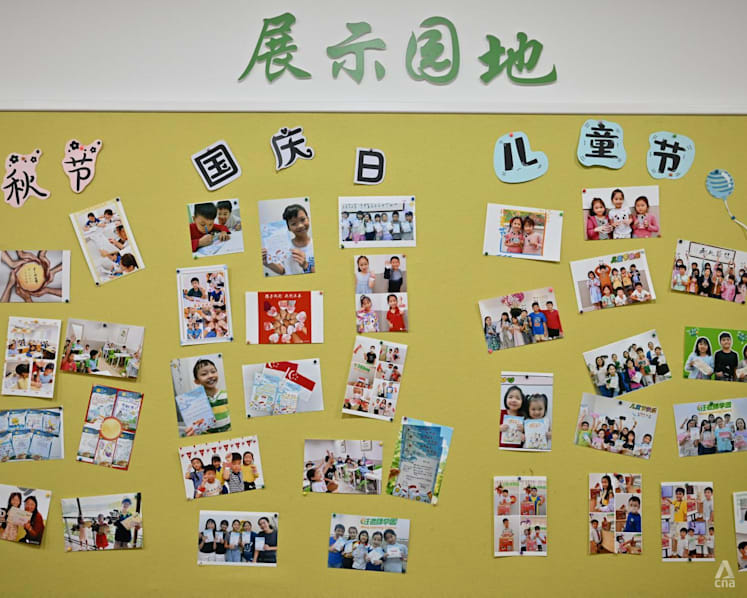
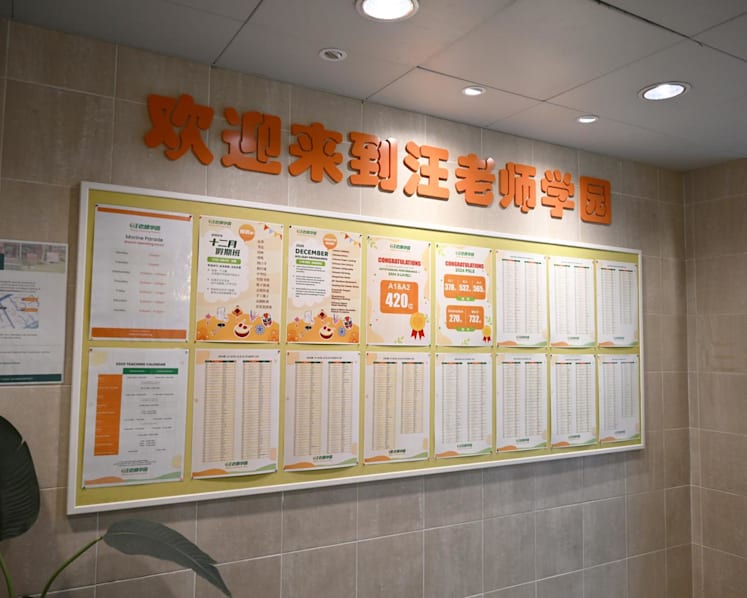
Despite boards displaying students' achievements outside the Eastgate outlet, Ms Wang stressed that the centre accepts students of all standards.
"Maybe not everyone can achieve AL1. But what we ensure is everyone improves here," she said, adding that weaker students are sometimes seated beside stronger ones to facilitate learning.
"You compare with yourself, not with others. I don't want them to compare with their peers ... I couldn't read before, but now I can read a bit. I failed exams before, but now I pass."

Ms Wang takes pride in the centre's teaching materials, meeting daily with her team to ensure they reflect recent developments and changes to the mainstream curriculum.
With nearly 200 teachers, staff turnover is low – around 5 per cent. Her son, who studied in Singapore, handles the academy's digitalisation and administrative systems.
Asked about her plans, Ms Wang said she may open another outlet soon but wants to focus on refining the business.
As for the long term, she returned to the proverb by Guan Zhong.
“This means maintaining our gold-standard brand. As long as there are people in Singapore learning Mandarin, we must keep it shining brightly,” she said.
Any expansion should not come at the expense of quality, she stressed.
“Maintaining my quality and Wang Learning Centre’s reputation in the market is my long-term goal. My grandchildren will also come here to study later on.”




